
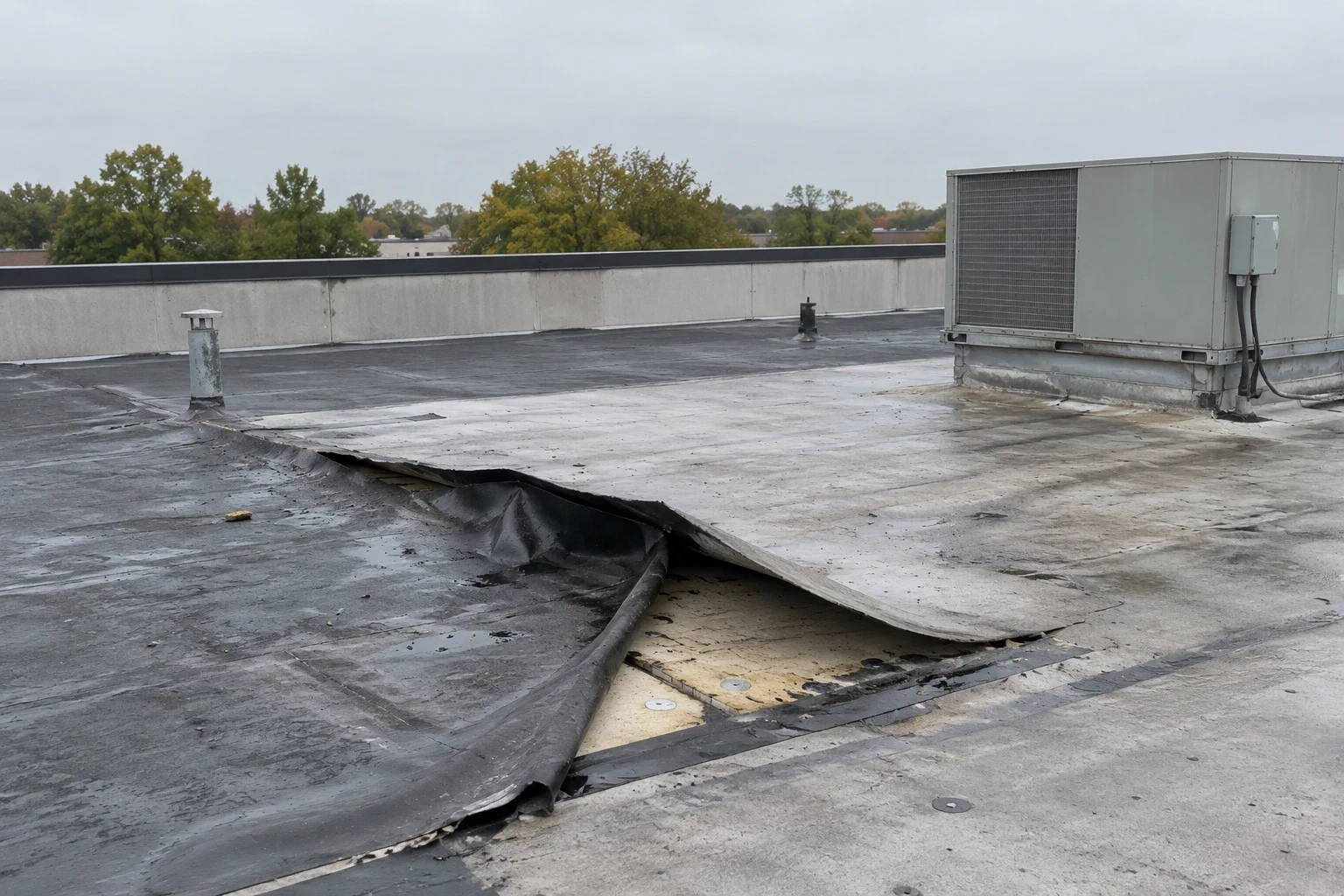
Wind Damage Roof Repair
Wind damage roof repair in St. Paul, MN, with dated photographs of lifted edges, loose membrane and failed fasteners that an adjuster can verify.
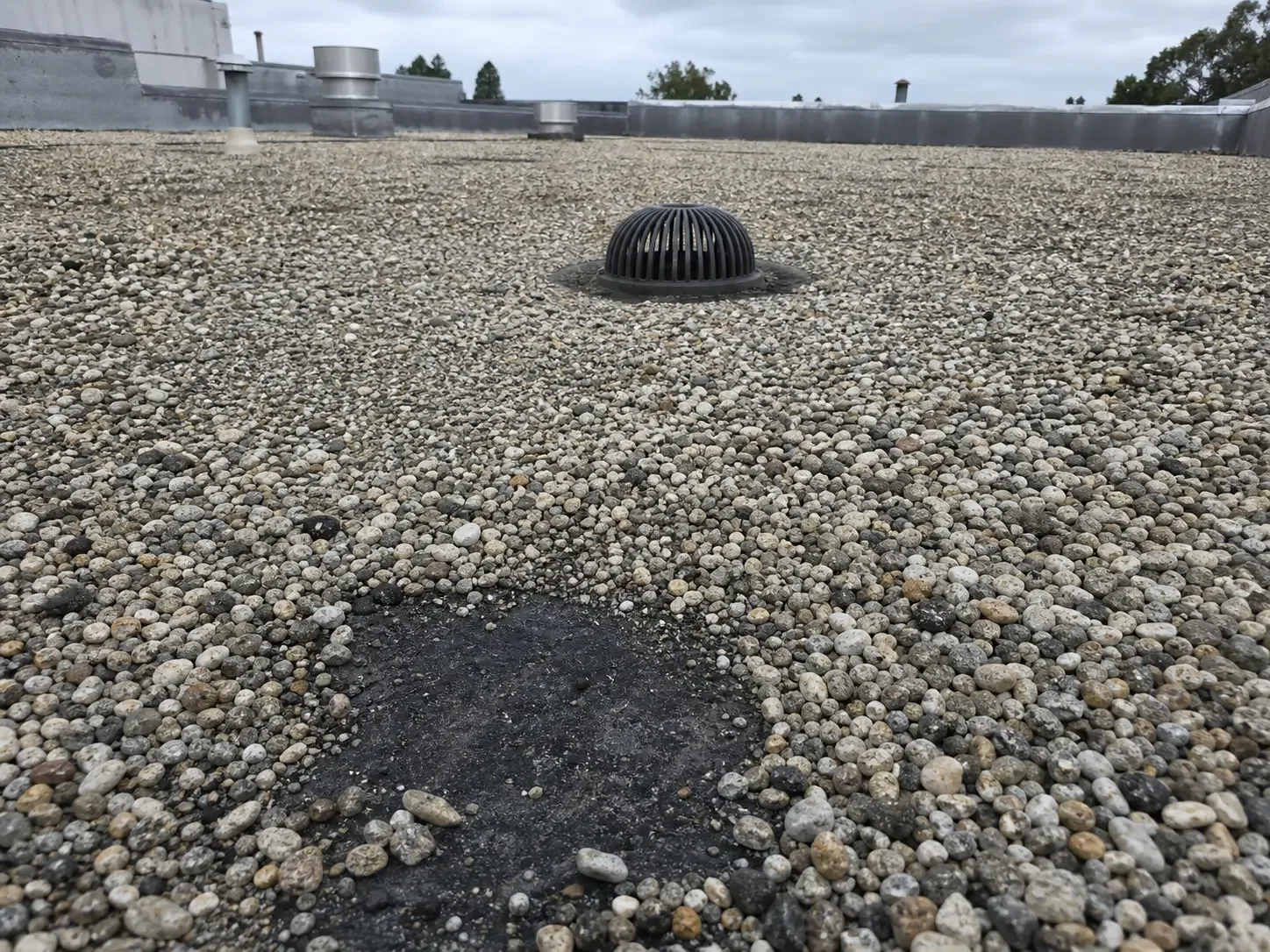
Ponding Water Roof Repair
Ponding water roof repair in St. Paul, MN: measured depths, drain checks and dated photographs before we choose tapered insulation, new drains or a patch.
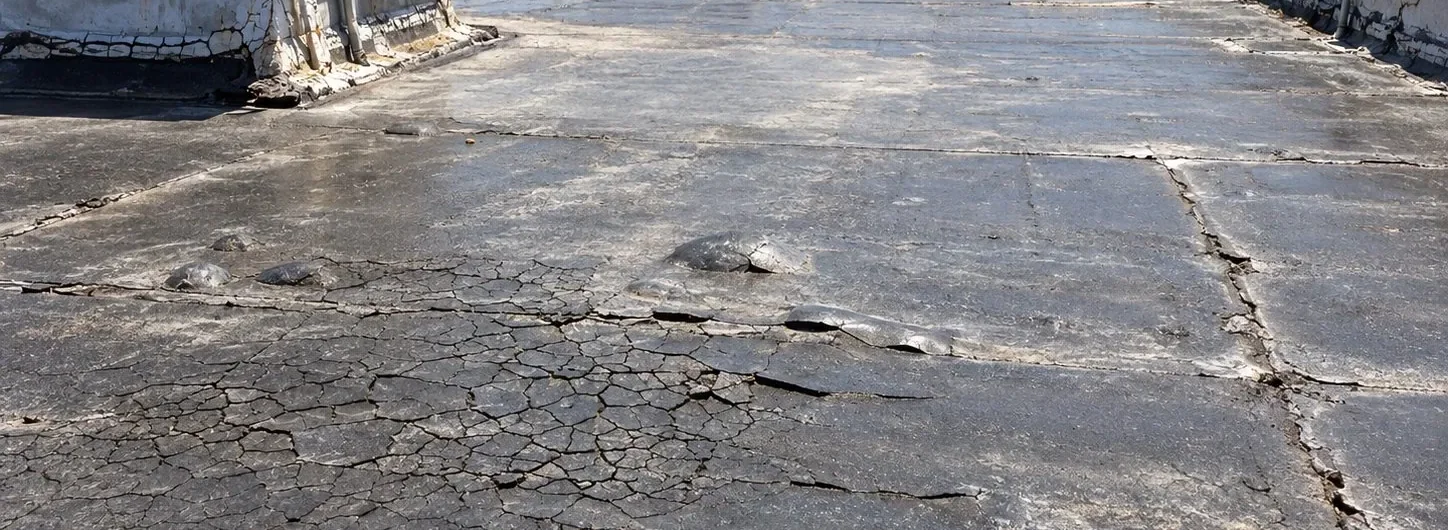
Flashing Failure Repair
Flashing failure repair in St. Paul, MN: moisture readings at walls, curbs and penetrations, a rebuilt detail, and a dated before-and-after photo record.
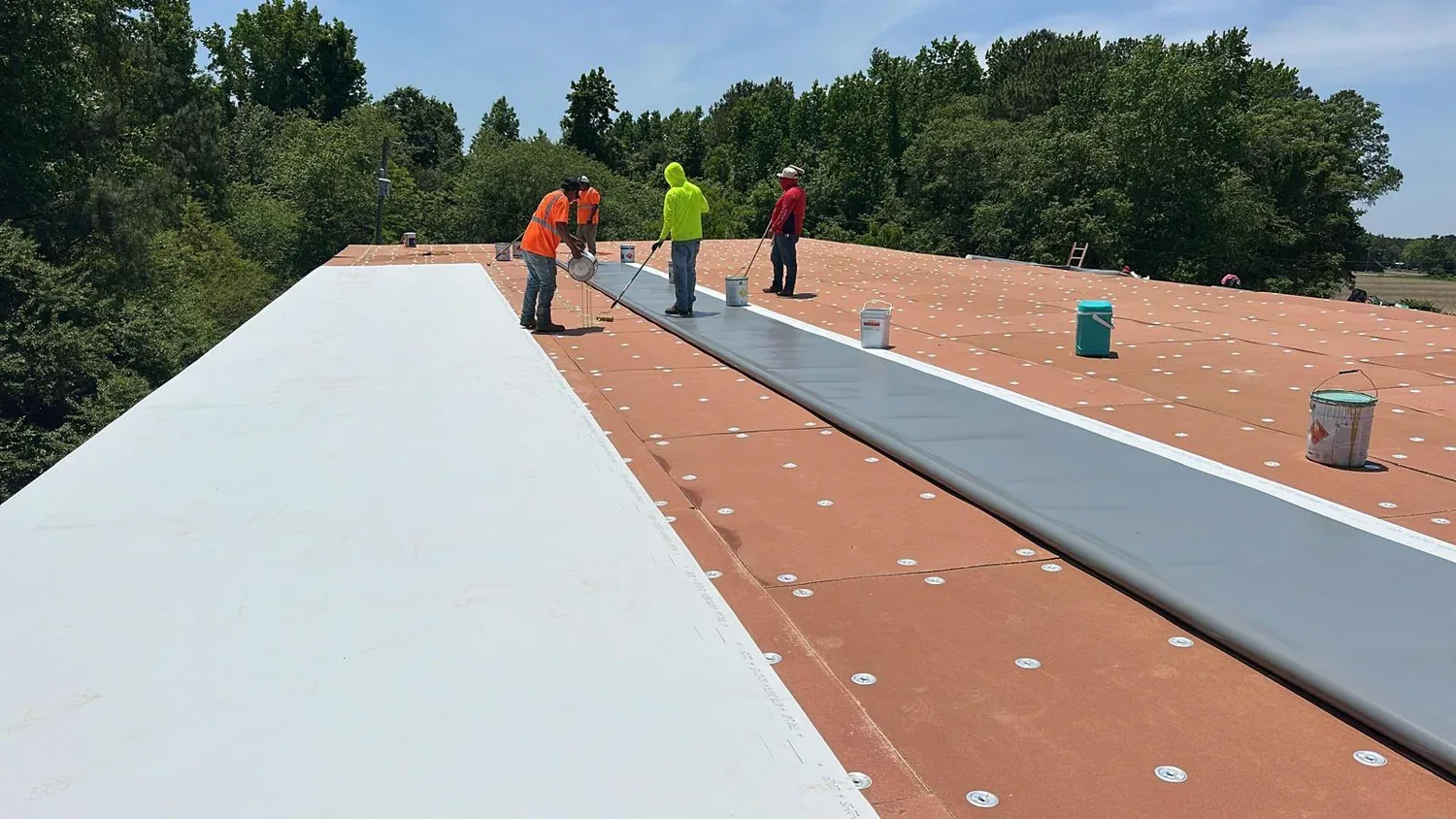
Seam Failure Repair
Seam failure repair in St. Paul, MN: probe testing of every lap, a numbered seam map and cold-weather timing for welds, tapes and cover strips.
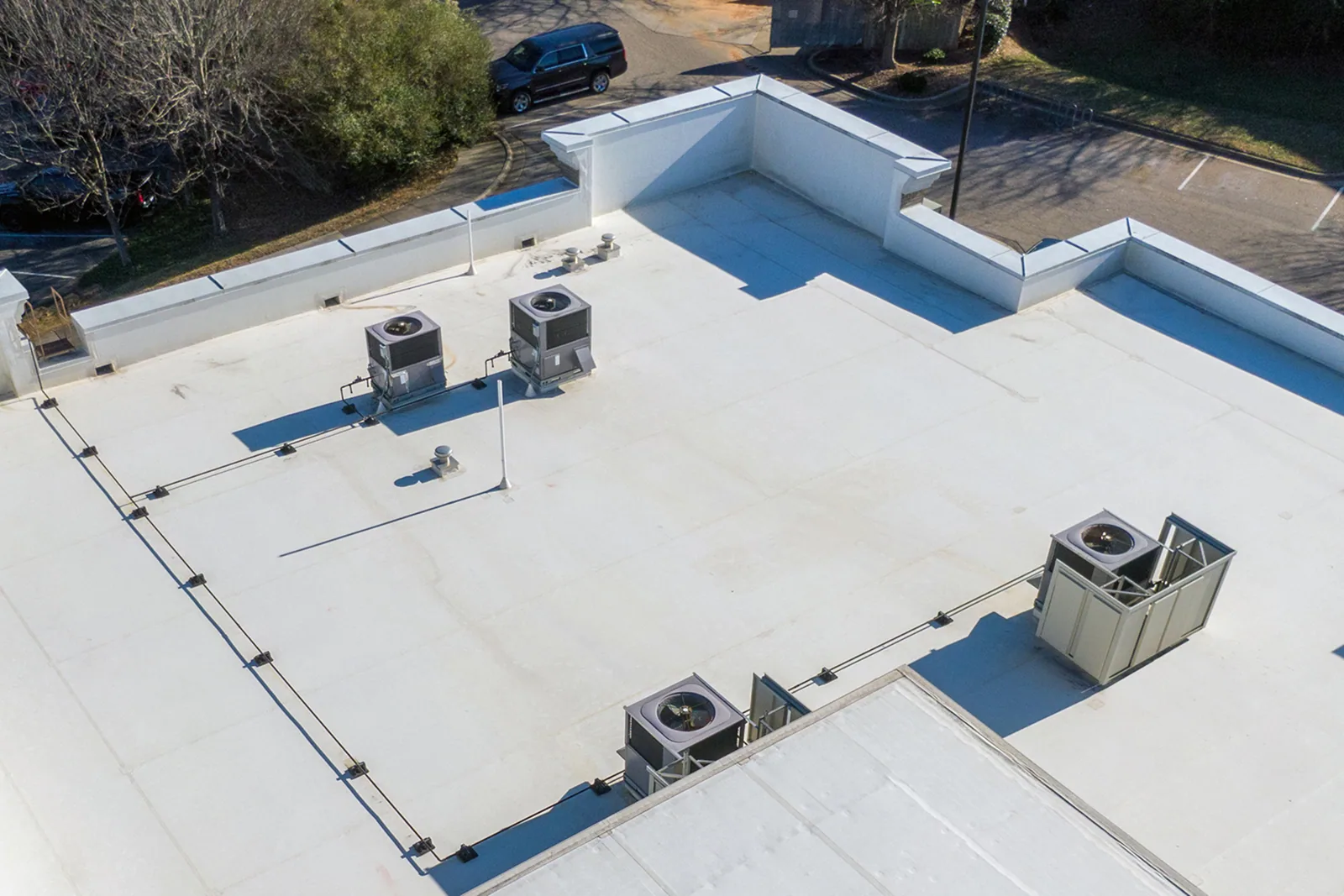
Membrane Puncture Repair
Membrane puncture repair in St. Paul, MN combines direct inspection, suitable moisture testing and compatible patches with a dated record of findings.
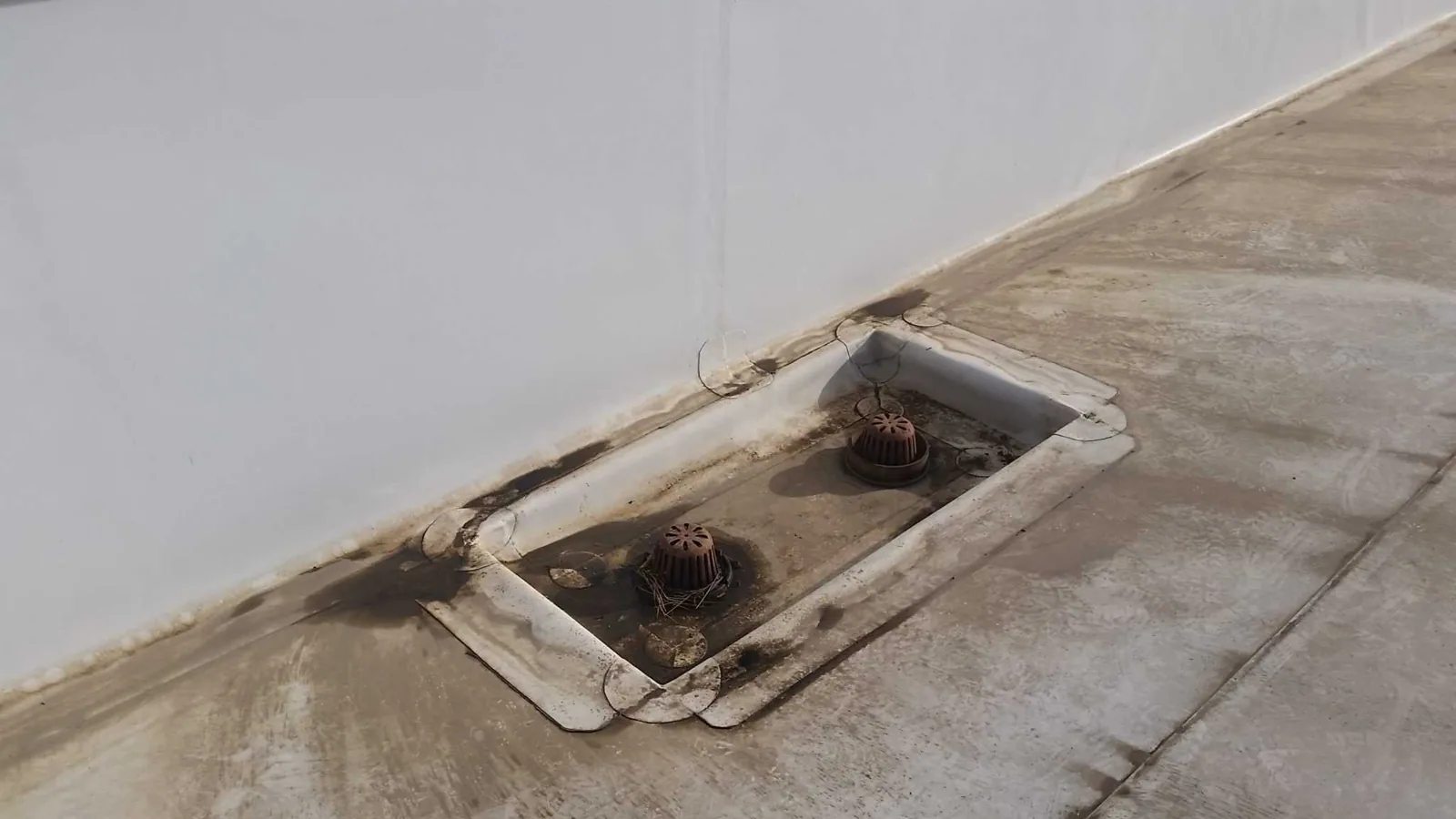
Fire Damage Roof Repair
Fire damage roof repair in St. Paul, MN: safe-access checks, heat and smoke mapping, wet-insulation readings and a claim file your adjuster can follow.
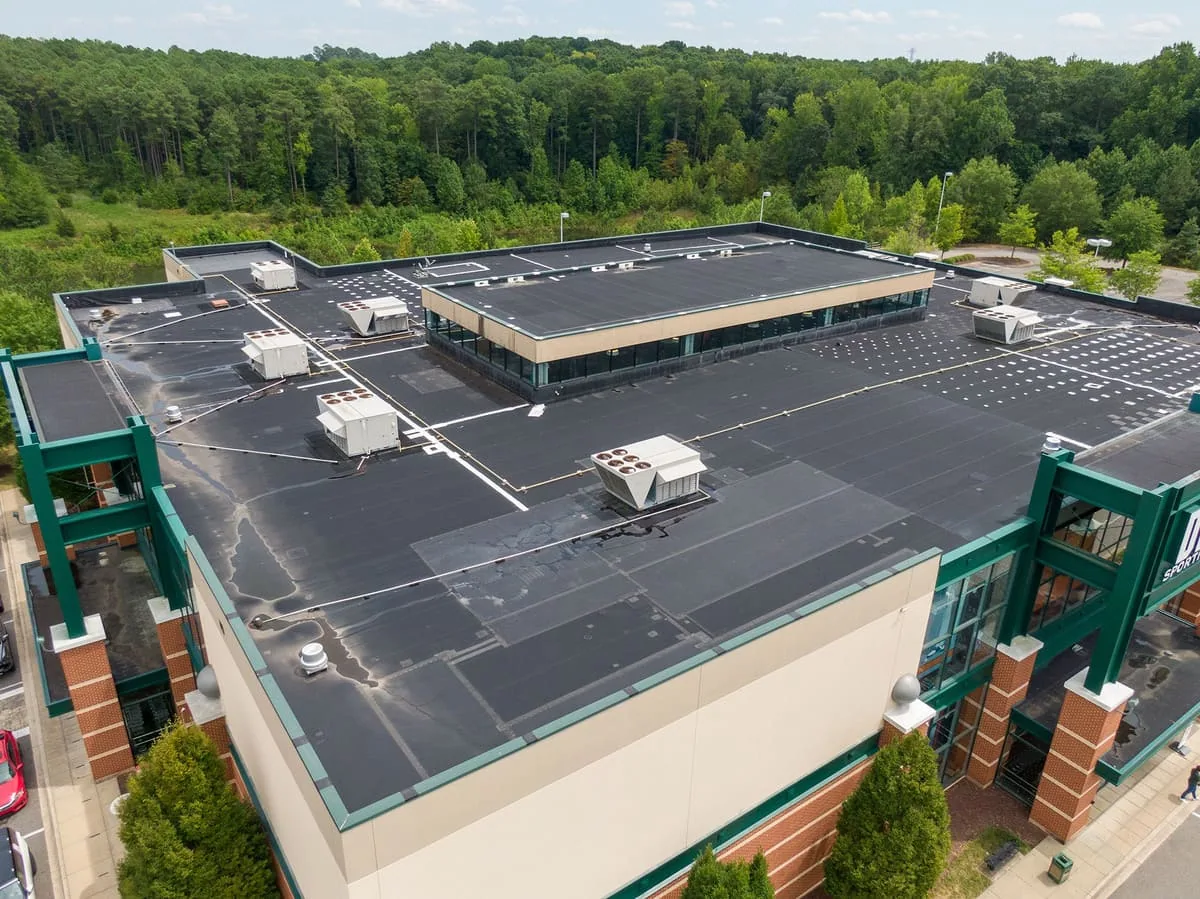
Hail Damage Roof Repair
Hail damage roof repair in St. Paul, MN, starting with chalked test squares, impact counts, core samples and a dated file for the adjuster.
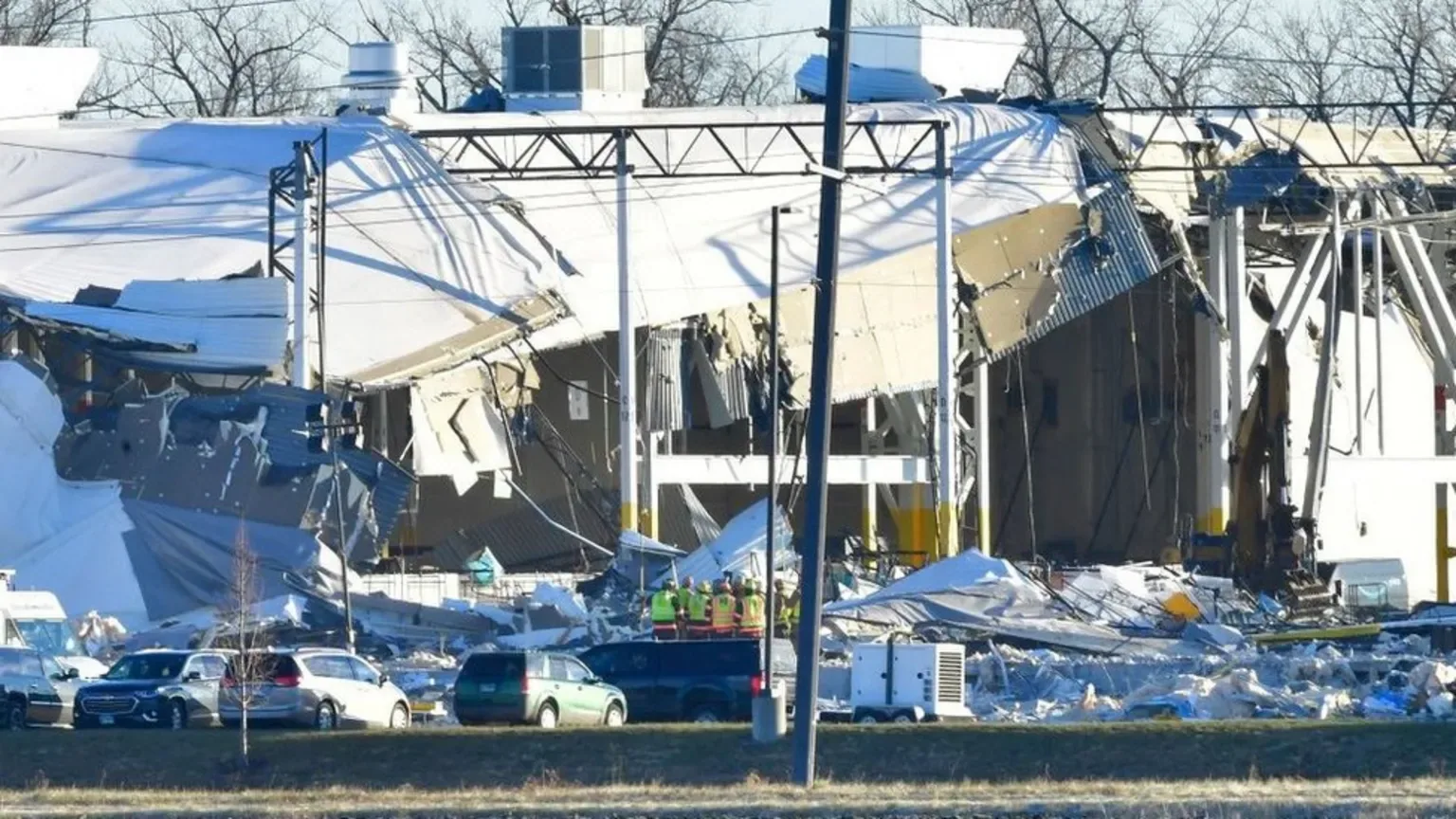
Tornado Damage Roof Repair
Tornado damage roof repair in St. Paul, MN: a mapped debris field, deck and framing checks, temporary closure and a dated file for the adjuster.
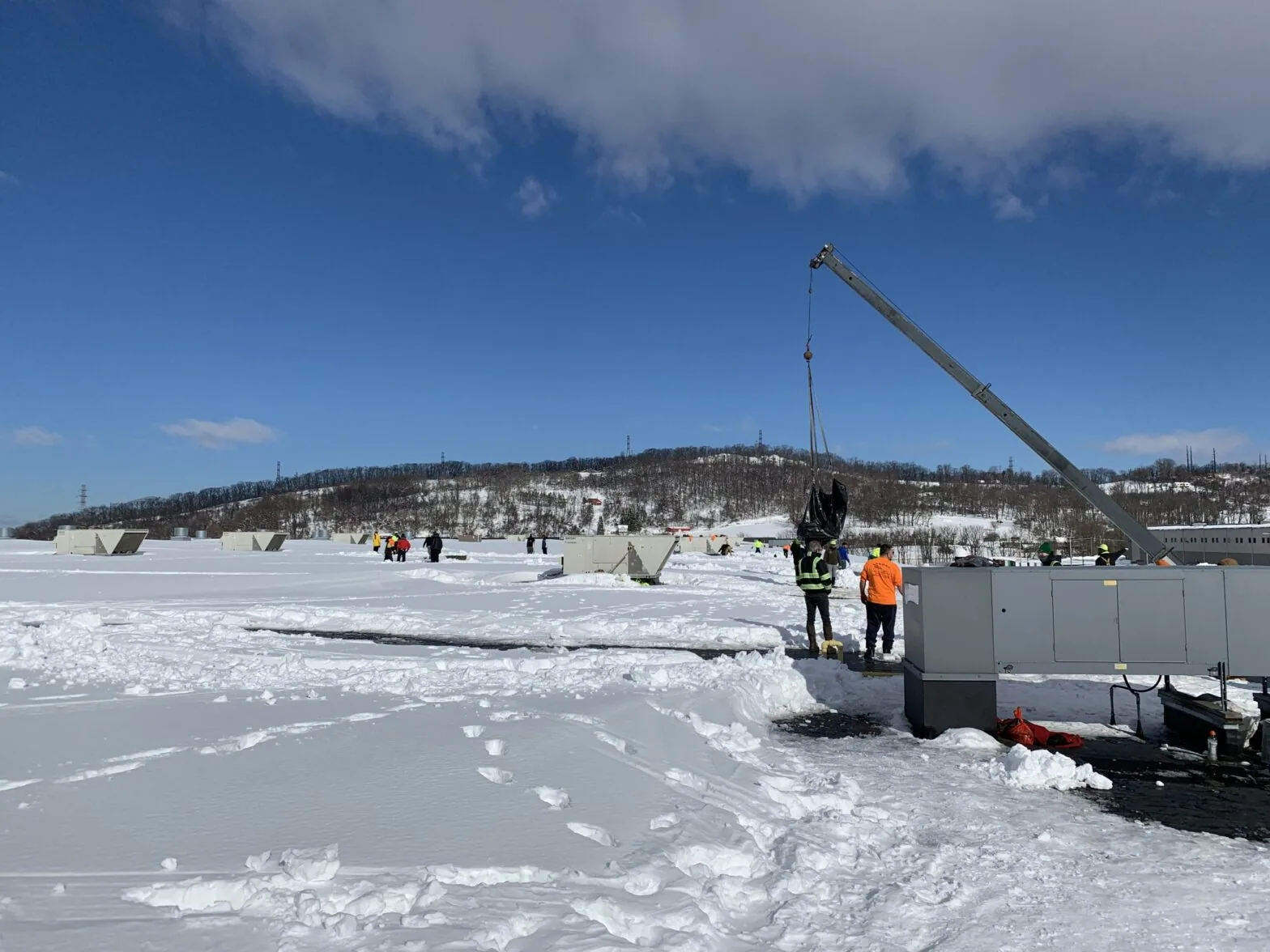
Snow and Ice Roof Damage Repair
Snow load and ice dam damage on St. Paul commercial roofs, recorded with dated photos, drift measurements and moisture readings, then repaired in sequence.
Photographing Damage Before Anything Moves
Debris, lifted flashing and water in the insulation all change within a day or two, which is why we document first and repair second. Hail damage is counted by impact in measured test squares. Wind damage shows at the edges, where metal has lifted and fasteners have pulled, and tornado damage often includes debris that has to be photographed where it landed. Fire damage gets its own record, starting from the ground, before anyone walks the deck.
Separating Storm Damage From Slow Failure
Not every leak after a storm came from the storm. A seam failure may have been opening for months, a flashing failure may trace to shrinkage, and a membrane puncture may be a foot-traffic injury from a service call. Moisture readings and cores document sampled conditions. They cannot reliably date water entry by themselves. Earlier photographs, maintenance records and event-specific evidence support the timing assessment, with uncertainty stated plainly. That separation keeps a claim defensible and allows the owner and adjuster to review observed damage separately from assumptions about coverage.
Tracking Winter Damage From Ice and Standing Water
Winter does its own damage on a slower clock. The Twin Cities saw 69.8 inches of snow in the 2013-14 winter, and state rules assume 50 psf of ground snow when Ramsey County roofs are designed. Meltwater that refreezes at an eave builds an ice dam, and water backs up under the membrane. We log snow and ice damage by location and depth, and we measure ponding two days after rain, when remaining water identifies a drainage concern whose cause may involve debris, geometry or structural movement.
Handing an Adjuster a Complete Claim File
Our emergency crews evaluate safe access and feasible temporary protection, with response timing and limits stated for the actual conditions, and the storm damage repair that follows is scoped from the photo record. We assemble claim documentation with dated photographs, moisture readings, repair scopes and the cause we found. A roof in Woodbury or Maplewood that took damage in the July storm is inspected the same way as one inside the city limits.
Commercial Roofing Questions
Why photograph a damaged roof before the temporary repair?
A temporary repair hides what the adjuster needs to see. Photographs taken first record the tear, the impact pattern or the displaced edge metal, and the dated image is the evidence of how the roof looked after the storm.
How can a claim tell hail damage from ordinary wear?
Impact marks, fractures, seam condition and sampling can support a hail investigation, but wear is not always uniform and impact patterns are not conclusive alone. The report compares current observations with dated prior records and storm evidence, separating supported findings from uncertain attribution.
Do hail marks in a photograph prove the roof needs replacement?
No. Photos preserve the observed pattern, but material sampling, seam checks and moisture findings help determine whether the assembly was damaged and what repair fits.
What should be recorded when snow drifts collect at a parapet?
Photograph and measure the observed depth and distribution, note drainage and any visible distress, then refer capacity questions to a qualified structural professional.