
Fire Damage Roof Repair in St. Paul, MN
Fire damage roof repair in St. Paul, MN: safe-access checks, heat and smoke mapping, wet-insulation readings and a claim file your adjuster can follow.
Request a Roof Assessment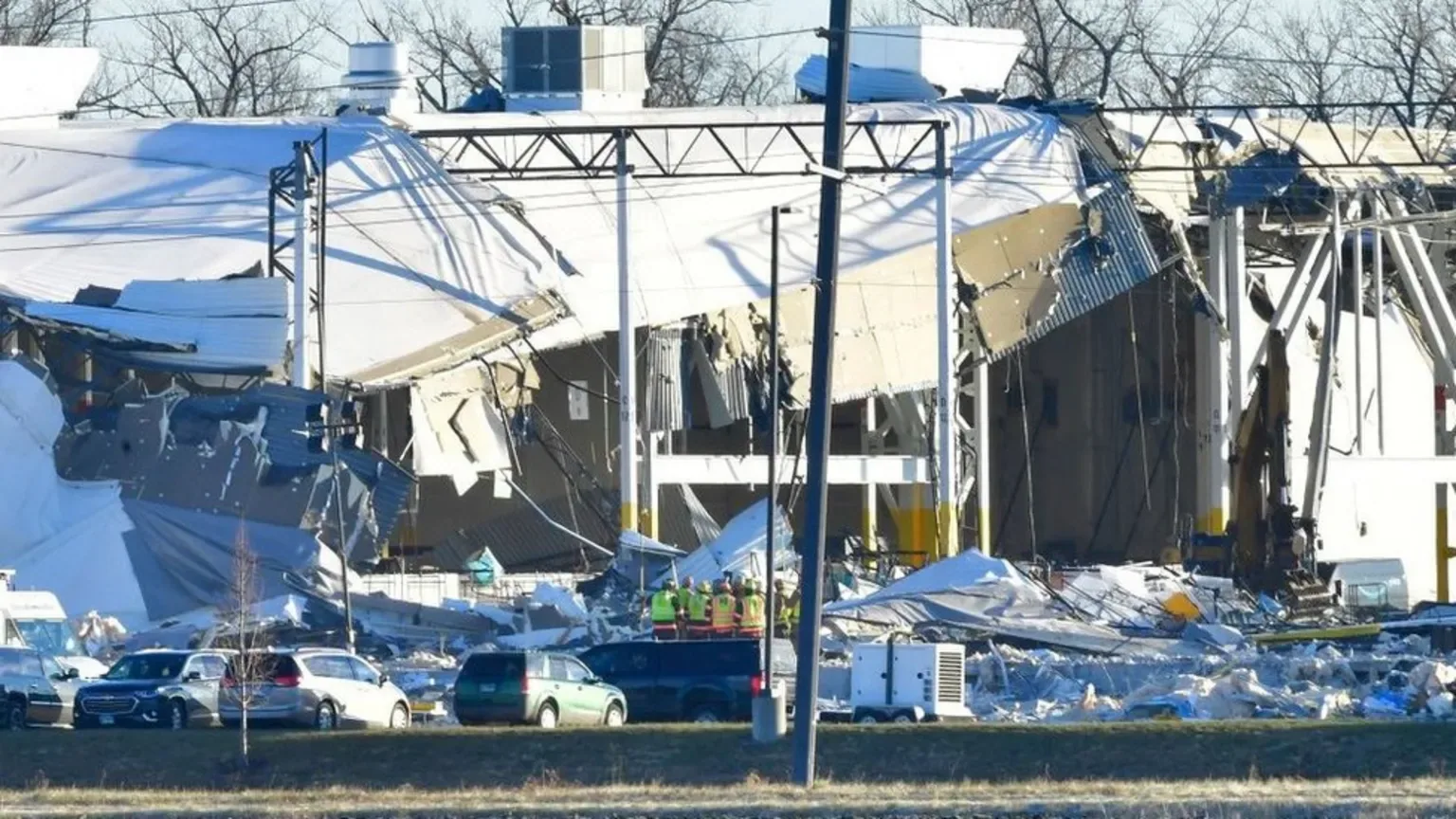
Fire Damage Roof Repair
Before anyone walks a fire-damaged roof, the first record is a photograph taken from the ground, with the fire department's release noted beside it. The edge of the roof, the line of the parapet and the sag or lack of sag in the deck are all visible from below, and they change as soon as crews, tarps and weather arrive. A roof that has been through a fire is part of the loss, and the adjuster will want it described as found.
In St. Paul, MN the clock is set by the season. A deck weakened by heat still has to hold winter snow, and the cited 50 psf county value is a ground-snow design input, not the capacity of the damaged roof, so the first question is structural before it is a roofing one. We work in the order that protects people first, then the building, then the claim: safe access, a dated survey of heat and smoke effects, a read of the wet insulation, and suitable temporary protection with its inspection interval and exposure limits recorded.
Waiting for the Release, Then Walking the Deck With an Engineer's Eye
No crew steps onto a burned roof until the authorities have released the building. A release alone does not authorize loading weakened framing. The structural engineer establishes permitted access, support needs and restricted zones before a roof walk; crews do not test structural safety by stepping onto suspect deck. Steel that has been heated can lose strength without showing it, and wood decking can be charred on its underside while the top looks sound. We mark any area where we see sag, buckling or exposed framing and ask the owner's structural engineer to clear it before we load it with equipment.
This early stage produces the most useful photographs in the file. They show the damage before cleanup, before crews cut openings for ventilation, and before snow lays over everything. A roof file that begins with these images is easier for an adjuster to follow than one that begins with a repair estimate.
Mapping Heat Distortion, Melting and Smoke Staining
Different membranes show fire differently. A thermoplastic sheet near the source can wrinkle, shrink, melt or blister, and the damage often spreads past the visible char. A modified bitumen or built-up roof may show bubbling, slipped plies or a surface that has turned brittle. An EPDM sheet can harden and crack at lower heat than owners expect. Smoke and soot, on the other hand, stain a wide area without necessarily harming the membrane, and the stain alone does not condemn a roof.
We draw a heat map of the roof: a zone of structural or membrane damage, a zone of heat exposure that needs testing, and a zone of soot only. Samples from the exposure zone document selected layers for assessment. Reuse also depends on structural condition, membrane integrity, contamination evaluation and the approved repair assembly. Knowing how a modified bitumen or single-ply system behaves when heated makes that sorting faster and easier to defend.
Drying Out Insulation Soaked by Firefighting Water
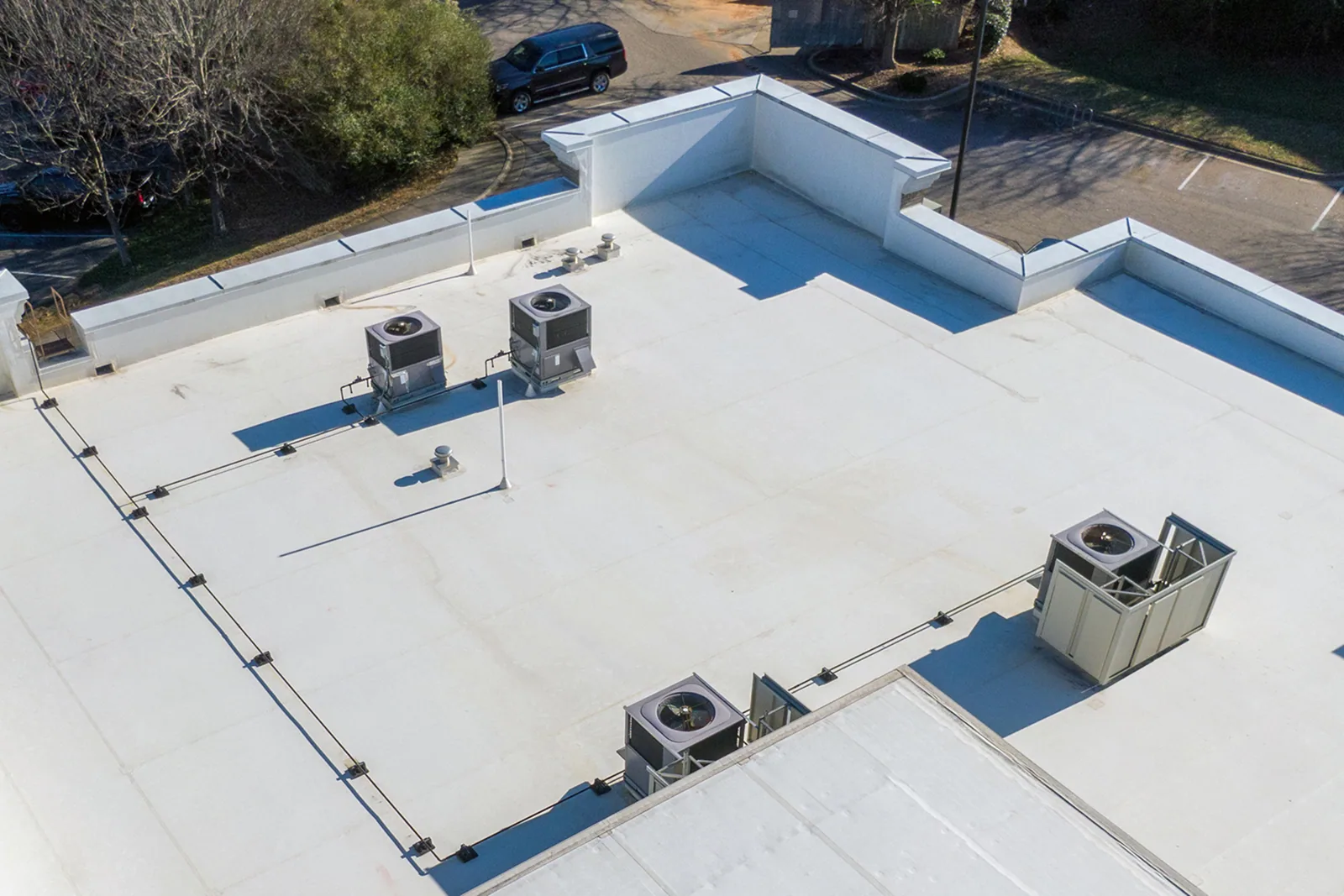
A fire leaves two kinds of damage on a roof: what the heat did, and what the water did. Firefighting water can enter roof openings and concealed layers, and in a Minnesota winter that water can freeze inside the assembly. We take moisture readings across the entire roof, not only near the burn, because water travels along the deck and soaks insulation far from where it entered. An insulation and cover board replacement plan is built from that map.
Retaining insulation requires confirmation that drying is feasible and that the material remains suitable for the repaired assembly. Where it has crushed, charred or absorbed smoke residue, it comes out. At a hospital such as Regions Hospital on Jackson Street, with more than 550 beds and a Level I trauma designation, the work also has to protect the floors below from dust and drips, and the plan sets out how each area is sealed off before the roof is opened. In Lowertown, where historic buildings have been converted to lofts, breweries and restaurants, a kitchen exhaust fire is one way a roof burns, and reoccupation requires the authorities and building team to approve conditions; a temporary roof cover does not establish that approval.
Closing the Building Against a Minnesota Winter
A burned roof cannot wait through a thaw. Our emergency roof repair crews respond around the clock, and the first roof task is to assess protection compatible with the engineer-approved structure and available access. Temporary membrane, board-up or tarps each have limitations. Because snow and ice add weight, the engineer determines whether clearing is needed and how it can be performed without unsafe access or concentrated loading. Depth and dates locate accumulations but do not establish their weight or safety.
The temporary cover is built to be inspected. We check it after each storm and each thaw, because wind can lift a tarp and meltwater can find a gap along an edge. Each visit is logged, and so are the moisture readings under the cover. That log shows the carrier that the owner took reasonable steps to prevent further loss, and it identifies failed protection and new moisture for action before permanent work.
Scoping the Repair With the Adjuster and the City
After the survey, we write a scope that separates repair from replacement and explains the reasoning for each area. We work from the file, and our roof insurance claim assistance keeps photographs, readings and cost drivers in the order an adjuster expects. The same file serves insurance and restoration teams working a larger loss, since they can see the roof's condition without a second walk.
The permanent work goes through code. The designer confirms the state and local requirements applicable to the approved repair or replacement scope. Structural work, insulation changes and preservation review are identified separately for permit coordination. For buildings in Lowertown and the industrial blocks of Riverview and the West Side, where the Port Authority counts 204 businesses, we prepare the permit material early with review time allowed in the repair schedule. When the damage reaches the structure, commercial roof replacement is the likely route.
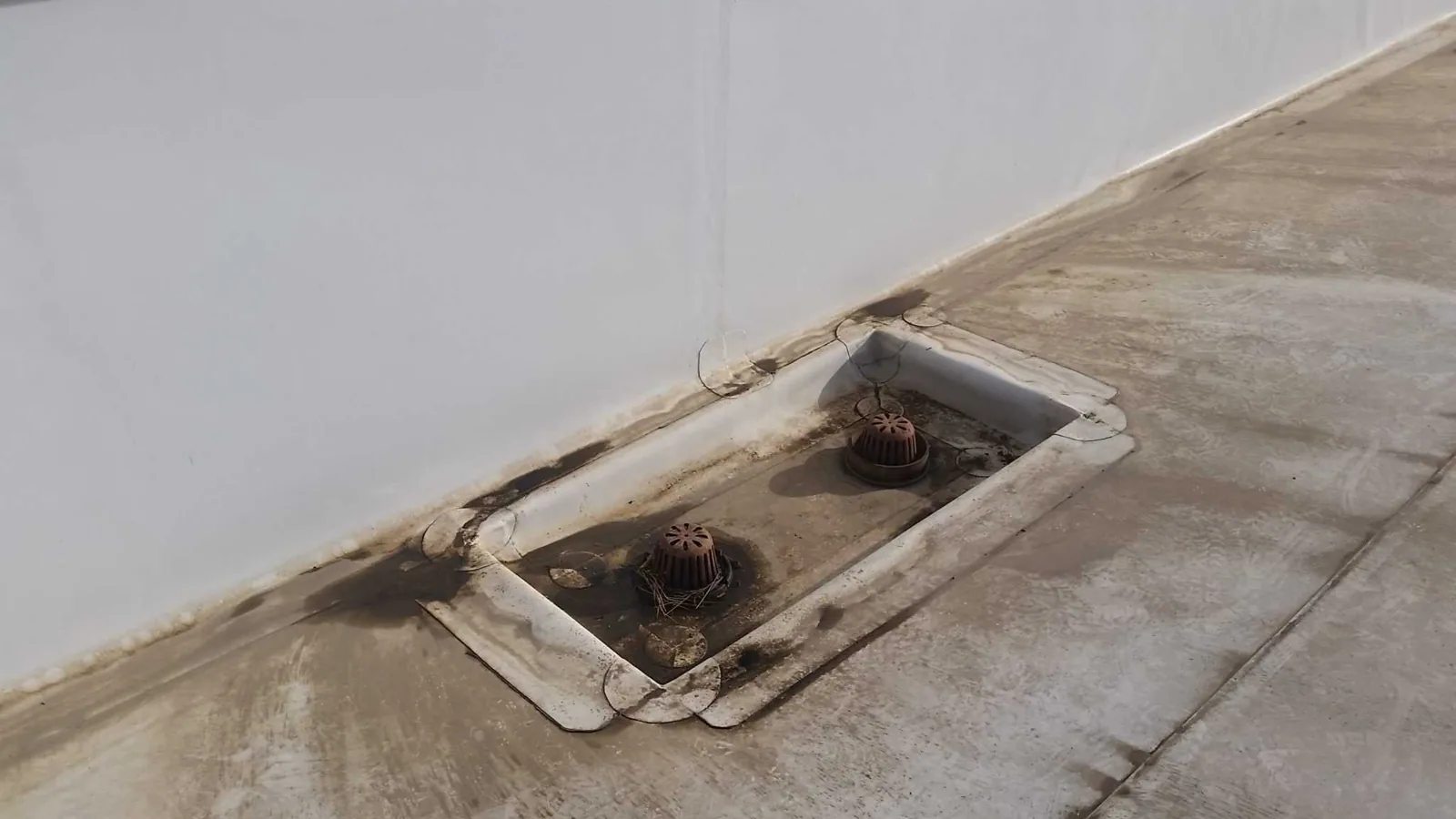
The exposed assessment may also identify a membrane opening or a failed flashing connection. Locate each finding and its supported correction separately. Fire restoration should retain the distinction between the observed roofing defect and the structural question assigned for qualified review.
Questions We Hear
Can the roof be inspected before the fire marshal releases the building?
We can document it from the ground and from adjacent buildings with a drone, which records the condition without anyone stepping onto the deck. Walking the roof waits for the release and an engineer's clearance. The aerial images are dated and become the first entries in the file.
How can you tell smoke staining from membrane damage?
Soot sits on the surface and can often be wiped or washed away, leaving a sound membrane beneath. Heat damage changes the sheet itself, with shrinkage, brittleness, blisters or melted edges. A border-zone sample adds evidence, but heat effects and contamination may require further evaluation beyond a core.
Does insulation have to be replaced after the firefighting water dries?
Not always, but readings taken weeks after the fire often show that water remains deep in the assembly. Insulation that has crushed, charred or soaked up smoke residue is removed. Dry, undamaged board can stay, and the file shows which was.
What should be photographed before a temporary cover goes on?
Every damaged area, the deck surface, any exposed framing, the membrane edges, drains and curbs, each with a date and a reference object. We also photograph the roof from several outside angles. Once the cover is in place, those views cannot be recreated.
Will a fire change the code requirements for the repair?
It can. A limited repair is treated differently from a re-roof, and a re-roof submitted to St. Paul's plan review brings the energy code insulation requirements into play. We note the scope early so the permit path and the budget are known before work begins.