
Roofing for Real Estate Investors and REITs in St. Paul, MN
Core samples, moisture surveys and dated condition reports for investors, owners and REITs buying, holding or selling commercial buildings in St. Paul, MN.
Request a Roof Assessment
Real Estate Investors and REITs
The page of our file that an investor reads first is the core sample log. Each entry gives a position on the roof, the layers found at that spot, whether the insulation was dry or wet, and the date and weather on the day it was cut. For a buyer in St. Paul, MN those entries turn an unknown roof into a set of measured facts before the closing clock runs out. A reserve needs the whole condition assessment, access costs and the planned ownership period. Extensive moisture may justify replacement, but no fixed fraction or clean sample log determines the underwriting allowance by itself. We build that record through due diligence roof surveys that fit inside a diligence window, and we write it so a lender, an insurer or the next buyer can read it without us in the room.
Sequencing a Survey to Fit a Short Diligence Window
A diligence window is short, so the survey follows a set order. A walk comes first, with photographs of every drain, seam line, curb and edge. An infrared moisture survey comes next, scheduled when the assembly, weather and temperature contrast support interpretation. Suspect thermal patterns are checked against field readings and selected openings, because temperature alone does not prove moisture. Sampling covers suspect locations, control areas and distinct roof assemblies as the survey plan requires, and each cut is patched and dated before we leave.
The deliverable is a report with a roof plan, the photographs, the readings and a rating for every area. It separates maintenance items from repairs and from signs that a roof is near the end of its life. We do not call a roof sound or failing from the surface alone, because a tired-looking membrane may sit on dry insulation, and a clean one can hide a wet layer beneath.
Reading New Supply as a Question About Your Own Roof
Twin Cities industrial vacancy reached 5.4 percent in the third quarter of 2025, and about 7 million square feet of new industrial space was under construction. Tenants shopping that market compare buildings, and the roof record helps answer their maintenance questions without treating patch count as a condition rating. Sportsman's Guide vacated 422,727 square feet at a St. Paul location that quarter, and Lumbermen's left 177,935 square feet at the logistics park in Cottage Grove.
The 2025 record reported an Amazon distribution center project at the former Thomson Reuters campus in Eagan, which shows how new supply arrives beside older stock. A landlord re-leasing space against that competition is better served by a dated condition report than by a verbal assurance. It tells a prospective tenant what the roof has and what has been repaired, and the same sheet supports an owner of logistics and 3PL space who is negotiating who pays for roof work.
Recording the Roof Before a Vacant Box Takes a New Use
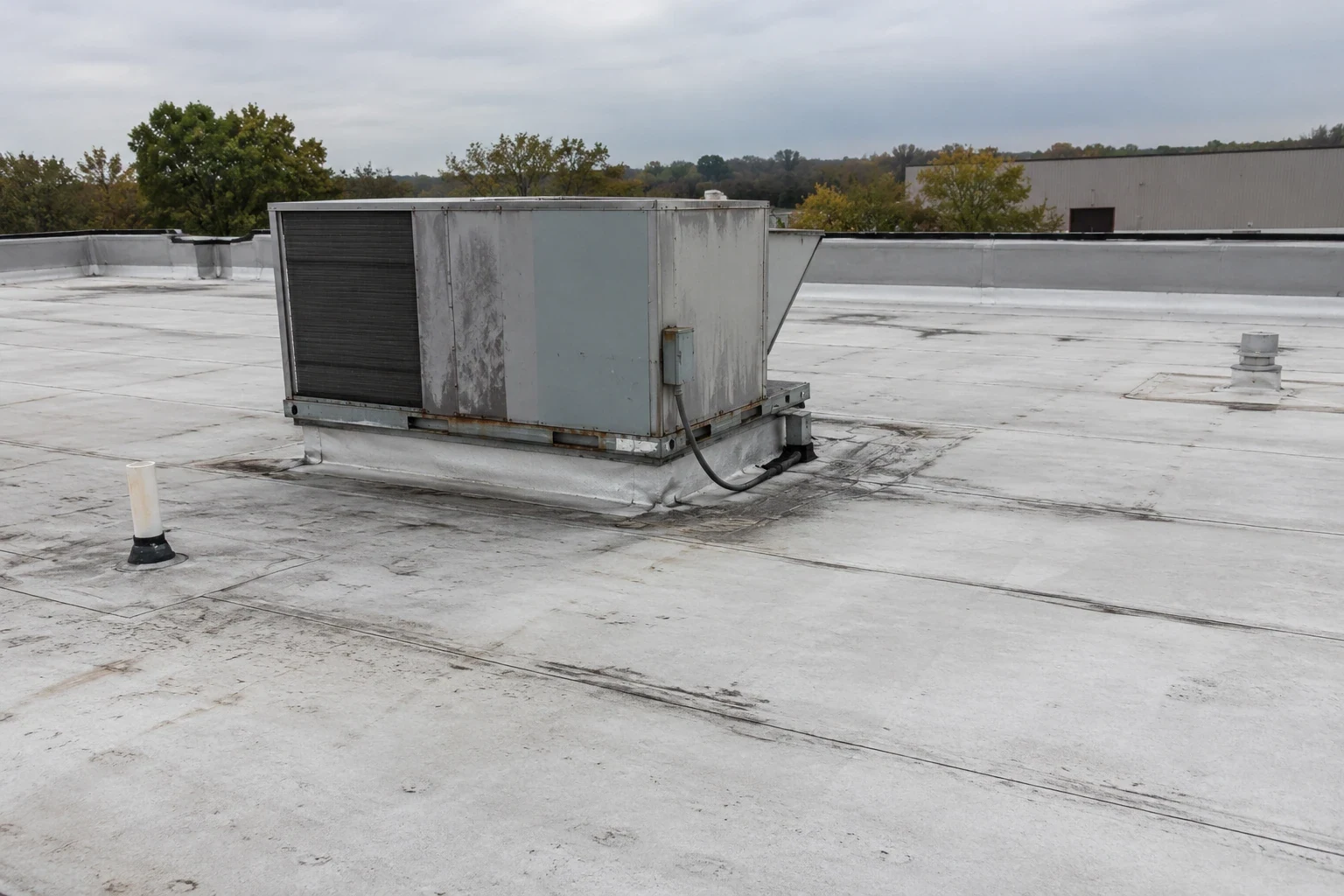
Conversions add rooftop work whether or not anyone planned for it. When the former Macy's building at Maplewood Mall opened as a Pan Asian Center in July 2025, a retail box began a new life under a new tenant, and a conversion may require equipment or utility changes. The approved tenant plans establish whether roof penetrations are involved; the building history cannot establish what was installed above it.
Before the tenant's contractors arrive, we record the membrane condition around the planned openings, with photographs and moisture readings that fix the starting state. Afterward we photograph every equipment curb and support as built. If a leak appears later at one of those details, the owner can show what the roof looked like before the work and which detail is now involved, which keeps the argument between landlord, tenant and trade contractor short.
Setting the Reserve Across Repair, Coating, Recover and Replacement
Cores and readings point to four paths. Repair suits a roof with dry insulation and isolated defects. A coating suits a sound membrane that needs a new surface. A recover also requires review of attachment, existing layers, code eligibility and the proposed assembly, in addition to moisture and structural capacity. Replacement is for wet insulation across a wide area or a membrane past repair. Cost moves with the roof area, access, the number of penetrations, the amount of wet insulation to be removed and whether tenants are in the building, and the report lists those drivers so a reserve can be built from them.
A re-roof also brings the energy code into the budget. The designer confirms applicable energy provisions for the actual work. Added insulation may change the reserve and curb details; repairs and partial replacements also need their scope-specific requirements checked. A buyer who sees that at closing sets a truer figure, and the findings flow into roof capital planning across the whole portfolio.
Assembling Papers a Lender or an Insurer Will Accept
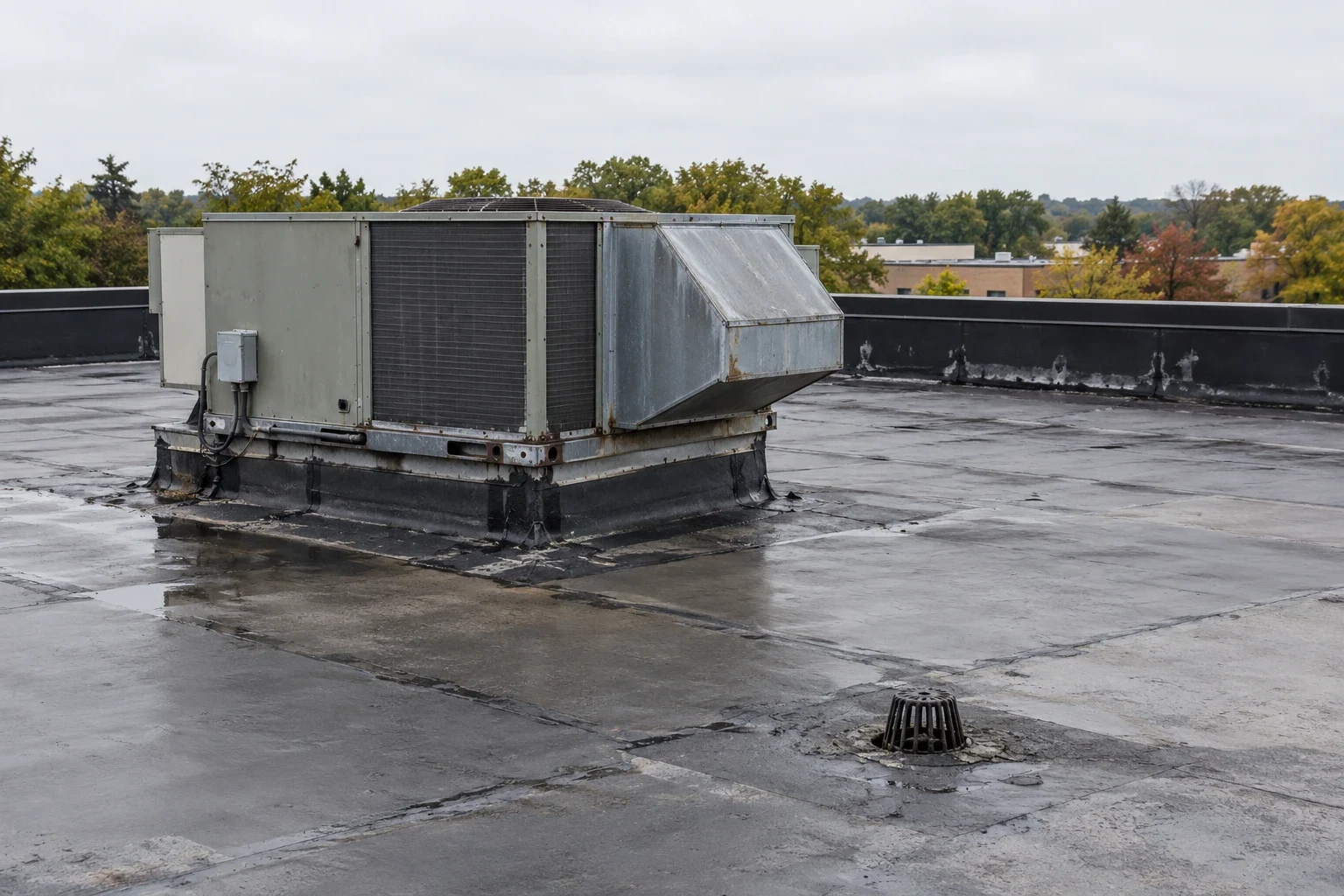
A lender and an insurer ask for much the same things: a current condition report, a record of repairs and the warranty papers. We assemble them into one file with dated photographs and moisture readings. Storms test that file. The May 2025 tornado outbreak affected west central Minnesota and western Wisconsin. Those regional reports cannot establish a tornado path or hail size at a St. Paul acquisition; the claim file needs property-specific observations. An owner whose roof was photographed before such a day can show an adjuster what is new.
Warranty papers sit beside the condition reports under roof warranty management, with notice deadlines listed for each building. An owner who also uses a management company can pass the same file to the property managers running day-to-day visits, and the record stays continuous when the building changes hands.
Questions We Hear
How many cores does a diligence survey need?
The count follows roof complexity and the questions the buyer needs answered. Cores go where the walk or the infrared pattern shows a problem, plus a handful of control points on areas that look sound, so the report can distinguish confirmed sample conditions from the survey estimate between openings. A roof with several sections needs coverage in each, because every section can carry its own history.
Can a roof report change the price of a building under contract?
It can, since the report states what the roof needs in terms a seller can check. Wet insulation, open seams and failed flashings appear with photographs and locations, which turns a vague concern into a negotiable item. Where the roof is sound, the same pages support the buyer's reserve and shorten the lender's questions.
What does a seller gain from ordering the survey before listing?
Control of the story. A dated report completed ahead of the sale shows buyers the roof as the owner recorded it, and any repair made afterward is logged with before and after photographs. A buyer may still find concealed or changed conditions. The earlier record gives both parties a basis for comparing those findings.
Which findings call for replacement rather than a coating?
Wet insulation across a wide area, damaged deck and a membrane that no longer holds adhesion in a test patch. A coating adds a surface; it does not dry insulation or restore a deck. Cores and adhesion tests show which condition applies, and we state the result in writing with the evidence attached.
How is a roof tracked across several buildings with different leases?
Each building keeps its own log, and a summary sheet lines them up: condition rating, open items, reserve and warranty dates. The lease terms that assign roof responsibility are noted beside each building, so a repair request is routed to the party identified by the owner and its lease advisers, and the photographs travel with the request.