
Infrared and Core-Cut Moisture Surveys in St. Paul, MN
Infrared scans and core-cut moisture surveys find wet insulation under St. Paul, MN commercial roofs and deliver a dated map you can price work from.
Request a Roof Assessment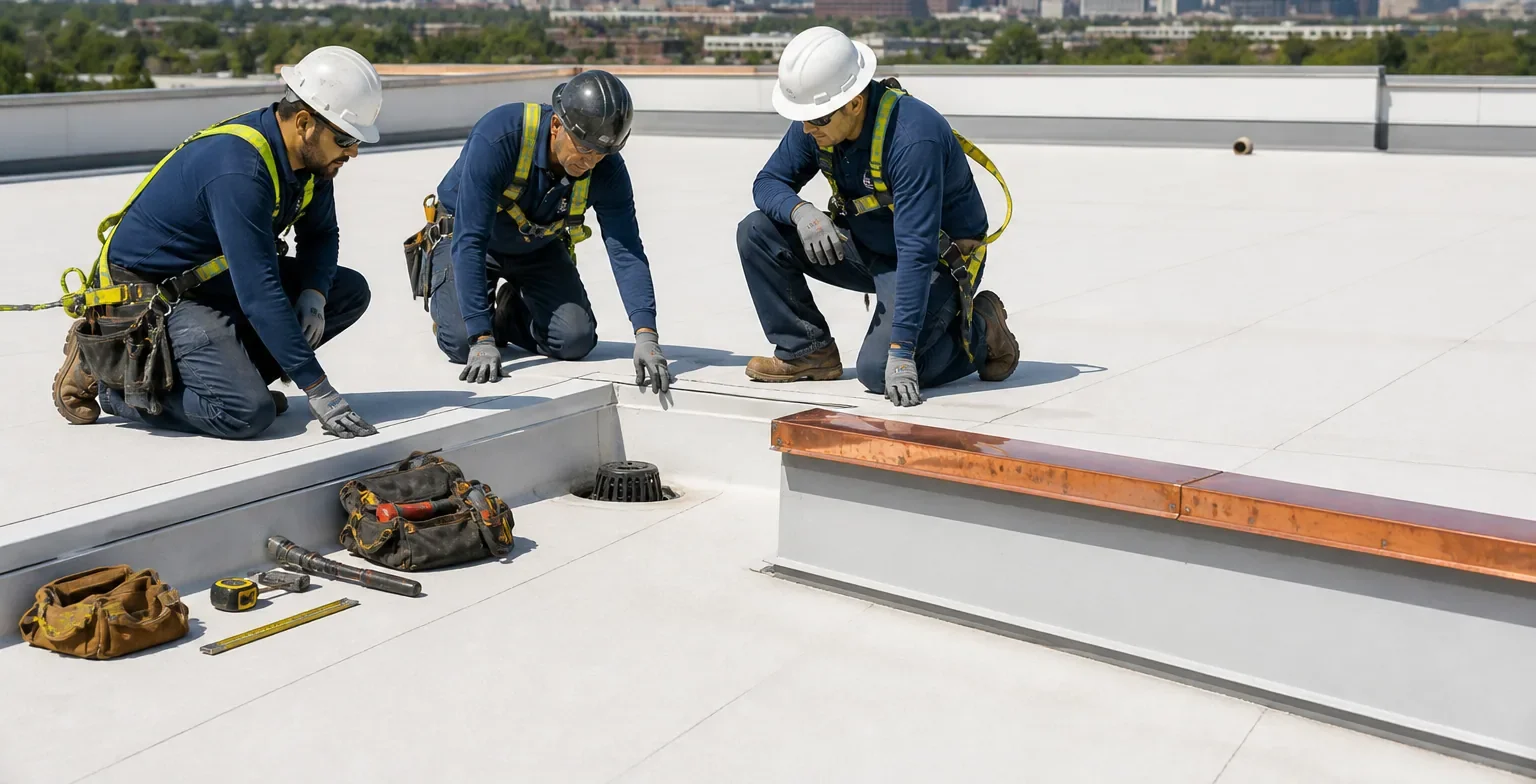
Infrared and Core-Cut Moisture Surveys
A moisture survey produces a map, and the map is only as trustworthy as the cores that check it. Water trapped under a roof membrane is invisible from the surface, yet it can soak insulation across a large part of the roof, add weight to the deck and ruin the thermal value of the assembly. On a St. Paul roof that goes through months of freeze and thaw, water in vulnerable materials can contribute to deterioration as freezing conditions recur. The survey estimates suspect moisture extent, confirms selected locations and puts its location on a plan that the owner can price and defend.
Scanning for Temperature Differences After the Sun Goes Down
Infrared imaging reads heat. After a sunny day, a dry roof gives up its warmth quickly in the evening, while wet insulation holds heat longer because water stores it. A thermal camera shows those warm patches as a pattern against the cooler dry areas. The scan is run when the roof surface is dry and conditions support a clear reading, which usually means the hours after sunset on a day with good sun and light wind.
We scan the full roof, mark the anomalies and record the weather and time of each pass. The scan does not prove water by itself, because insulation type, roof layers and surface changes can also produce thermal patterns. It is the first step in a measured process.
Checking Suspect Patterns With Samples and Readings
Each flagged area is checked with moisture instruments and, where the evidence calls for it, a small core cut. The core shows the actual layers, the thickness of each, and whether the insulation is dry, damp or saturated. We photograph the cut with a ruler, take a moisture reading at each depth and patch the opening the same day with compatible material.
Core samples also test the scan itself. If a warm patch turns out to be dry, the log says so and we recalibrate how we read the rest of the roof. If a suspect area is wet, we cut further out to find the edge of the wet zone. That systematic sampling is what turns a thermal picture into a defensible inspection finding.
Drawing the Wet-Insulation Map and Its Boundaries
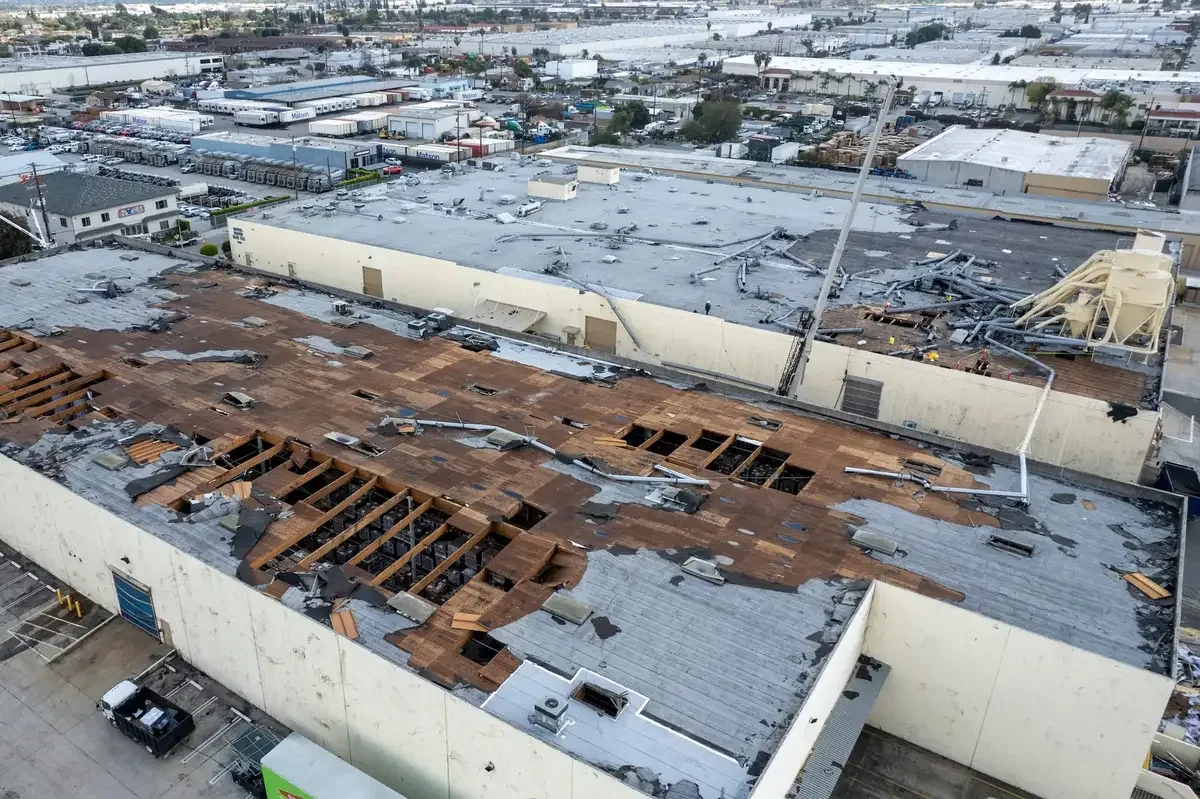
The product of the survey is a roof plan with wet areas outlined and numbered. Each outline is supported by the thermal image, the moisture readings and the core cuts used to check estimated boundaries. A table lists the area of each wet zone and the layers affected, so quantities can be priced with the sampling limits and concealed-condition procedure stated.
The map shows more than where the water is. Moisture near drains or walls identifies details to investigate, but water can migrate from elsewhere. Field-wide moisture may reflect several leaks or condensation, so distribution alone does not establish membrane-wide failure. That pattern helps us recommend either a targeted repair or a larger project, and the same mapping underlies a due diligence roof survey for a buyer or lender.
Understanding Where Infrared Reaches Its Limits
Infrared is a strong tool but not a universal one. Ballasted roofs, heavily graveled surfaces, thick coatings and some metal systems can mask thermal differences. Snow and standing water on the surface distort readings. A cloudy day or high wind can flatten the contrast.
Where infrared will not give a clear answer, we rely more heavily on probe readings and cores taken on a grid. Wherever a roof is hard to read, whether at a retail center such as Rosedale Center in Roseville or at an industrial building, a grid with a measured spacing gives coverage that is both repeatable and defensible. We tell the owner at the start which method suits the roof, and we write down any area the survey could not read well.
Trimming the Replacement Scope to What Is Actually Wet
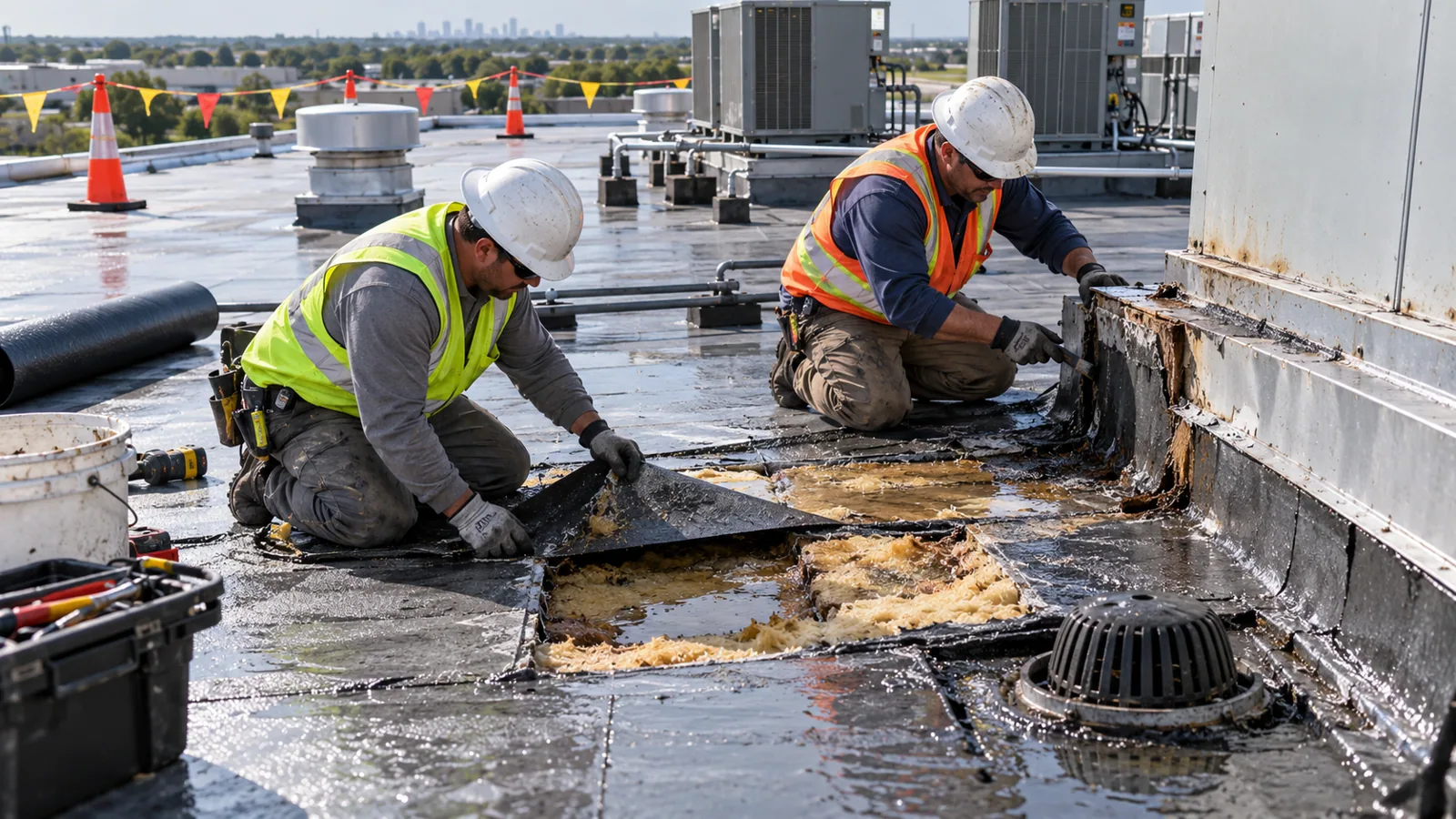
A useful result is a removal scope whose quantities and limits are clear. When wet insulation is localized, selective replacement can be evaluated against the condition and suitability of the retained assembly. Selective removal may be feasible where the retained assembly remains suitable, and a roof that looked finished may qualify for a recover in its dry areas.
Widespread confirmed saturation informs a replacement review alongside attachment, membrane condition and supporting findings. In both cases, the owner and any bidder start from the same measured quantities, and later change orders for wet insulation can be settled against the map.
Our report distinguishes the interpreted moisture map from final removal limits until the roof is opened and verified. Each sample represents material at its test opening; nearby dry readings do not establish the condition of every concealed layer. We identify unsampled boundary areas and document additional findings before recommending whether removal should expand.
Surveying Roofs With Heavy Insulation and Cold Interiors
Buildings that hold a cold interior face higher risk, whether a cold storage warehouse or a food facility, and a tenant moving refrigerated use into an industrial-zoned building, such as those at Beacon Bluff, raises the same question. Warm moist air moving into a cold roof assembly can condense and soak the insulation from below, even when the membrane is intact. A survey can identify moisture requiring investigation of air leakage and condensation. Assembly information and mechanical conditions are needed before a vapor-control detail is selected.
For owners of cold storage roofs and other temperature-controlled buildings, a survey every few years is a sensible part of the maintenance record. For a re-roof, the designer checks applicable energy provisions and evaluates the retained insulation within the proposed assembly. Dry samples do not establish thermal compliance or the suitability of a new vapor-control detail.
Survey conditions matter. Confirm that the roof surface has had a suitable thermal cycle, the scan area is not obscured, and the building’s operating pattern will not confuse the comparison. Mark suspect patterns on a roof plan, then select confirmation points that represent both the signal and nearby control areas. Record the instrument, conditions and sample results together so the owner can see why a boundary was drawn and where uncertainty remains.
Questions We Hear
Why is infrared not enough on its own?
Heat patterns can come from causes other than water, such as roof layers or surface debris. Cores and moisture readings confirm what the scan suggests, and they check the sampled conditions and help estimate removal boundaries. The report identifies the confirmation methods used and the limits of the sampled evidence.
How is each sample opening closed and recorded?
Sample openings receive compatible closure under the agreed investigation procedure. The log identifies each location, records the layers and preserves photographs of the completed patch. Access and surface conditions are reviewed before sampling begins, so the closure method is ready for the assembly being tested.
When is the best time to run a survey?
The deciding factor is a dry roof surface and clear conditions. Late spring through early fall usually offers the right weather, with the scan done after sunset. Snow cover or a wet roof will postpone the work.
How does a survey change what I pay for a new roof?
It estimates moisture-related removal. The new assembly may also require removal of dry materials, and final boundaries are checked when the roof is opened. A bidder prices from the same measured quantities, and any wet insulation found beyond the map can be handled against the record.
Can a survey help with a purchase or a loan?
Yes. A buyer or lender wants to know whether the roof hides water. The dated map records findings and investigation limits for the transaction file. Access, survey conditions and requested testing determine the schedule.