
Commercial Roof Leak Repair in St. Paul, MN
Commercial roof leak repair in St. Paul, MN uses photographs, detail checks and moisture findings to document confirmed defects and the repair work.
Request a Roof Assessment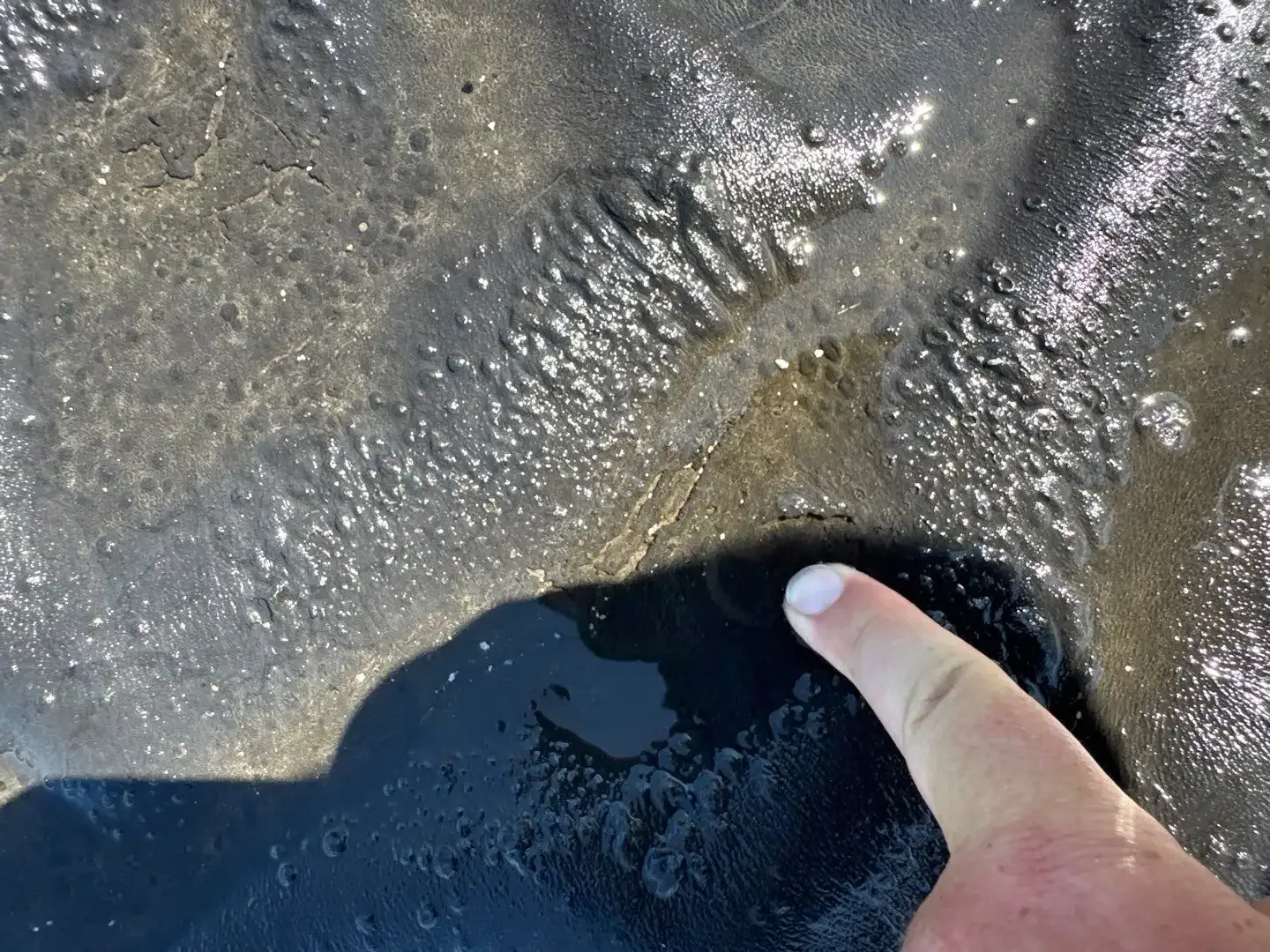
Commercial Roof Leak Repair
A stain on a ceiling tile marks where water ended up, and does not reliably locate the entry point. On a flat or low-slope roof, water can run along the deck, down a column or through insulation for many feet before it shows itself inside. The first thing we record on a leak call is the interior damage: tile locations, the reported stain history, any dripping pattern and the moisture reading at each point. Those readings become the first line of a dated record, and they give us a trail to follow upward to the roof opening that is actually responsible.
Tracing the Path From the Ceiling Stain to the Roof Opening
Once the interior is recorded, we work up and across the roof. The search follows the likely routes of water: the nearest drain, the closest wall flashing, any penetration or curb within the area, and the seams that cross it. We check for ponding that could be pushing water through a weak spot and for sealant that has pulled away from a pipe or a termination bar.
When the cause is not visible, we expand the search with surface moisture readings and an infrared and core-cut moisture survey that can identify suspect moisture patterns under suitable conditions. Follow-up readings and openings confirm those patterns; they do not trace an entry route on their own. Each suspected entry point is photographed and ranked, so the final repair addresses the actual source.
Reading the Common Causes Behind St. Paul Roof Leaks
Local conditions shape which leaks occur. A roof under a heavy winter load can have seams stressed by the combination of weight, thermal movement and traffic from snow removal. Spring melt exposes any drain that is blocked or slow. During warmer months, wind and hail can expose weak seams, flashings or edges. After a reported storm, compare the timing with the building record and inspect the affected roof; weather alone does not establish damage or cause.
Leaks on a commercial low-slope roof tend to start in one of these places:
- Failed flashing at walls, parapets and rooftop equipment curbs
- Open seams in single-ply or modified bitumen membranes
- Cracked or dried sealant around pipes and vents
- Debris-blocked drains and scuppers that cause standing water
- Impact damage from hail or fallen limbs
Where standing water is part of the cause, ponding water repair has to address drainage as well as the membrane.
Sealing the Entry Point and Recording the Fix
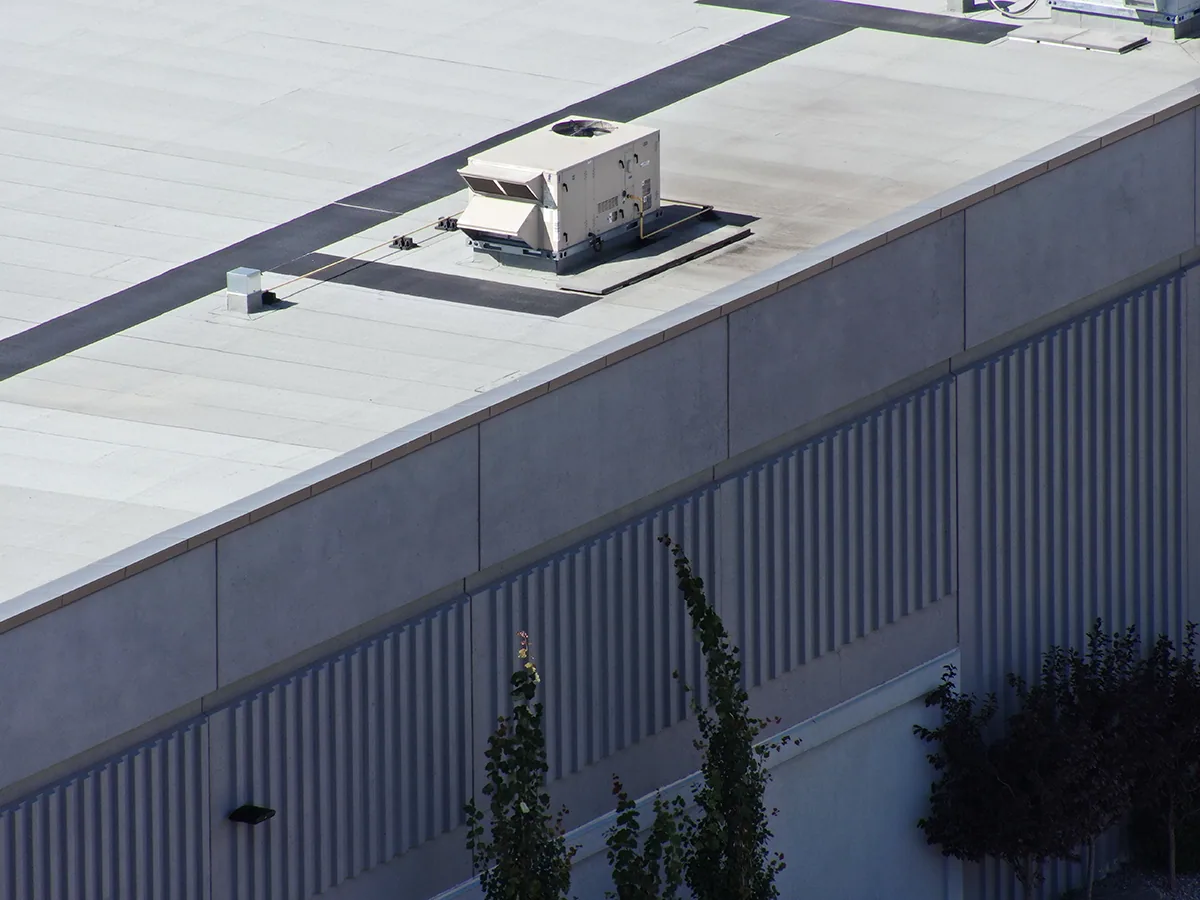
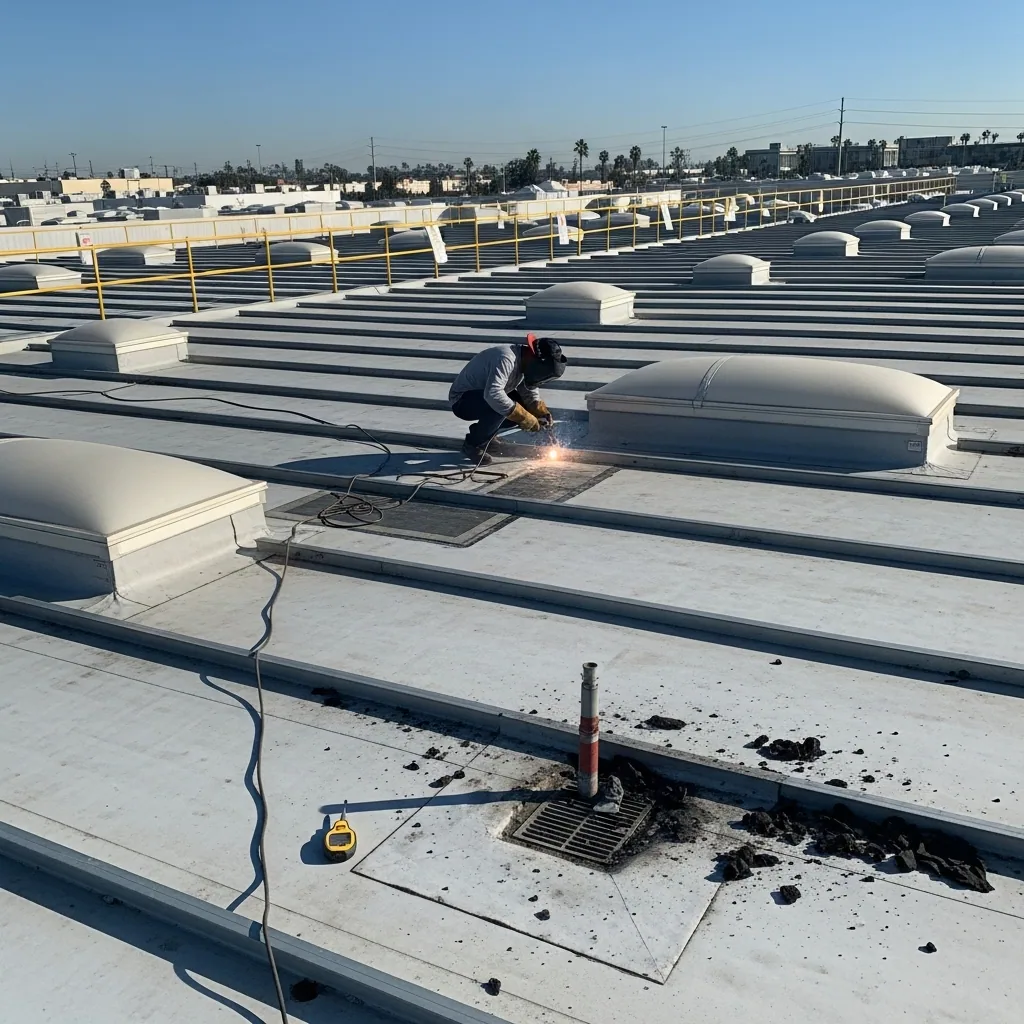
The first visit prioritizes feasible protection and confirmation of the defect. Repair performance may need a later weather check rather than an immediate claim that the leak is solved. We make a repair suited to the membrane and conditions, and we photograph the area before, during and after. The repair material, the method and the weather at the time are logged along with the date.
If the leak is active and the weather rules out a permanent repair, a temporary measure is installed and labeled as temporary in the record. A permanent repair is scheduled once conditions allow. Where the water is coming in fast or the building is at risk, the response moves to emergency roof repair, with an emergency contact route and protection assessed against safe access and weather conditions.
Before opening concealed layers, agree on the size and location of any test area, how water will be controlled during the work, who can authorize added removal, and how the surface will be closed if findings differ from expectations. A repair proposal should connect its boundary to observed conditions and identify adjacent areas that were not tested. That lets the owner compare a defined repair with further investigation before either expands.
Separating Ice Dam Leaks From Membrane Leaks
Some winter leaks in the Twin Cities involve ice at the roof edge. Heat flow, sunlight or interior air leakage may contribute to melting; water can refreeze at a colder eave and back up against edge details. That water can back up under edge metal and flashing and enter the building even when the membrane itself is sound. Heat loss can contribute, but solar warming, blocked drainage and edge details also need investigation. The thaw sequence is recorded with the observed conditions.
The distinction matters because the fix differs. A membrane repair will not stop an ice dam, and an ice dam does not mean the membrane has failed. We record the conditions at the eave, the insulation findings and the timing of the leak, and the report explains which cause the evidence supports. Once water has damaged the deck or edge metal, snow and ice roof damage repair is a separate scope.
Tracking Leaks at the Junctions of Older and Converted Buildings
On older buildings, including converted structures like the Jacob Schmidt Brewery lofts on West Seventh, leaks often arise at the junctions: where a lower roof meets a taller wall, where a chimney or stair tower penetrates, or where masonry has weathered behind the flashing.
We map each junction, probe the joints and counterflashing, and note whether the leak originates in the roofing or in the wall above it. The findings help the owner decide between a localized repair and a broader scope for the whole roof, whether the building sits in West Seventh or among the 1870s-to-1920s properties of Lowertown.
Preparing the Leak Record for Insurers and Owners
Every leak creates a record that someone may need. If storm damage is involved, an adjuster will ask for the date of the event, photographs of the damage and evidence of the repair. A building owner may need the same file for a tenant dispute or a lender. We assemble the interior photographs, the moisture readings, the roof findings and the repair log in one dated packet.
When the cause points to a storm, the same packet feeds roof insurance claim assistance. When it points to wear, the same file supports a maintenance or planned repair discussion.
Questions We Hear
How quickly should I respond to a commercial roof leak?
As soon as the leak is found, because water keeps working on the insulation and deck even when the interior stain is small. Wet insulation loses its value and can lead to deck damage. We recommend documenting the interior first, then arranging a roof visit so the entry point is located and sealed.
Why does the leak not match the spot on the roof above it?
Water travels along the deck, the insulation and the framing before it drops into the building. The point where it appears inside is rarely directly below the entry. Moisture readings and suitable thermal observations narrow the investigation, while direct detail checks and selected openings test possible sources, which is why a roof visit is more reliable than patching over the stain.
Is a leak always a sign that the roof needs replacing?
Not at all. One entry point on an otherwise dry roof calls for a targeted repair. Several leaks, wet insulation across multiple readings or repeated failures at seams suggest a bigger issue. The dated record shows which situation applies.
Who pays when a leak damages tenant space?
That depends on the lease and the insurance coverage, which are matters for the owner and counsel. What we supply is the evidence: dated photographs, readings and the repair record. Clear documentation shortens the discussion for everyone involved.
Can a leak be fixed in freezing weather?
A compatible temporary repair may be feasible when access and product conditions permit. Permanent repairs may need warmer conditions for adhesives and welds. We label each repair as temporary or permanent in the record and schedule the final work when the roof can take it.