
Ponding Water Roof Repair in St. Paul, MN
Ponding water roof repair in St. Paul, MN: measured depths, drain checks and dated photographs before we choose tapered insulation, new drains or a patch.
Request a Roof Assessment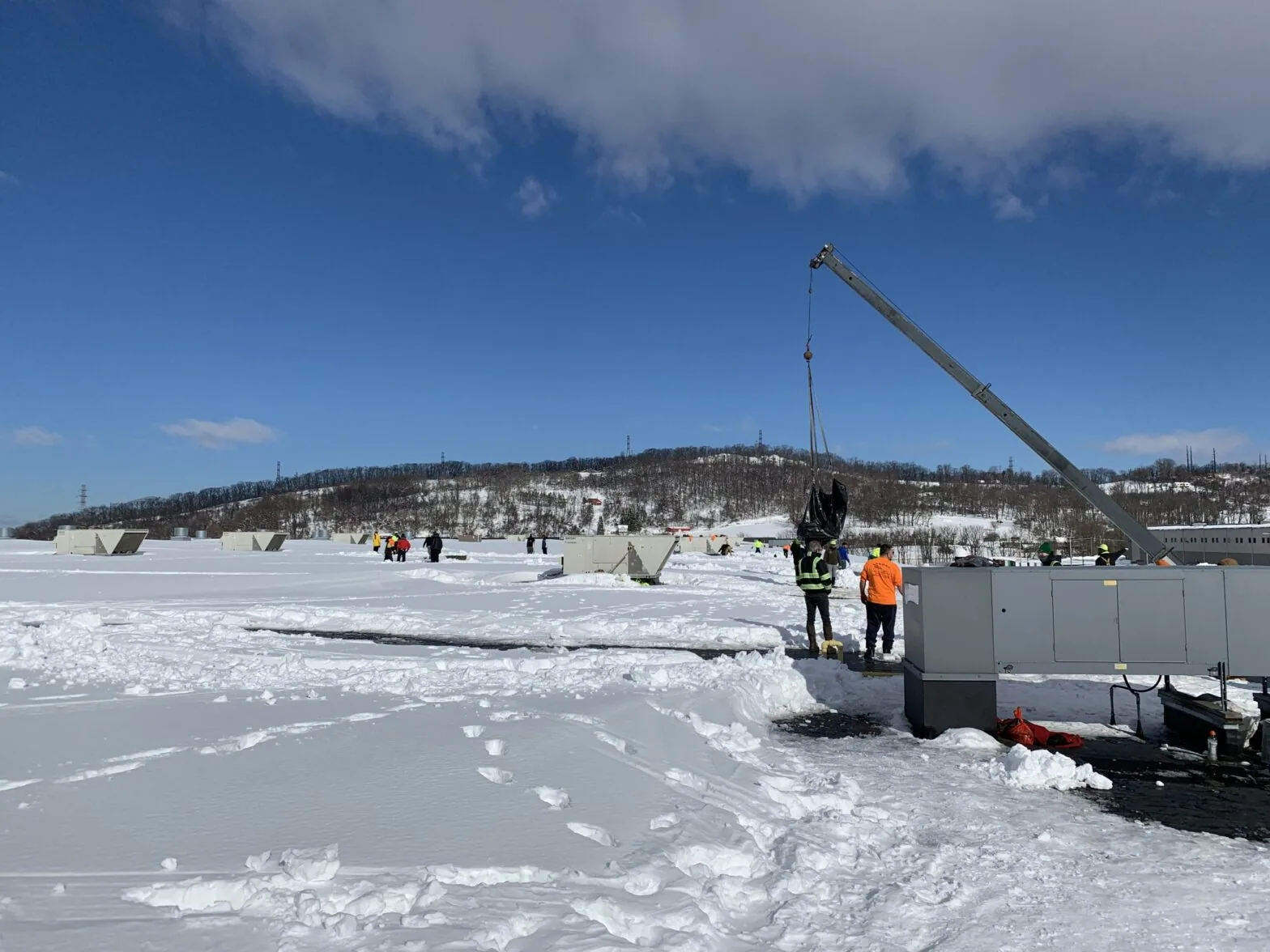
Ponding Water Roof Repair
A tape measure and a photograph taken two days after the last rain say more about ponding than any forecast. Water remaining after a suitable drying period warrants investigation. Forty-eight hours is a common drainage reference, but warranty language and weather conditions must be checked separately, and on a St. Paul, MN roof it is worth catching early. Each inch of standing water presses on the deck with a little over five pounds per square foot, and in this market that weight arrives on top of snow, not instead of it.
We begin by measuring the depth and outline of every pond, marking its edge with chalk or tape, and photographing it with a reference object for scale. That dated record supports investigation of blocked drainage, substrate geometry and insulation condition, and it tells the owner which of those is worth paying to fix.
Mapping Standing Water at the Drains After the Melt
Thaw timing matters more to a drainage inspection than a seasonal snowfall average. Ice can remain in an outlet while water is already moving across the roof, so the observation log records both conditions. The first warm week after a hard freeze is when ponding shows itself, because meltwater runs toward drains that may still be plugged with ice or last autumn's leaves. We visit those drains first, clear what we can, and photograph each bowl and strainer as found.
Then we walk the field. A pond that sits directly around a drain suggests the drain body sits high or the sump pan is missing. A pond between drains calls for a level survey and substrate review; insulation shape or slope design can resemble deck deflection. A long, shallow pond along a wall points to a missing cricket or a slope that never reached the edge. Each shape suggests a different repair, so we draw them on a roof plan instead of describing them in general terms. Every repair to roof drains and scuppers begins with this map.
Weighing Pond Depth Against the Snow Already on the Deck
In Ramsey, Dakota and Washington counties the cited ground-snow design value is 50 psf. It must be converted to building-specific roof loads; it is not a comparison limit for a measured pond or drift. A pond that forms where a drift sits adds to weight the deck is already carrying. The Twin Cities logged 69.8 inches in 2013-14, well above normal, and poor drainage requires review of retained water and the actual structural design, rather than an assumed capacity margin.
Structural capacity belongs to the owner's engineer. When a pond is deep, when the deck visibly sags beneath it, or when the steel shows corrosion at the underside, we record those observations with photographs and recommend that the owner's engineer review the framing before any new load is added. That recommendation, and the date it was made, stay in the file.
Reading Membrane Wear Inside the Ponded Area
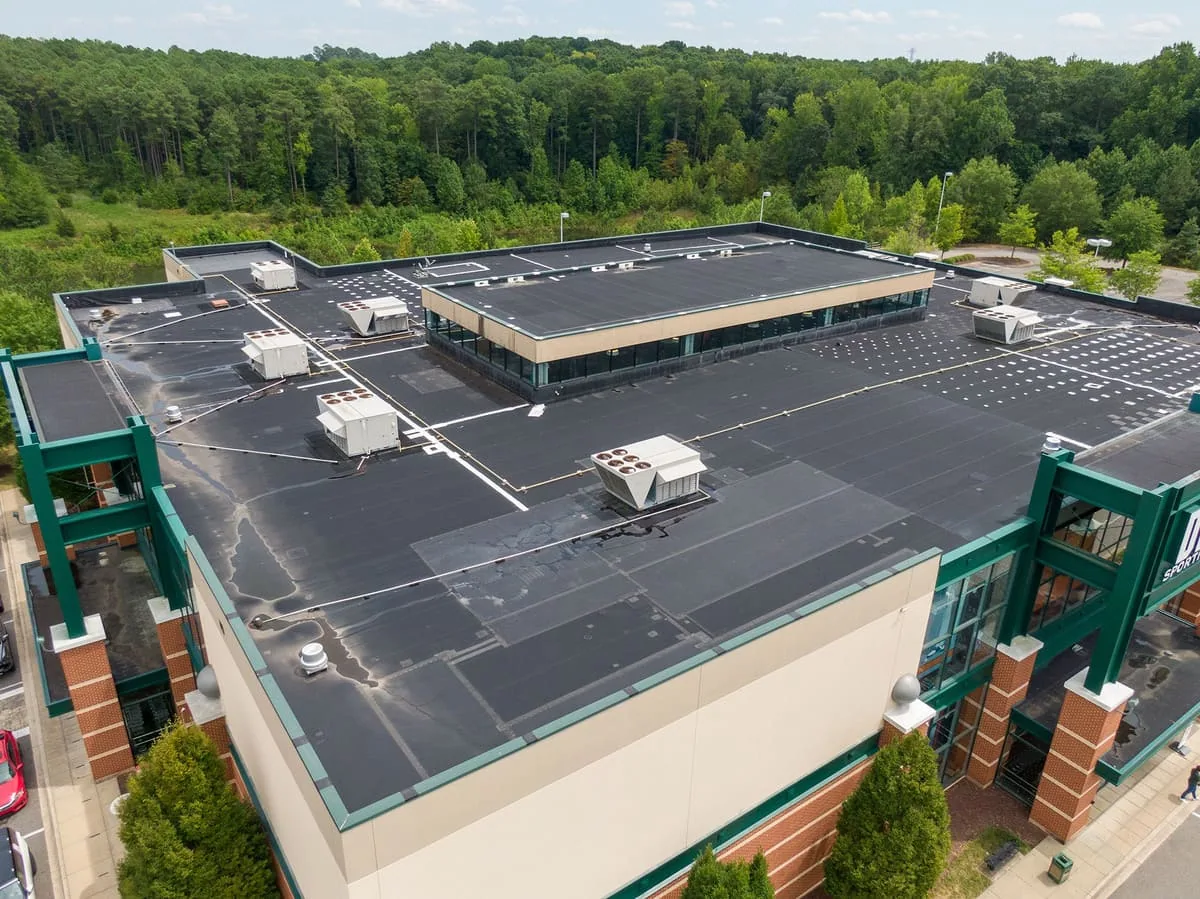
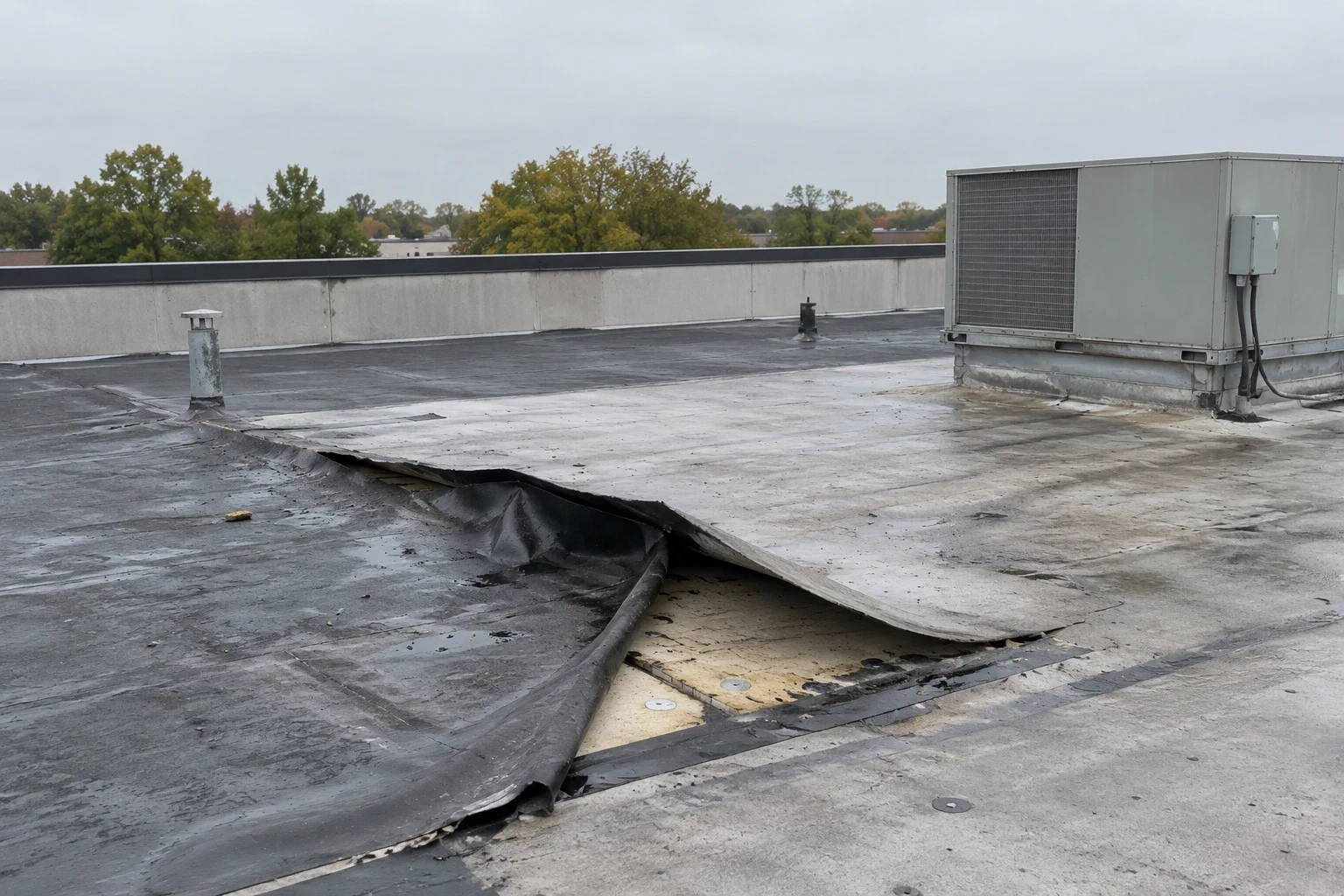
Water that stays on a membrane changes it. We look for dirt rings that show the old waterline, algae and mineral staining, a chalky surface where the top layer has weathered, and softened or blistered areas in a coating. On a modified bitumen roof, standing water speeds the loss of surface granules and can open lap seams. On a single-ply sheet, the field is usually durable, but the seams and flashing at the edge of the pond take most of the strain.
Steel decks move through the year as they heat and cool, and a deck that deflects under a heavy snow can leave a permanent dip, so deck type is the first question on the industrial buildings among the 92 businesses in the Port Authority's Energy Park. At the University of St. Thomas, where the main campus covers 78 acres along Summit Avenue and the Schoenecker Center opened in 2024, each building's roof gets its own pond record. Moisture readings and core samples inside and outside each pond tell us whether the insulation beneath has stayed dry.
Choosing Between Tapered Insulation, New Drains and Resurfacing
The repair follows the cause. If the problem is a blocked or poorly set drain, we assess the outlet and plumbing correction before proposing larger alterations. If a dip in the deck is localized, tapered insulation can be laid to push water toward the nearest drain, and wet or unsuitable crushed insulation is removed rather than concealed by cover board. Replacement board and the membrane follow the approved assembly. Where several ponds point to a roof that never had adequate slope, adding drains or scuppers may be better than trying to reshape the whole surface. Which of those choices fits depends on what the roof insulation and cover board look like under each pond.
The design review establishes applicable insulation provisions and how the tapered assembly is evaluated for compliance. Thickness alone does not establish its approved thermal performance. A move in drain size or position also belongs in the submittal that goes to the city's plan reviewers.
Keeping the Ponding File for Warranties and Buyers
Many manufacturer warranties limit or exclude coverage for damage from standing water, and the wording differs from one manufacturer to the next. A ponding record showing when the water first appeared, what we measured and what we corrected can protect a claim and can answer a buyer's questions during due diligence. Kept with the warranty paperwork under roof warranty management, that record is on hand when a claim or a buyer's question arrives.
For a landlord in the Midway, where University Avenue is the main commercial corridor, weighing a coating or a partial re-roof, the file also marks which ponds were present before a repair and which formed afterward. If a leak develops at a ponded seam, the same dated map points to the entry for seam failure repair, and the same goes for flashing failure repair along the edge of a pond.
Questions We Hear
How is persistent standing water evaluated after rainfall?
Forty-eight hours is a common investigation reference under suitable drying conditions. A shorter-lived pool is not automatically acceptable, and each warranty has its own terms. We measure the same pond at several visits, because a puddle that grows shows a drain or deck problem that a single look can miss.
Does a roof that ponds only after snowmelt need work?
Often yes. Snowmelt can reveal blocked or frozen drainage, and ponds that appear only then usually point to a partly blocked drain or a deck dip that rain alone does not reveal. We photograph the melt period and compare it with a dry-season walk.
Can new drains be added without replacing the roof?
In many cases they can. A new drain needs a clear path through the deck, the insulation and the interior, along with a plumbing connection, so we check what is below before cutting. Where that is not practical, scuppers through an edge wall or tapered insulation to an existing drain may serve the same purpose.
Why does one corner of my warehouse pond when the rest drains?
That corner has usually settled, or the drain nearest to it sits above the lowest point of the deck. Column movement, a deflected purlin or old insulation that compressed under foot traffic can all create the dip. A level survey and samples help distinguish insulation geometry from structural movement; framing concerns go to the engineer.
Will a coating stop a roof from ponding?
A coating does not move water, and ponding tolerance is product-specific. Some coatings are unsuitable for sustained immersion. If the dip is shallow and the membrane is sound, a coating can extend the roof's service. If the pond is deep or the insulation is wet, the slope has to be corrected first.