
PVC Roofing in St. Paul, MN
PVC single-ply roofing in St. Paul, MN for rooftops exposed to grease and exhaust, with weld testing, flexibility checks and a dated record of each repair.
Request a Roof Assessment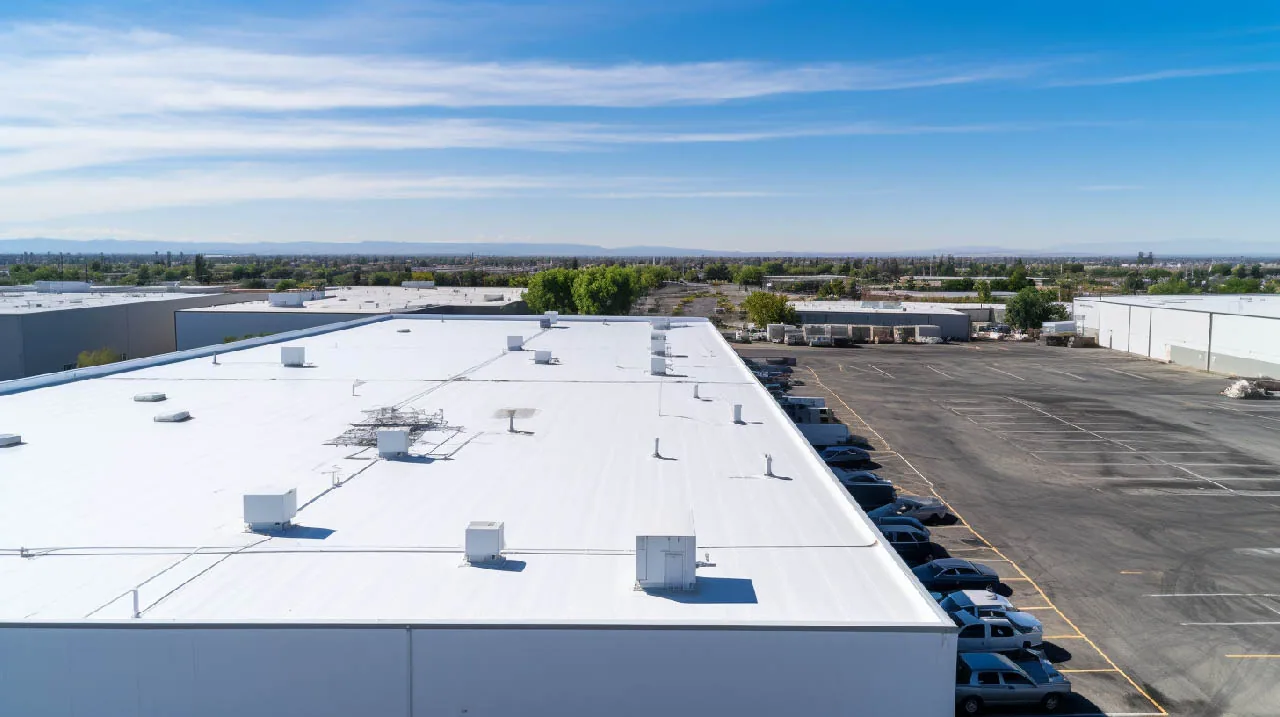
PVC Roofing
A core sample cut through a PVC roof shows a pale sheet with a layer of reinforcing fabric inside it, and the first thing we record is how stiff that sheet has become. Polyvinyl chloride is made pliable with plasticizers, and over many seasons of sun and cold some of that softness leaves the material. We bend a small test edge, measure the sheet where a core was taken, and photograph the cut with a date. The observation contributes to condition assessment alongside seams, attachment and moisture. An informal bend cannot establish remaining years of service.
Measuring Flexibility, Thickness and Weld Strength on an Aged Sheet
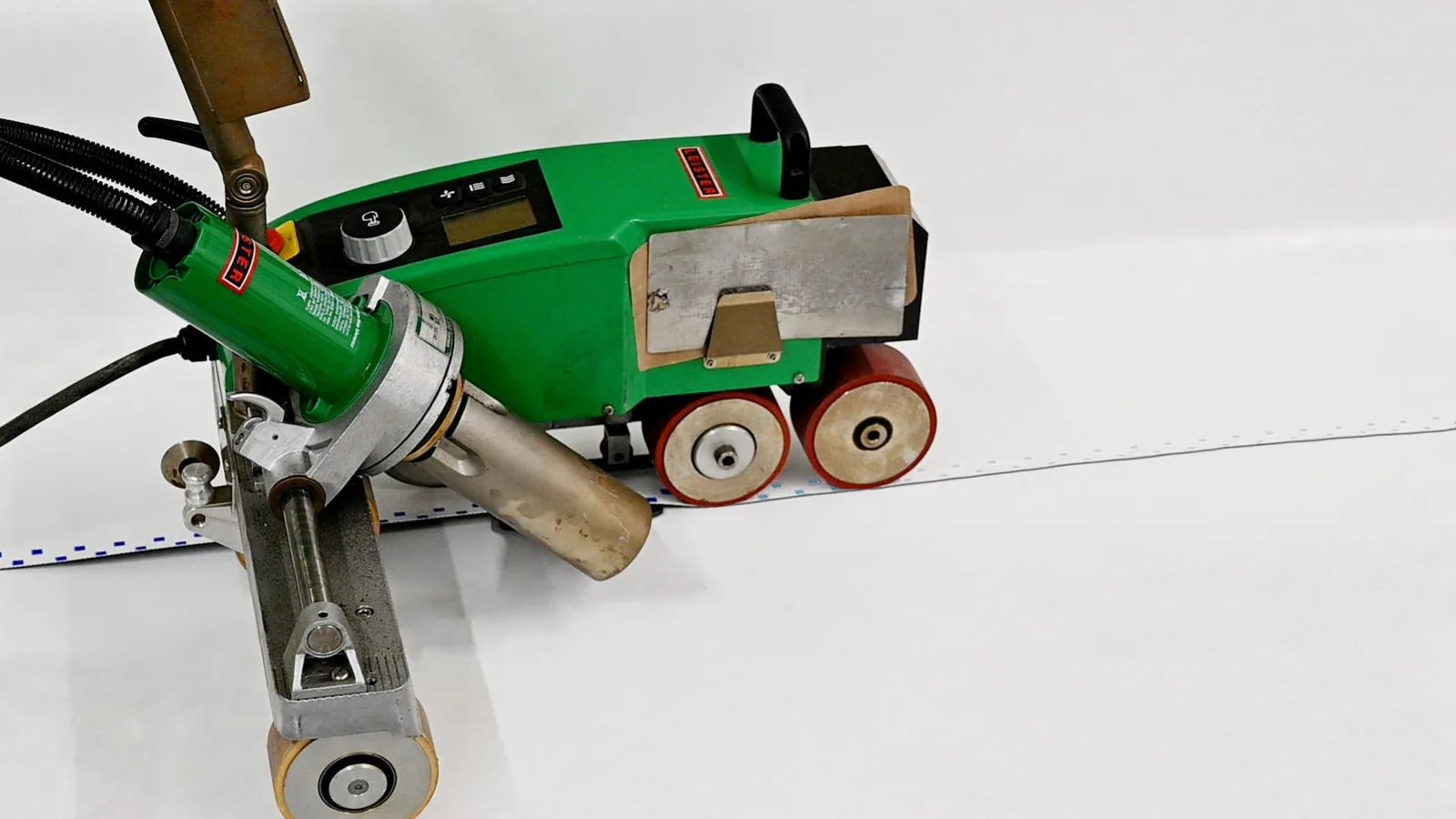
PVC seams are fused with hot air, and a well made weld is at least as strong as the sheet around it. The test is done with a probe along the lap and, where a repair is planned, with a small cut sample pulled by hand to see which gives first, the weld or the membrane. A weld that peels cleanly is logged with its position. Test acceptance follows the manufacturer's method and criteria; tearing aged sheet is not automatically proof of a sound weld.
The condition of the surface is recorded the same way. Chalking, hairline cracking near flashings, and darkened rings under equipment drips are each photographed and placed on the roof plan. Where cracking has started, we take moisture readings around it to find out whether water has already reached the insulation, because readings help identify suspect locations, which need confirmation before a surface mark is classified as active entry.
Placing PVC Where Fats, Exhaust and Chemicals Land on the Roof
The reason owners ask for PVC over other single-ply sheets is its resistance to grease, oils and many airborne chemicals. Kitchen exhaust, laboratory fans and process vents can drip or settle on a membrane for years, and some roofing materials swell or soften under that exposure. A hospital such as Regions Hospital in downtown St. Paul, a teaching facility with more than 550 beds, is the kind of building whose facility team must coordinate roof equipment and sensitive departments. Its bed count does not establish equipment density or roof area. St. John's Hospital in Maplewood raises the same questions about where exhaust lands and what it does to the sheet below it.
We map every discharge point on a roof and note which ones deposit residue. If a new tenant installs a kitchen hood, the map is updated and dated, so there is a clear record of when the exposure began. That helps later if a manufacturer or an insurer asks why a section of membrane has aged faster than the rest. Owners weighing a sister product will also look at KEE membranes, whose chemical resistance must likewise be checked against the specific discharge.
Welding Flashings Around Equipment, Drains and Foot Traffic
Much of a PVC roof's real life is lived at the details. Prefabricated corners, pipe boots and curb flashings are welded to the field sheet, and each weld is a place where the membrane changes direction. We check them for pinholes, open edges and bridging, which is membrane pulled across a corner without enough slack to survive winter movement. Details found open are photographed before they are touched.
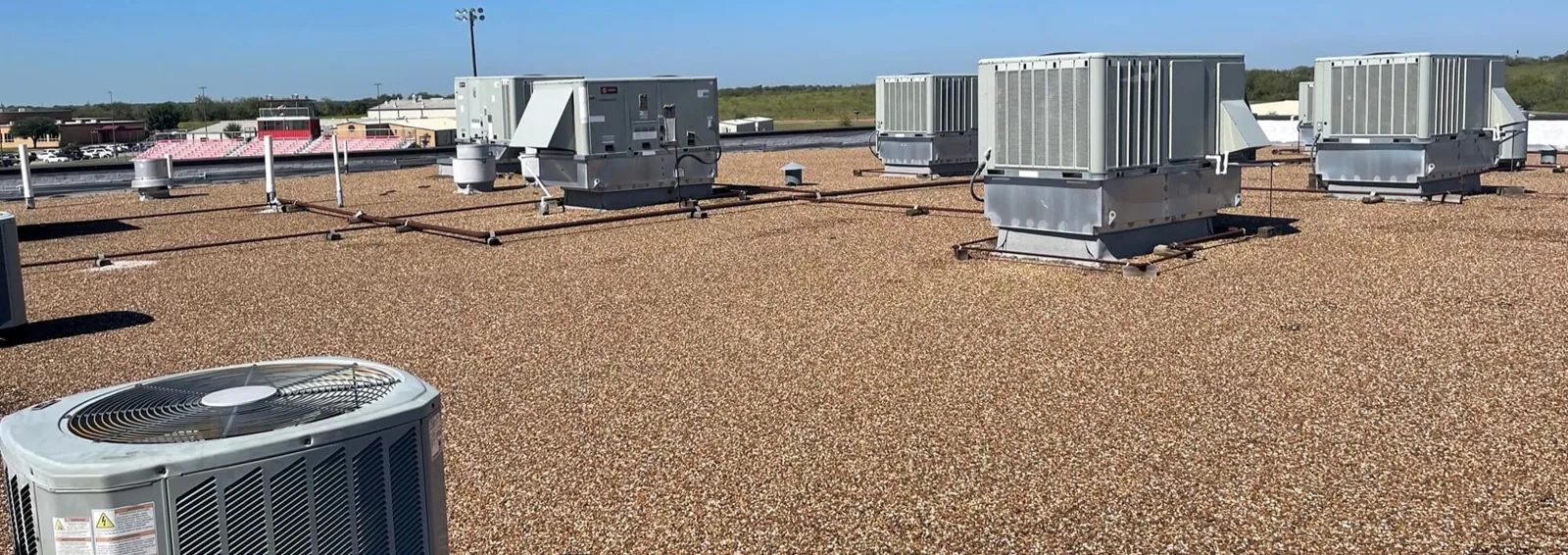
Service technicians walk the same paths over and over on a busy mechanical roof. Foot traffic wears a visible trail, and a trail is a record. We photograph worn lanes and recommend welded walkway pads where the sheet is losing its surface. On a downtown St. Paul building in the skyway district, where forty bridges tie major buildings together, the equipment platforms and roof hatches tend to concentrate that wear.
Scheduling Welds and Repairs Around Ice, Heat and Hail
A hot-air weld needs a clean, dry membrane, so winter repairs on PVC are limited to what can be dried and kept dry. In deep cold the sheet stiffens, and the Twin Cities saw 23 below zero on January 21, 2014. A temporary patch is logged as temporary, with the date it must be revisited, and the permanent weld waits for conditions that allow it. Ice is the other winter concern. Heat that leaks through the deck melts the snow above it, the water freezes again at the cold overhang, and the ice holds back whatever melts next, so we photograph the edge detail and the drain bowls while the ice is still in place and again after it clears. On any Midway or Energy Park building that drains to interior bowls, those bowls are checked first in a thaw, since a frozen bowl turns a melt into ponding.
Summer brings a different record. July 2025 metro reports of wind and hail provide a dated event for comparison with property-specific findings. After weather like that we chalk impacts on the membrane, photograph each in a test square and check the reinforcing fabric for fractures. Our hail damage repair record is organized so that it can be handed to an adjuster without rewriting.
Keeping the Maintenance File an Insurer or Manufacturer Will Ask For
The case for a membrane that has performed well, or one that failed early, rests on its history. We keep a dated inspection log, weld test results, moisture readings and before-and-after photographs for each repair. The file also shows that drains were cleared and that rooftop discharge was tracked, which matters for a sheet chosen to resist contamination.
A routine preventive maintenance visit adds an entry each time, and a full commercial roof inspection gives the owner a baseline when a building changes hands. Comparing PVC with TPO, which welds in much the same way, is easier once that history exists, because the comparison rests on what each roof did rather than on a brochure.
Questions We Hear
Why pick PVC for a roof that sits under restaurant exhaust?
Cooking fats soften and swell some membranes, and the selected PVC product may have useful published resistance, which needs checking for the actual grease, concentration and temperature. We still keep the exhaust map current and photograph residue at each visit. A restaurant roof needs clean grease management on top of the right sheet, and the dated record shows the owner is managing both.
How does a PVC sheet change as it gets older?
Over the years the plasticizers that keep it supple migrate out, and the sheet slowly becomes harder and less able to stretch. We measure that change with flexibility tests on small edges and compare the findings with earlier visits. A steady trend gives the owner a planning window, and a change warrants product-specific repair testing rather than a prediction based on flexibility alone.
Can an old PVC roof still be repaired by welding?
Usually, after the surface has been cleaned and a test weld has been pulled. Old membrane that has lost too much plasticizer may crack beside a new weld, so we try a small one first. If the test fails, we log the result, and the next conversation is about a recover or replacement rather than another patch.
What should a hospital keep on file for a rooftop that sees service traffic?
A walk-path map, dated photographs of the worn lanes and a list of every discharge point on the roof. Add the weld tests and moisture readings from each visit. A large hospital roof changes as equipment is added, and a dated map shows what changed and when.
Does PVC cost more than the other single-ply membranes?
Material generally runs higher per roll, and the welded detail work takes skilled labor. Whether the premium is worth paying depends on what falls on the roof, since a clean warehouse gains little from chemical resistance. We price both choices from measured quantities so the owner can see the difference in writing.