Distribution Center Roofing in St. Paul, MN
Roof inspection, repair and phased replacement for distribution and fulfillment centers in St. Paul, MN, planned around dock schedules with a dated record.
Request a Roof Assessment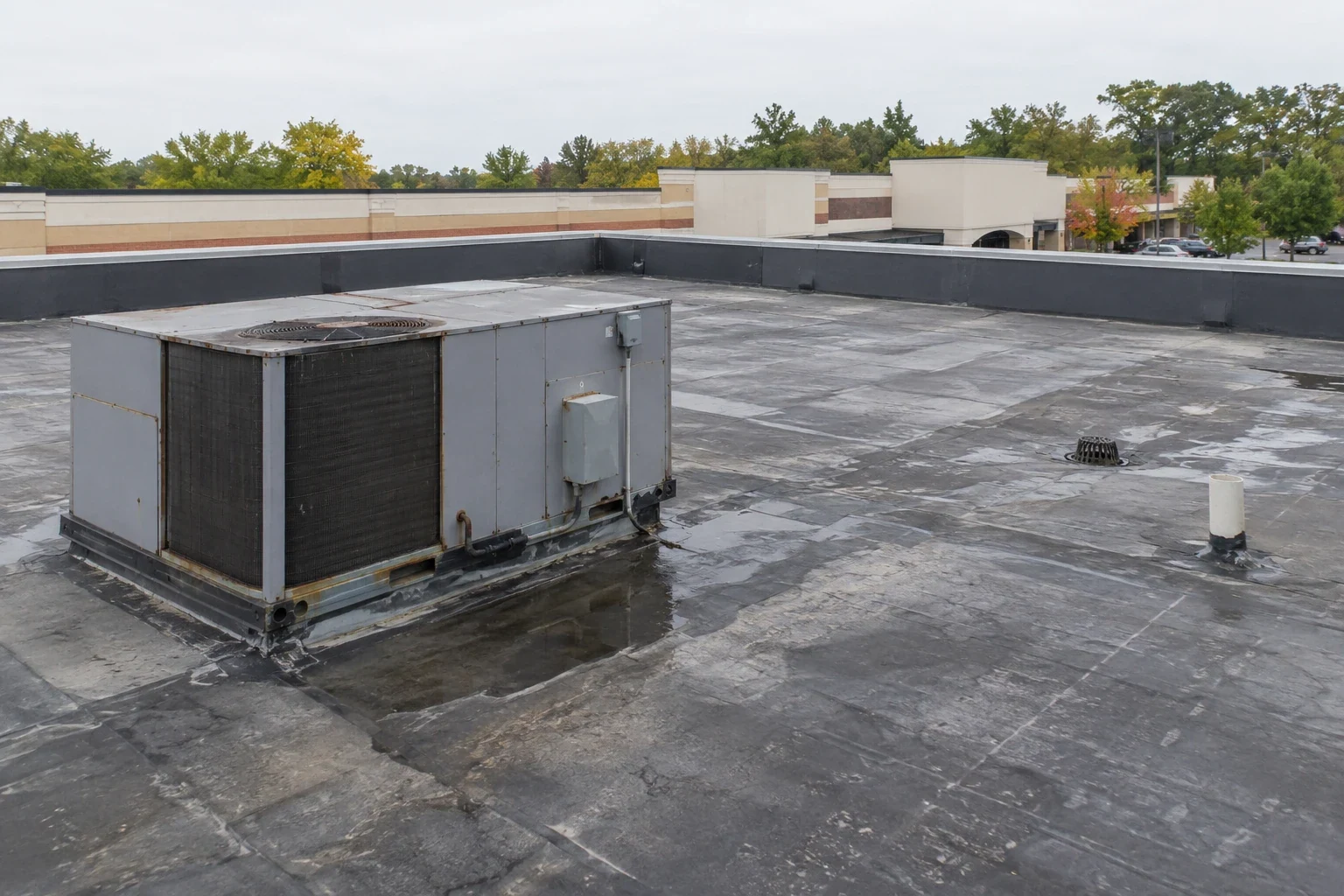
Distribution Center Roofing
A moisture reading taken above a dock door at a distribution center in St. Paul, MN means little unless the date, the weather and the shift schedule sit beside it. Trucks arrive whether or not the roof has a problem, so the log has to show what the roof looked like on a particular morning, what had happened the night before, and which section of the building was in use. We record those details with every photograph, and they are what let an operations manager read a roof report the way a dispatcher reads a load sheet.
An industrial-market report for the third quarter of 2025 described a substantial construction pipeline and an Amazon distribution project at the former Eagan Thomson Reuters campus. New fulfillment buildings are arriving beside older warehouse stock, and each one needs a roof record that travels with the building. Eagan also hosts a UPS hub, and in Mendota Heights the I-35E and I-494 interchange is a freight junction that already hosts Mayflower Distributing's headquarters.
Timing Roof Walks to Shifts, Dock Traffic and Freeze Cycles
A distribution roof is walked when the yard below is at its quietest, which usually means early morning or a planned lull between shifts. Each visit is dated and tied to conditions: overnight low, any thaw during the previous day and whether snow is still sitting in the drifts. A survey taken after a freeze reads differently from one taken after a week of mild weather, because ice in a lap or a cracked sealant can look sound at noon and open by midnight.
We log access points, the route a technician takes and any roof hatch or ladder that tenants share with a service vendor. That detail keeps repeat visits efficient, and it gives a facility manager a written answer when a safety auditor asks how the roof is reached and who is allowed up there.
Reading Wear Around Units, Exhaust Fans and Service Paths
Distribution buildings carry heavy mechanical loads: makeup air units, exhaust fans for dock areas, sprinkler risers, conduit runs and the occasional conveyor or lighting support. Equipment interfaces need inspection according to their actual connection, and each curb, pipe boot and flashing collar is photographed and checked for open sealant, rust and loose fasteners. Curbs and supports get the same sequence of log, repair and re-photograph.
Service traffic does the rest of the damage. Technicians walk the same path to the same units, drop tools, set down filters and leave oily residue where a condensate line runs onto the sheet. Scuffing and cuts along that path are marked with dated photographs, and where the traffic is constant we recommend walkway pads laid so the route is clear and the membrane is spared. Without the log, the first sign of that wear is often a leak below a conveyor.
Sequencing Repairs and Replacement While Trucks Keep Moving
A building that ships around the clock cannot hand over its roof for a month. The workable answer is a phased plan: the roof is divided into bays or zones, each zone is opened, dried in and closed before the weather turns, and the schedule keeps the work away from inbound doors at peak hours. We map those zones on the roof plan before work starts and record the moisture condition of each, so the order follows the worst insulation first.
Where operations allow no interruption at all, a temporary dry-in with a clear fire and debris plan lets the building carry on while the permanent roof is installed beside it. On an occupied building we also plan around noise, fumes and dust that could reach inventory or air intakes. For a leak that cannot wait, an emergency response evaluates safe temporary protection, and the permanent fix goes into the next planned zone.
Measuring Roof Capacity Before Solar, Units or Cool Surfaces Are Added
Many distribution owners are weighing rooftop solar, added mechanical equipment or a reflective surface. Each choice changes what the roof carries. The ground-snow design input applicable in Dakota County, including Eagan, informs engineering review rather than defining a roof loading allowance, and panel arrays, ballast and new curbs create drift pockets and concentrated weight that an even blanket of snow does not. We document the existing layers, insulation thickness and drain locations so an engineer has measured conditions to work from, and we flag wet insulation and deteriorated support for correction.
Roofs intended for panels are best planned before the membrane goes down, which is where solar-ready roofing comes in: reserved zones, protected walk paths and penetrations detailed to be sealed once rather than repeatedly. A white membrane is a separate decision, weighed against the long heating season, and our cool roof installation findings show what the roof gains in July against what it gives up in January.
Filing Storm and Interruption Records for Insurers and Clients
The storm of July 28, 2025 left more than 51,000 households in the Twin Cities without power and brought winds near 70 mph with golf-ball hail. A distribution roof hit by that kind of event needs its damage separated from earlier wear, and a dated earlier record provides useful comparison evidence. Insurers also ask for the timing of the loss and what the interruption cost, so we record when water entered, which doors or aisles were affected and what was done the same day.
Third-party logistics operators who lease space often answer to the building owner and to their own clients, and the file serves both. For logistics and 3PL operators the file follows what a lease and a customer contract expect, and the same file supports a hail damage repair claim when it is needed.
Questions We Hear
How do you schedule roof work above a dock that runs around the clock?
By dividing the roof into zones and working one zone at a time, away from the doors that are busiest that shift. The order follows the moisture log, so the wettest area is first. Each zone is closed and dried in before the crew leaves, and the daily schedule is shared with the dock supervisor in advance.
Why does a fulfillment center see wet insulation after a storm when the sheet looks intact?
Water finds its way under the membrane through a pinhole, a lifted seam or an open flashing and then spreads sideways through the insulation, far from where it entered. The surface looks fine because the damage is below it. Moisture readings and core samples locate the wet area, and the log shows whether it was already damp before the storm.
What should be on file before rooftop solar or new units are added?
A recent condition report, the layer-by-layer makeup of the roof, drain locations and any wet insulation found by survey. We add a record of the area under each new support, since each penetration will be sealed once and then lived with. Having that file ready shortens the engineer's review and keeps warranty conversations factual.
Can packaging debris and dock dust really cause roof damage?
Yes, indirectly. Loose film, cardboard and dust gather at drains and scuppers, and a blocked drain turns snowmelt into standing water. Ponding stresses the membrane and the deck beneath it. We note drain condition on every visit and clear what we find, and a standing quarterly visit keeps small blockages from becoming leaks.
What does a third-party logistics tenant need to keep on the roof?
Copies of every inspection report, photo set and repair record, plus any notice sent to the owner. A tenant that can show when a problem was first reported and what was done in response is in a firmer position if a lease dispute or a customer claim follows. Owner and tenant each receive the same copy, whether the building is a fulfillment hub or a flex industrial space.