
Office Building Roofing in St. Paul, MN
Roof inspection, repair and replacement for office buildings in St. Paul, MN, scheduled around tenants and backed by dated photographs and condition notes.
Request a Roof Assessment
Office Building Roofing
An ice dam at the eave of an office building is the entry that starts the conversation, because the ceiling tile beneath it is usually stained before anyone goes up to look. In St. Paul, MN we photograph the ice, measure how far it has backed up the roof and note the temperature pattern that built it, then trace the water to the opening it found. The record that results reads as a sequence: what the roof looked like, what the weather did to it and what was done next.
The city's office stock includes downtown towers and older buildings in Lowertown, and the roofs differ as much as the facades. Downtown, Securian Financial and Travelers each employ thousands of people, Ecolab is based in the Travelers North Tower, and state agencies fill buildings around the Capitol. An office property needs an identified facility contact and a written roof history for tenant and ownership decisions.
Photographing Ice, Drifts and Drains Above Occupied Floors
Winter is the season that tests an office roof, and the entries we make in January look different from those in June. Historical Twin Cities snowfall normals for 1981 through 2010 reported 54 inches annually, and on a building with parapets and rooftop mechanical rooms the snow gathers in a few deep pockets. We measure those pockets, photograph the drain areas as the melt starts and mark any place where meltwater pools or refreezes. Ice at an eave can prompt investigation of heat loss and water movement, which is a finding about insulation as much as about flashing.
Gutters, scuppers and internal drains get a separate pass. A drain that clogs under packed snow sends water to the nearest low point, often a transition at a wall or a curb. Our roof drain and scupper work clears and rebuilds these outlets and records the flow before and after.
Tracing Stains, Condensation and Drips From the Ceiling Up
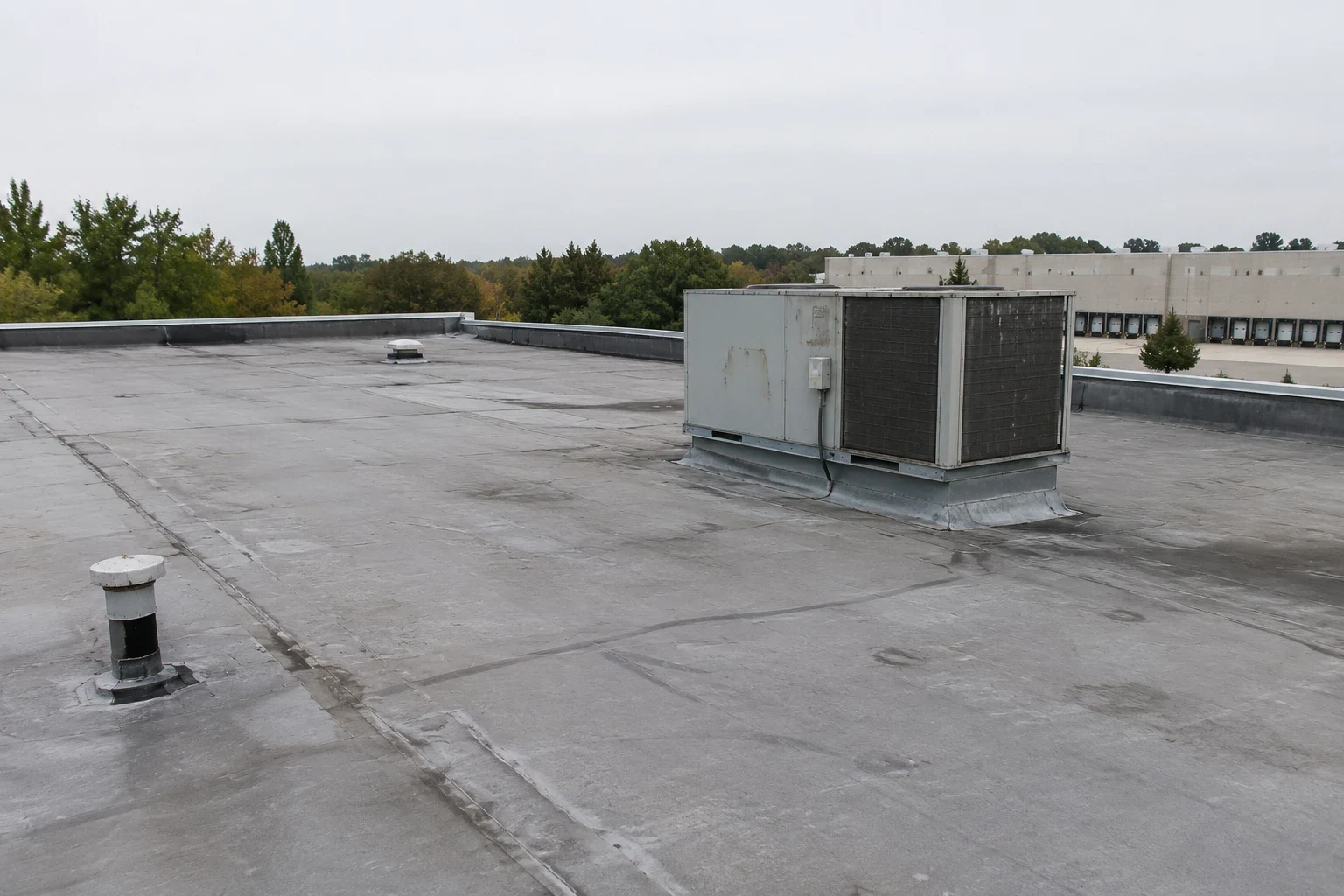
Tenants report symptoms: a stain, a drip, a smell, a bubbled ceiling tile. The entry can be outside the area directly above the stain. Water travels along decks, ducts and conduits before it appears, and winter condensation can mimic a leak when humid air meets a cold deck. We start the trace at the stain, map likely entry points on the roof and take moisture readings across the area between them. Where those points fall near a wall flashing, a rooftop unit or a drain, that is where we cut a core or open a flashing to confirm.
The result is a single page that links the interior photograph to the roof photograph, which is what a property manager needs when explaining the issue to a tenant. Our commercial roof leak repair follows the same trace and ends with a record of the fix, so a recurring stain can be compared with the earlier entry.
Detailing Penthouses, Parapets and Roof Edges on Tall Buildings
Taller buildings expose the roof to more wind, and the work has to be planned for access by crane, hoist or stair. Parapet caps, coping, mechanical penthouse walls and window-washing rig supports all interrupt the membrane, and each needs flashing that can handle movement. Downtown's skyway system ties 40 bridges to major buildings, so wall junctions where connections meet towers are also checked for movement and sealant failure. We photograph those details and note sealant condition and fastener spacing.
Older buildings in Lowertown add another factor. The historic district counts 37 contributing properties dating between the 1870s and 1920s, with many turned into lofts, breweries and restaurants. We take care to match flashing and edge details to the building's character, and our Lowertown records distinguish existing details and later changes where supporting building records establish them.
Timing Repairs and Replacement to Lease Cycles and Capital Plans
An office roof is a capital asset with a calendar. Landlords weigh the age and condition of the membrane against lease renewals, refinancing and sales, and a dated condition report lets them make each decision on facts. A building with dry insulation and sound seams can often be restored or repaired for several more seasons. A building with wet insulation and repeated leaks is a replacement candidate, and the cores show how far the damage reaches.
For property management companies that handle several buildings, we assemble reports in the same format so the roofs can be ranked and funded in order. The ranking draws on roof capital planning, which turns inspection findings into a budget over several years. Corporate campuses in Eagan, home to Thomson Reuters and BlueCross BlueShield of Minnesota, are handled the same way, with each building's file kept separate.
Our phasing plan ties each proposed phase to affected suites, access windows and approval contacts. It shows which work can proceed during normal occupancy, what needs advance notice and which concealed conditions could change cost or timing. The decision record stays with the roof plan for future managers.
Protecting Tenants, Entrances and Air Intakes During Work
Working above people means planning around them. Entrances get covered walkways, material staging stays away from loading docks and fire lanes, and air intake protection or operating changes are coordinated with the appropriate personnel during application. Noisy tasks are scheduled early or late, and a tenant liaison gets a daily summary. Before reroofing, we confirm current permit, plan-review and inspection requirements with the City and project design team. The application uses measured roof area, proposed materials, drainage details and design documents for the actual scope.
If storm damage interrupts operations, the file provides evidence for claim review. If a reported storm is involved, preserve its date, available weather record, pre-event conditions and post-event observations for the claim review. Our occupied building reroofing approach pairs naturally with the claim file, since both depend on dated photographs.
Questions We Hear
Why does water appear in my office suite when it has not rained?
Snowmelt, ice dams and winter condensation can all deliver water without rain. We look at roof temperature, drain flow and the humidity inside the building to separate those causes. The photographs and readings show whether the water came through the roof, formed under it or arrived through a mechanical line.
Who should hold the roof record in a multi-tenant office building?
The owner or property manager, with a copy available to any tenant whose space is affected. A shared file provides evidence for reviewing disagreements because it shows when a defect was first logged and what was done. Our reports are written so a tenant can follow them without technical training.
Can an older office building in a historic district keep its character with a new roof?
Yes. Copings, cornices and parapets can be repaired or rebuilt in matching profiles while the membrane behind them is replaced. Historic status brings its own review in some districts, and our records document original details so any approvals have photographs behind them.
How much notice do tenants need before roof work begins?
Enough to move sensitive equipment and plan around noise, with the lead time established from the project tasks and affected operation. We provide the property manager with a tenant notice that covers the work area, hours and who to contact. A daily update after work starts keeps disruptions predictable.
What will a buyer or lender ask about an office roof?
Age, recent leaks, repair history and any remaining warranty. A condition report with cores and photographs answers those questions directly, and a due diligence roof survey adds a capital cost outlook. Buyers of a medical office or government building ask similar questions.