
Cold Storage Roofing in St. Paul, MN
Roof inspection and repair for cold storage and freezer buildings in St. Paul, MN, with surface temperature records, moisture readings and vapor findings.
Request a Roof Assessment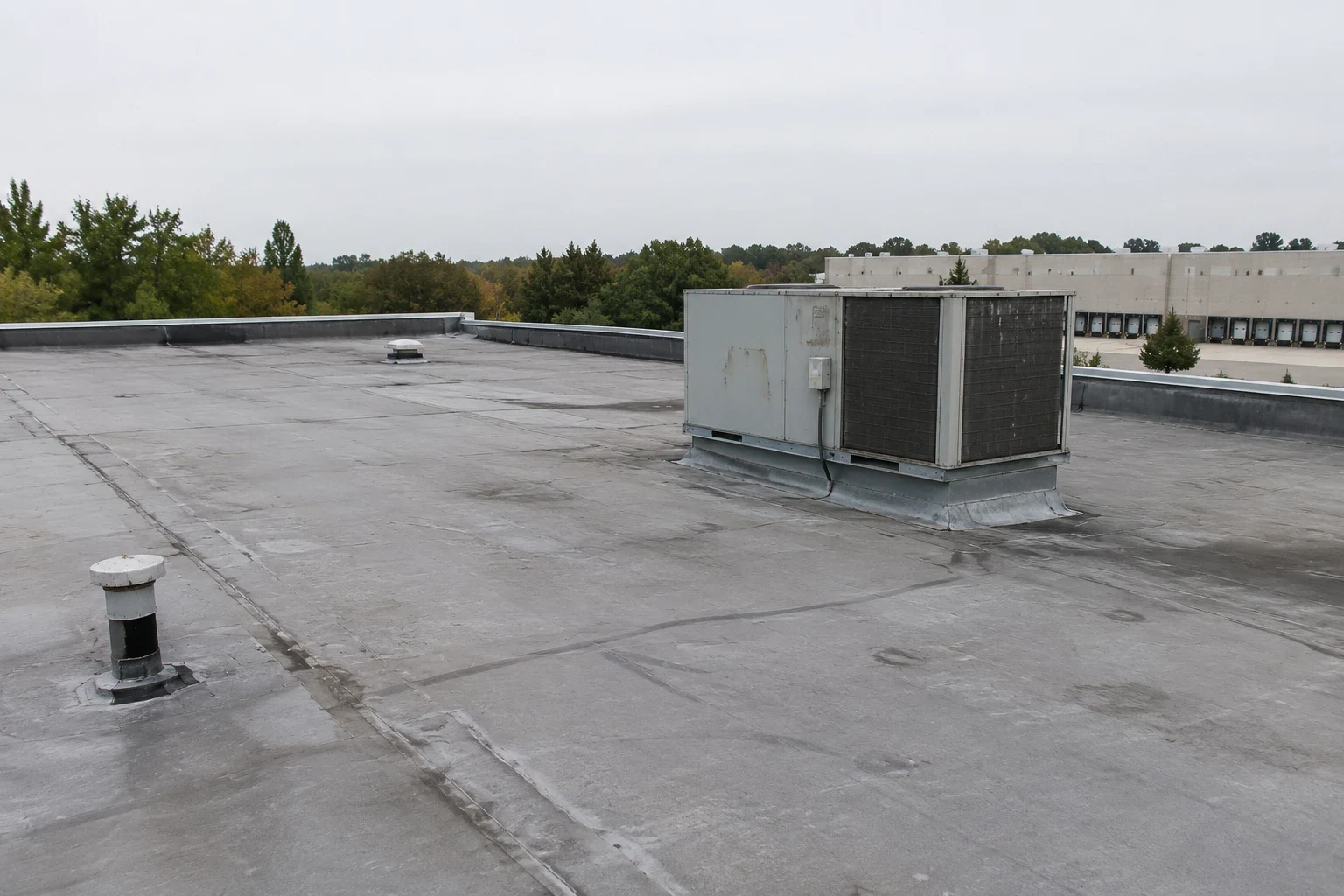
Cold Storage Roofing
The entry that matters most on a cold storage roof in St. Paul, MN is a small one: the surface temperature over a freezer room, written beside the surface temperature over the dock. A cooler or freezer building keeps one climate inside and another outside, and the roof is the layer where the two meet. Where those readings differ more than the insulation should allow, possible causes include wet insulation, a penetration gap or an air and vapor path requiring investigation. We record each reading with its date, the sky conditions and the interior setpoint if the operator will share it, so the next visit has something to compare against.
Frozen food has a place in the metro's buildings: the Totino's frozen pizza factory opened in Fridley in 1970. Roofs over refrigerated space work harder than those over a dry warehouse, and the file we keep reflects it.
Comparing Surface Temperatures Over Freezer Rooms and Dock Areas
Roof surface temperatures depend on weather, material and the refrigerated interior. An infrared anomaly prompts investigation of the assembly rather than proving failure from the temperature pattern alone. Water has replaced air in the insulation, a seam has opened, or a penetration is leaking conditioned air outward. We scan at night, after the sun has stopped heating the surface, and use suitable authorized checks to confirm suspect layers before identifying damage.
The dock end of the building sits in a different thermal zone, and doors cycle warm, humid air into the vestibule all day. We track roof edges there for staining, ice and wet fasteners, since air that leaves through the roof edge condenses on its way out. Each location is photographed and entered with a plan reference so a repair can be matched to it later.
Reading Vapor Drive, Frost and Wet Insulation From the Roof Side
On a freezer building the vapor drive runs the opposite way from an ordinary office. In July, warm humid air outside pushes moisture toward the cold interior, and if the vapor retarder has a gap, that moisture condenses in the insulation and freezes. Over several seasons the insulation fills with ice, loses its value and pushes on the membrane from below. A blister, a raised seam or a spongy walk-on feel are the roof-side signs we record, followed by cores that show whether the insulation is dry, damp or frozen solid.
That evidence decides how far a repair can go. A small wet zone can be cut out, dried and patched. A large one means the assembly has to be opened to the deck, and our infrared and core-cut moisture survey maps its boundary so the replacement covers wet material and no more. The insulation and cover board layers we specify afterward are chosen with the interior temperature in mind.

Locating Condensers, Refrigerant Lines and Cold Bridges at Penetrations
Refrigeration puts hardware on the roof: condensers, conduit, refrigerant line sets and exhaust. Each line that passes through the deck is a place where cold travels outward and moisture travels in. We log every one, noting the condition of boots, pitch pans and sealant, and look for frost, staining or rust at the interior side when the operator allows access. A poorly sealed penetration over a freezer builds ice that grows through the season and eventually damages the surrounding insulation.
Our work on penetration flashing follows a simple rule: seal the opening against both air and water, and record the product, the date and the photograph. Where equipment sits on curbs, we check that the curb is insulated and that the flashing carries water away from the unit. Their condition identifies repair priorities and the details to compare during subsequent visits.
Weighing Spot Repair, Recover and Replacement of a Cold Assembly
A cold storage roof is rarely simple to replace, because the insulation is thick, the interior cannot be warmed and the products below have to stay frozen. The decision tree starts with the cores. If insulation is dry and the membrane is the only defect, a repair or a recover may extend life with limited disruption. If insulation is wet over a meaningful share of the deck, patching only delays the cost. When the roof carries heavy rooftop equipment, spray polyurethane foam is sometimes considered because it adds insulation value as a continuous layer, provided the substrate is dry.
Whichever route is chosen, the file includes the thickness of each layer, the vapor retarder's position and the tested moisture content. A buyer, lender or operator looking at the building later can read the decision and understand why it was made.
Protecting Product, Power and Paperwork After a Storm
The July 28, 2025 storm cut power to more than 51,000 households across the Twin Cities, and an outage raises the stakes on any freezer building: a roof leak above a freezer room during a power loss can spoil stock quickly. A roof record that shows the building was inspected and maintained supports the insurer's view of the loss, and a food safety auditor can ask for dated evidence that the envelope was kept sound.
An owner in Fridley, in South St. Paul, where the stockyards ground has been redeveloped, or in the Port Authority centers at Energy Park and Midway, where light-industrial buildings stand, may weigh a conversion to refrigerated use. Before any conversion, we measure the roof and flag what a cold interior would do to it. A distribution center with a refrigerated wing gets the same treatment.
For work above temperature-controlled areas, we coordinate the opening and closeout with the facility contact and document the protection used, the work period and any agreed follow-up check. The owner can compare that dated roof record with operating conditions and investigate an alarm on its own evidence, without assuming it proves product loss or roof failure.
Questions We Hear
Why do freezer building roofs fail from the inside out?
Because moisture moves from warm outdoor air toward the cold interior in summer and condenses in the insulation if the vapor retarder is breached. The ice builds up over seasons and lifts the membrane. Surface temperature scans and core samples catch the problem long before the sheet itself cracks.
Can a leak over a freezer be repaired without warming the room?
Exterior access can permit some repairs without changing the interior setpoint, provided the protection and refrigeration plan support that task. We seal the entry point, record the cause and watch the area on later visits. If cores show wet insulation, the repair grows into a controlled cut-out, but temperature control and product protection remain operating requirements to coordinate with the facility.
Does heavy snow matter more on an insulated cold storage roof?
It matters differently. A well-insulated assembly passes little heat upward to melt snow, so the load tends to stay on the roof until a thaw clears it. The Ramsey County ground-snow design input is distinct from the calculated roof loading and requires engineering interpretation, and we record drift depths against walls where the load climbs highest.
How can a warehouse owner tell whether a building is ready for a cold conversion?
A condition report that includes cores, insulation thickness, penetration locations and deck condition will show what the roof can accept. We flag where the vapor retarder will need to be rebuilt, which penetrations will need new boots and whether the existing sheet can be reused. A written assessment before the refrigeration contract is signed is useful for identifying roof changes before the conversion proceeds.
What belongs in the file after a cold storage roof repair?
The date, the photograph of the opening, the moisture readings before and after, the materials used and the surface temperature reading taken once the area settles. For an auditor or an insurer, those entries show a repair that was measured instead of assumed.