
Spray Polyurethane Foam Roofing in St. Paul, MN
Spray polyurethane foam roofs in St. Paul, MN: moisture-tested substrates, measured foam thickness, protective coatings and a dated record of the finished roof.
Request a Roof Assessment
Spray Polyurethane Foam Roofing
A core cut through a spray foam roof gives the clearest record the system can offer: a small plug that shows the foam thickness, the coating above it and the bond to the deck below. On a St. Paul, MN building, the sample contributes to the condition record. Spray polyurethane foam goes on as a liquid and expands into one continuous, insulating layer, so there are no field seams to lift and no laps to open when the cold arrives.
We measure the foam in a grid of test points, photograph the coating at each one and file the readings with the date. Owners who want to restore a tired roof rather than strip it often find that foam can add shaped insulation with a protective coating, provided the full retained assembly passes suitability review. Dryness alone does not qualify a recover.
Testing the Existing Roof Before Any Foam Is Sprayed
Foam bonds to what it is sprayed onto, and it cannot bond to wet material. Before a crew mixes a single batch, we walk the roof and take moisture readings across the whole surface, then confirm suspect zones with core samples. An infrared and core-cut moisture survey can estimate suspect moisture extent where conditions support thermal interpretation. Readings and samples confirm selected locations, and the map records its limits.
Dry areas can often be cleaned, primed and sprayed directly, which saves the cost and mess of a tear-off. Wet areas are cut out and replaced first, since trapped moisture under new foam turns into blisters and delamination later. The survey records removal and retained materials.
Setting Foam Depth for Snow Load, Energy Code and Permit
Foam is light, which matters on a structure engineered for a design ground snow load of 50 pounds per square foot in Ramsey County. A sprayed layer adds far less dead weight than a ballasted system or a second membrane, so available capacity still requires engineering review; low material weight cannot establish eligibility where other recover conditions fail.
Depth is set by the insulating target. The designer confirms applicable energy provisions and scope-specific exceptions before setting the foam insulation target. We calculate the foam depth against that target, along with the slope needed to move meltwater to the drains. The city's Department of Safety and Inspections reviews commercial flat-roof permits through plan review, and the submittal identifies measured roof area, specified materials and drainage dimensions. We prepare those entries from our field measurements, so the permit file and the roof agree. Where the assembly also needs a layer of insulation or cover board, it is recorded beside the foam.
Shielding the Foam From Hail, Sun and Foot Traffic
Bare foam is not a finished roof. Sunlight breaks it down, so every foam system is capped with an elastomeric coating, usually silicone or acrylic, and the coating is what the weather actually touches. Hail is the test of that cap. The July 2025 Twin Cities hail reports are regional exposure context. Very large hail reported in the May outbreak farther west in Minnesota and in western Wisconsin does not establish a strike at this building. Foam can take a glancing strike, but a hard hit can dent it or break the skin.
After a storm we look for bruised spots, record each one with a photograph and a location mark, and probe the foam beneath for softness. Small breaks are cut out, refilled and recoated. When the pattern is wider, the dated record supports a hail damage repair claim that an adjuster can follow line by line. Walkways around rooftop units keep service traffic off the foam in the first place.
Spraying Only When the Day Will Let the Foam Cure
Application requires product-specific conditions. Surface temperature, humidity and wind all decide whether the two components react as they should. A cold or damp surface produces poor adhesion and uneven cell structure, and a gust carries overspray onto parked cars and neighboring walls. In St. Paul, MN, the workable season runs from late spring through early fall, and we schedule the spraying for mornings and afternoons that fall inside those limits.
We log the surface temperature, the dew point and the wind speed at the start of each shift. Those readings go into the file with the batch information, which gives the owner proof that the conditions observed at the logged times. Readings are continued as conditions change; a shift-start entry cannot prove the whole day was suitable. On an occupied building, we also plan air intakes, tenant notice and masking so the work does not reach the people inside.
Matching Foam to Buildings With Crowded Roofs
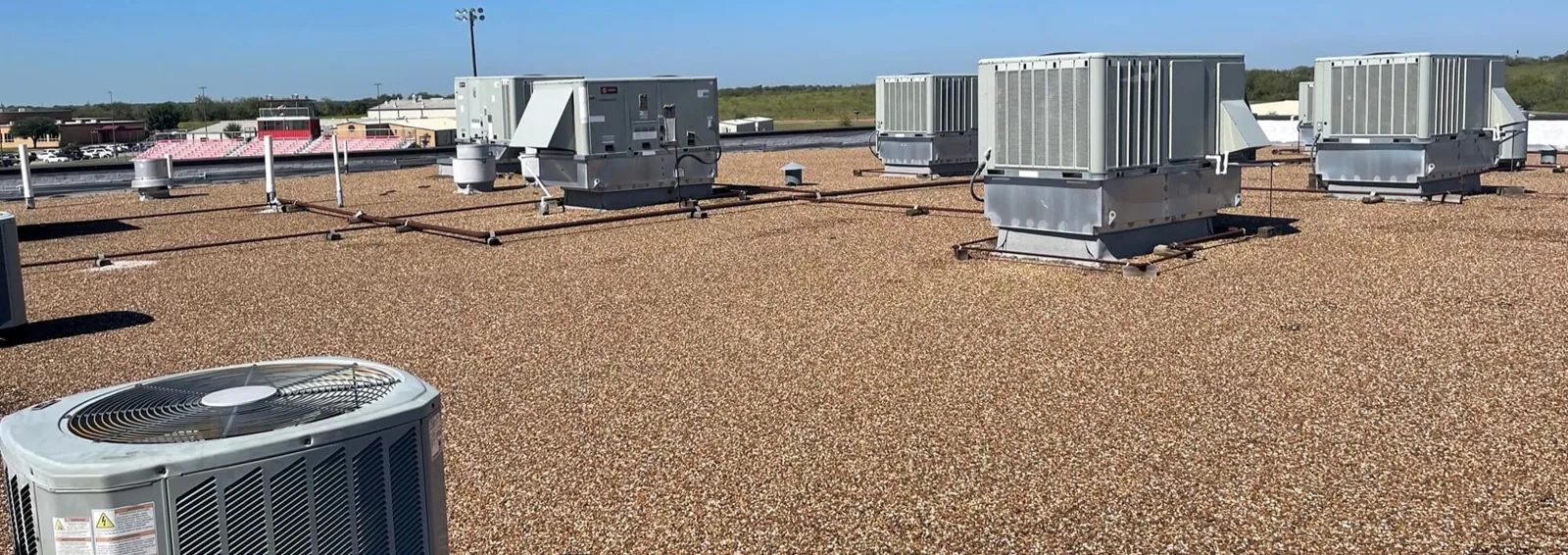
Foam suits roofs that are hard to detail with sheet membranes. It flows around curbs, pipes, drains and irregular edges and cures into a continuous surface, with no cut pieces to fit. The light-industrial and flex buildings of the Port Authority's Energy Park and Midway business centers often carry many rooftop units and penetrations, and a flex industrial roof with that kind of clutter is where we look first at foam.
Foam is not the answer for every roof. A roof with heavy, constant foot traffic, or one that needs to carry heavy equipment on pads, may do better with a conventional membrane, and we say so in the written findings. A coating chosen for ponding areas, such as silicone coating systems, may be specified over the foam where drains fall short. Owners across Energy Park can compare these options on their own measured roof plans.
Filing Foam Thickness and Recoat Dates for the Long Run
A foam roof is maintained by its coating, and the coating is maintained by its schedule. We file the final thickness readings, the coating type and the date each coat went on. Visits after that add to the same file: a photograph of each penetration, a note on any bruised or scuffed coating, and the date of every spot repair. The file documents upkeep for later review.
When the coating wears thin, the owner has a documented choice. A fresh coat over sound foam renews the roof for far less than a replacement, and the earlier readings show whether the foam underneath is still healthy. Portfolio roof condition reports compare foam findings with the owner's other assemblies.
Questions We Hear
Can spray foam go over my existing roof, or does the old roof have to come off?
The review combines moisture with substrate, attachment, structure, layer count and code eligibility. Where the insulation tests dry and the surface is clean and sound, foam can usually be sprayed over it. Where readings show water, that section comes out before any foam goes down, because wet material under foam will not hold the bond. A survey shows which sections fall into each group before a price is set.
How thick does the foam have to be on a Minnesota roof?
Thickness follows the insulation target and the slope. The designer identifies the thermal requirement applicable to the scope and sizes the approved foam assembly accordingly. Low spots that hold water may call for extra depth to build slope. Test points across the finished roof record the depth actually achieved.
What happens to a foam roof when hail like the July 2025 storm comes through?
A glancing hit usually leaves the coating intact, and a hard hit can dent the foam or break the skin. After a storm we inspect for bruised spots, probe them for softness and photograph each location. Damaged foam is cut out and rebuilt, then recoated. The dated record shows an adjuster which marks came from the storm and which were already there.
Will tenants smell the foam or notice overspray?
Careful planning keeps both to a minimum. The mechanical team approves intake separation or any isolation window while maintaining needed ventilation. Tenant notices and masking support that plan; an operating intake is not arbitrarily covered. Spraying stops when gusts rise. Access and coating intervals follow the foam and coating manufacturers' instructions under the actual conditions.
How long before the coating over the foam needs attention?
The coating wears at a pace set by sun, foot traffic and storms. Readings at each visit show whether the surface is chalking, scuffed or thinning. A recoat applied while the foam is still sound extends the roof at a modest cost, but a coating left to fail lets water into the foam and shortens its life.