
Acrylic Roof Coatings in St. Paul, MN
Acrylic coating systems for sound St. Paul, MN commercial roofs: surface condition recorded, weather windows logged and every coat documented for the file.
Request a Roof Assessment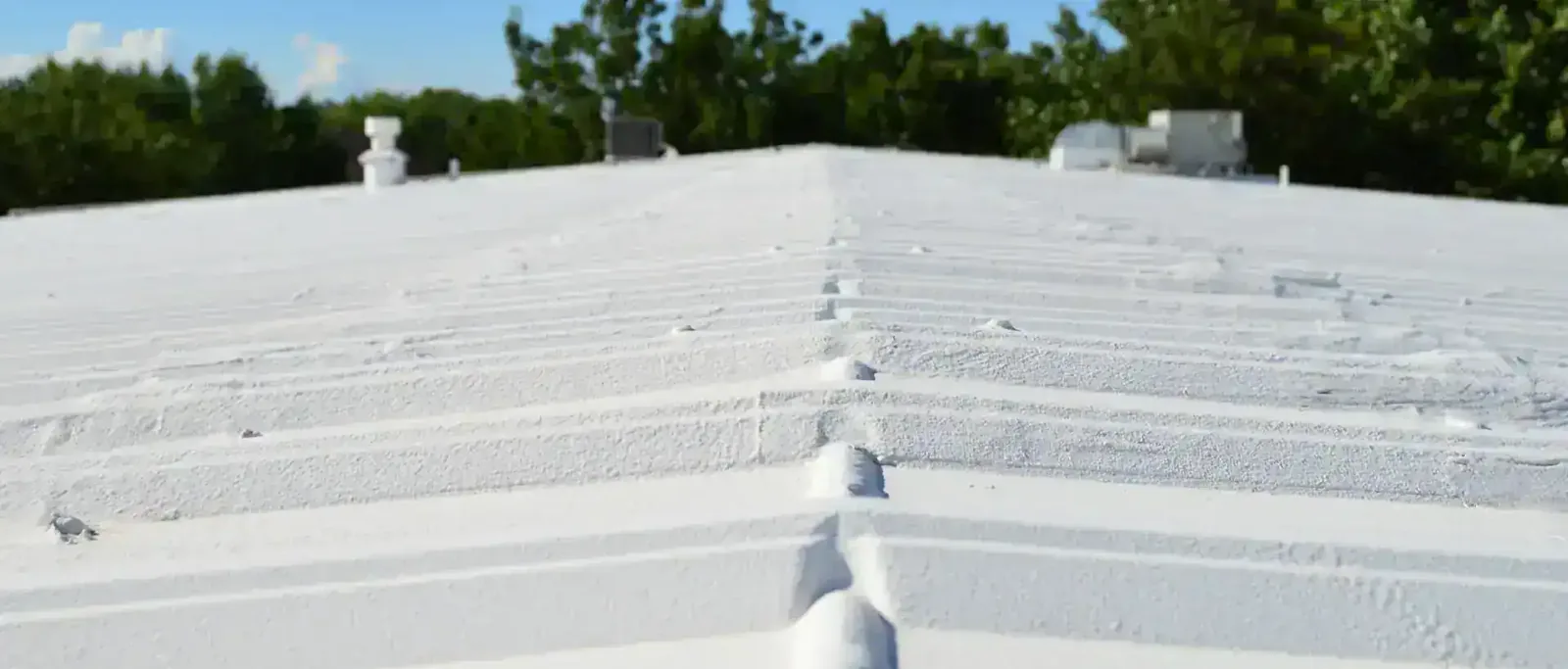
Acrylic Roof Coatings
On a sun-weathered roof in St. Paul, MN, one of the first things an inspection records is chalk: a pale powder that comes off on a gloved hand and shows how far the surface has worn. We rub it at several spots, photograph the result and log the date. That reading, taken together with moisture readings and a close look at seams and flashings, tells the owner whether an acrylic coating can extend the life of the roof.
Acrylic is a water-based, reflective coating that is rolled or sprayed over a sound membrane or metal panel. It adds a fresh waterproof skin and cuts surface heat without the cost and disruption of a tear-off. The log records the system's limits and the roof's eligibility.
Rubbing, Probing and Photographing the Surface Before a Coat Is Specified
A coating inherits every flaw beneath it. Our survey starts with a walk of the whole roof, probing for soft spots, marking blisters and listing every open seam and cracked flashing. We take moisture readings across the surface and confirm doubtful areas with core samples. A roof that has already soaked its insulation is not a coating candidate, and the readings are the evidence that says so.
The survey also records the substrate itself. Approved acrylic systems can be specified for standing seam metal panels, to aged single-ply membranes, to modified bitumen and to built-up surfaces, though each calls for its own primer and cleaning method. We write the substrate type, the surface condition and the planned preparation beside every area of the plan. If the findings point away from a coating, the report says that plainly and names what the roof needs instead.
Choosing Acrylic Only Where Water Leaves the Roof
The firm limit on acrylic is standing water. Most acrylic films soften and lose adhesion when they stay wet for days, so a roof with ponds that persist after the thaw is better served by another chemistry. We measure the ponded areas after a rain or a melt, with depths, outlines and dates, and the numbers decide how acrylic fits.
Where drainage meets the product requirements, acrylic may suit the substrate after preparation and adhesion testing. Its chemistry does not justify assuming less preparation. Where ponds are broad or recurring, we recommend correcting the slope or choosing silicone coating systems, whose published ponding limits must be checked for the selected assembly. Mixed chemistry requires written system approval, including transitions and future recoat methods. A field test alone does not establish a manufacturer-approved combination.

Guarding Eaves and Edges Against Ice Dam Stress
Ice dams form when snow on a warm roof melts, runs to a cold eave and refreezes, trapping water behind the ice. In Minnesota, heat loss through an inadequately insulated roof assembly feeds that cycle, and a thaw followed by a hard freeze can send service calls climbing. A coating does not stop an ice dam. What it can do is keep the surface sound where meltwater touches it, so the edge does not become the first place to leak.
We inspect eaves, gutters and perimeter metal before any coating goes down, and we log the condition of every joint. Loose or rusted edge metal, coping and gutters are repaired or replaced first, because a coating that overlaps failing metal fails with it. The photographs of each edge, taken before and after the work, become part of the claim file if an ice dam later damages the roof.
Applying Each Coat Inside a Warm, Dry Window
Acrylic cures as its water evaporates, so it needs warm temperatures, low humidity and several rain-free hours after each coat. Rain on a film that has not set can wash it off the roof and into the drains. Summer storms in the Twin Cities complicate this: July 2025 flood warnings included St. Paul, Woodbury and Maplewood, and no coating schedule can ignore a forecast like.
Our crew leaders check the forecast before the first batch is opened and keep a daily weather log of surface temperature, humidity and dew point. When the window closes, we stop application and inspect exposed work under the product's instructions, and the log shows exactly when. We separate the base coat from the top coat with enough dry time for each to set, and we measure wet film at marked points during the pour. The same daily log is kept on a roof in Roseville as on one in St. Paul.
Cutting Heat Gain on Campus and Office Roofs
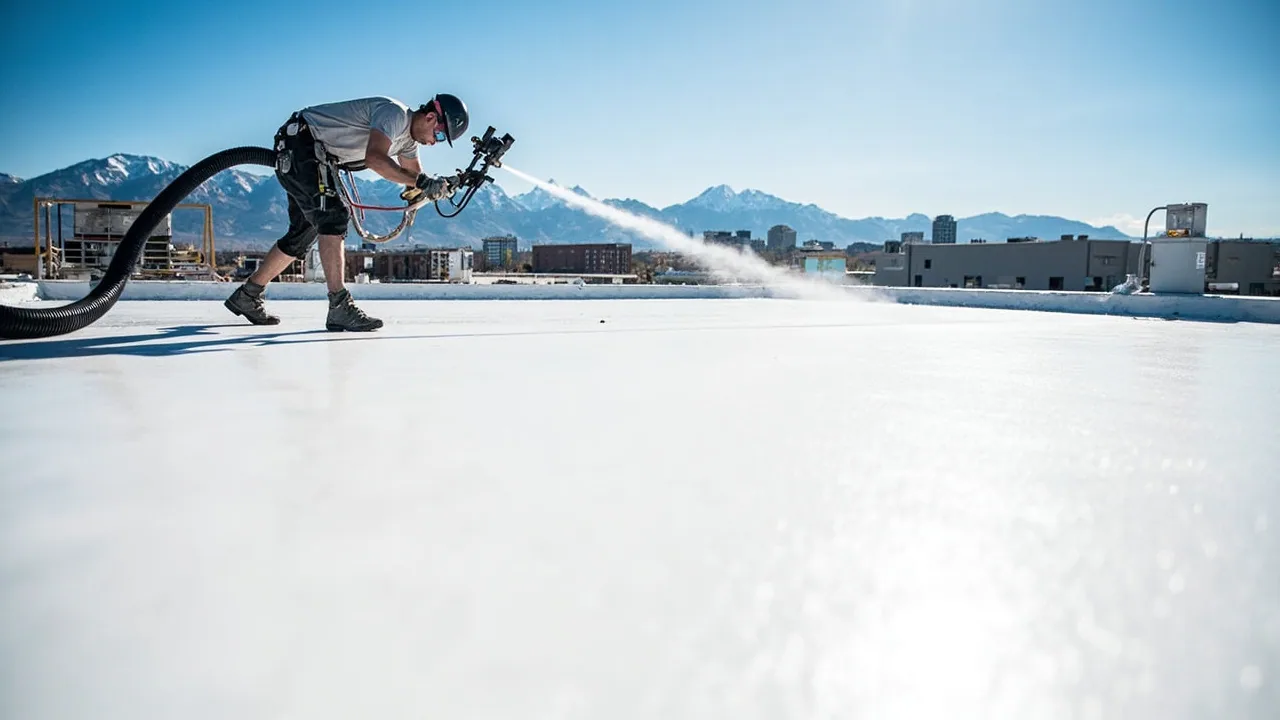
A white acrylic surface reflects sunlight and lowers the temperature of the roof on summer days. For buildings with heavy cooling loads, that can reduce stress on the membrane as well as on the mechanical systems. For a campus like the 78-acre University of St. Thomas along Summit Avenue, or an office building in downtown St. Paul, the cooling benefit is weighed against the cost of a full replacement, and the condition findings decide which side wins.
A reflective coating is one route to the cooler surface that cool roof installation aims for, and the designer confirms which energy provisions apply if the scope changes insulation or other envelope components. We note what the coating can and cannot change, since a coat of paint does not add insulation. On college and university roofs, each building gets its own dated condition report and its own coating decision.
Scheduling Recoats and Keeping the Maintenance File Current
An acrylic coating wears, and the wear is the schedule. Foot traffic, ultraviolet light and repeated freeze and thaw thin the film, and the thinning shows up in the log long before water gets in. At each visit we record chalking, scuffing, lifted edges and the condition of seams, then compare the entry with the last one.
Recoating while the film is still intact is a modest project that can be repeated when the readings call for it. Waiting until the coating has failed means paying for more preparation and risking water in the insulation. Each visit adds a dated page to the preventive roof maintenance file. When a buyer, lender or insurer asks how the roof was looked after, the owner has the answer in photographs, dates and measured thickness.
Questions We Hear
Why would a roof get acrylic and not silicone?
Drainage is the first filter. A roof whose water leaves within a day or two of a rain is a good acrylic candidate, provided the selected product's drainage, substrate and adhesion requirements are met. A roof that holds ponds after every thaw is better matched to silicone. The ponding survey with dated depths is the evidence for either choice.
How many coats does an acrylic system need?
Coat count and reinforcement follow the specified product system; some require distinct base and finish coats while others use a different approved sequence. Total film thickness matters more than the coat count, so we measure the wet film as it goes on and record the readings by location. A thin spot gets more material before the crew moves off.
What happens if rain falls on the coating before it cures?
Fresh acrylic can wash out or turn milky when rain arrives too soon. Because of that, we check the forecast the morning of the job and stop early if the window is closing. Any section that took rain is inspected once it dries, and damaged film is removed and reapplied before the next coat goes over it.
Can acrylic be applied over an old coating?
A test patch answers that. Acrylic generally bonds to a clean, sound acrylic surface, but ordinary acrylic is not assumed compatible with cured silicone. A specialty transition or recoat requires written product approval and testing. We pull a patch after the cure and record how it holds. If the old coating is peeling or unknown, it is removed or primed in a way the test supports.
Does a white roof make sense in a climate as cold as St. Paul?
The cooling benefit shows in summer, and the annual heating and cooling effect depends on insulation, snow cover, shading and the building loads. Surface color alone does not establish utility savings. The coating also protects the membrane from ultraviolet wear, which counts all year. Heating and cooling use should be weighed with the condition findings, and a coating does not add insulation.