
Cool Roof Installation in St. Paul, MN
Reflective commercial roofs for St. Paul buildings, with insulation checks, moisture readings and a dated record weighing summer heat against Minnesota winters.
Request a Roof Assessment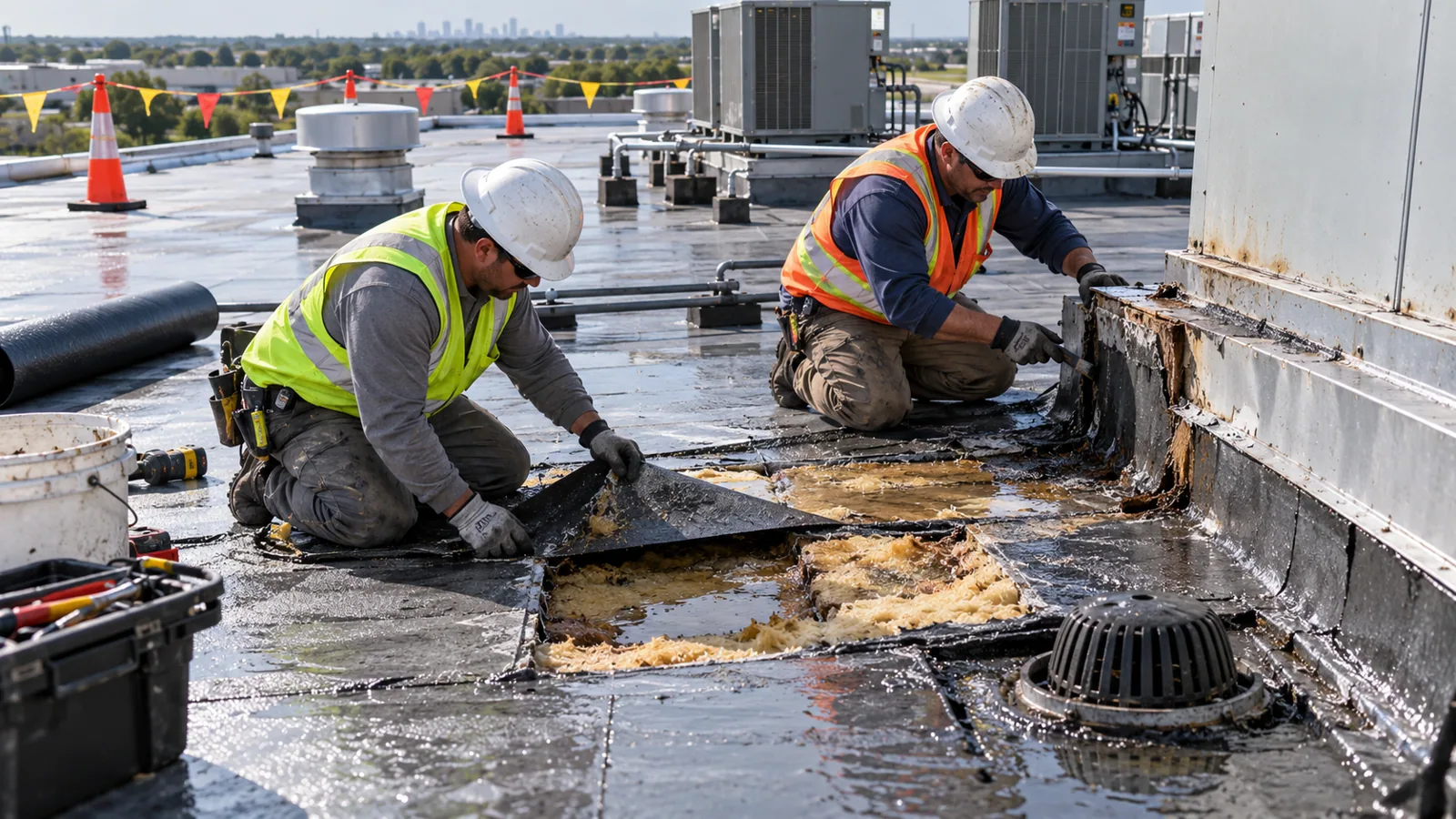
Cool Roof Installation
A reflective roof in St. Paul gets judged twice a year, and we record both judgments. In July we take surface temperature readings across the white membrane and note where dirt, ponded water or a pale chalky film has dulled the finish. In January we photograph the same roof under snow and look at what the cold season did to the seams, the drains and the edge metal. A cool roof is only a good decision here when both sets of readings hold up.
Minnesota is not Arizona, and a roof that sheds solar heat is only part of the story in a city that burns through heating fuel for much of the year. The right installation starts with the condition of the roof underneath and ends with a record the owner can use to compare the reflective surface against the roof it replaced.
Measuring the Roof Before Anything Turns White
Before a reflective system goes down, we log the existing roof as it stands. That means surface temperature readings on a warm afternoon, a map of ponding after rain, and a count of every curb, vent and drain that will need its own flashing. We take moisture readings across the field and cut core samples where the readings climb, because wet insulation under a new white sheet will keep losing heat in winter and holding moisture in summer, no matter how well the surface reflects.
Photographs are taken at every edge, parapet and penetration, so the reflective system can be compared to the original detail later. If the building has a history of leaks, we trace each one to its source before the new membrane is ordered. A reflective roof laid over unsolved problems simply carries them forward under a brighter surface, and the owner is left with a dated record that proves the problems were already there.
Weighing Summer Heat Against a Long Heating Season
The cited historical climate record compares 8,597 heating degree days in 2013-14 with a 7,580 baseline. That dated comparison illustrates heating demand; it is not a current verified normal or a prediction of this building's energy bill. A reflective surface cannot warm a roof in January the way a dark one sometimes does, so the owner is trading some winter solar gain for a cooler roof in July. For a building with heavy summer cooling loads and good insulation, that trade often favors a reflective system. For a building that is mostly heated, the answer is closer.
Insulation levels change the arithmetic. A roof with plenty of dry, well-detailed insulation loses little heat through the deck whatever the surface color, which changes the importance of surface color in the energy analysis. A roof with thin or saturated insulation loses heat all winter, and reflectivity will not fix that. In those cases, adding insulation, or a new insulation and cover board assembly, comes before the surface decision.
We do not run energy models ourselves, and we do not promise utility savings. We provide measured surface temperatures, moisture readings and condition notes so the owner and the building's mechanical engineer can make the call with real data.
Choosing a White Membrane or a Reflective Coating
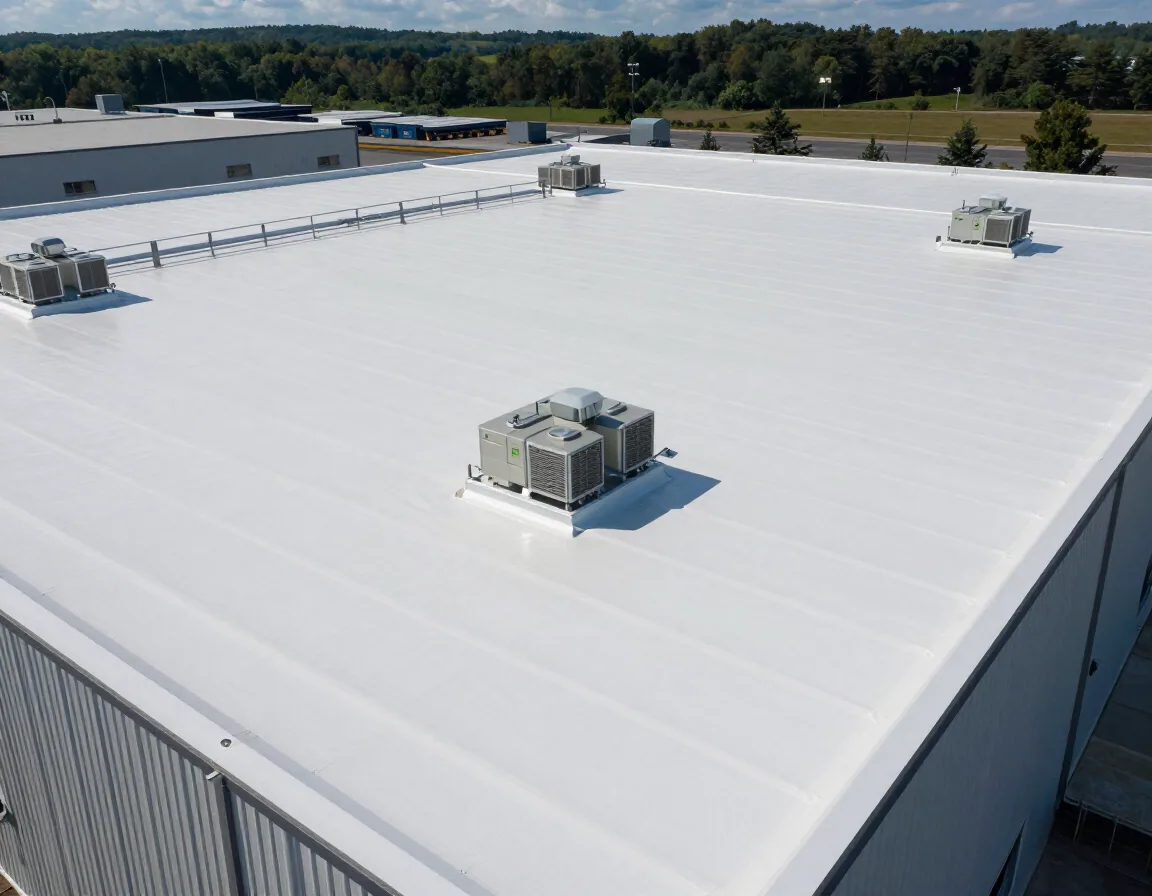
There are two routes to a reflective roof. One is a new white membrane, most often TPO or PVC, laid over fresh insulation or a prepared existing roof. The other is a liquid coating on a sound existing membrane, such as acrylic roof coatings or silicone. Coating may avoid some removal costs and extends an existing roof, but it only works when the substrate is dry and the seams are tight.
Moisture, adhesion, compatibility and drainage findings inform the choice. A roof with isolated wet spots can be cut and repaired, then coated. A roof with widespread wet insulation needs replacement, and the white membrane goes on at that time. Hail matters in both cases. Regional hail reports from July 2025 justify checking the building itself for impacts, and a reflective membrane that is bruised or punctured loses both its watertightness and its finish. We photograph any impact marks and record their size and spacing, so that an adjuster has clear evidence in hand.
Surface cleanliness also bears on performance. Dirt, soot and standing water dull a white roof over the seasons, and on the light-industrial buildings of Midway, a district that grew up around the rail lines, the surface should be rinsed and rechecked on a schedule.
Meeting Energy Code and Permit Requirements on a Re-roof
Re-roofing a commercial building in St. Paul brings the energy code into play. The designer identifies applicable energy requirements and exceptions for the replacement scope. Reflectivity and insulation are separate performance questions rather than proof of one another. We confirm with the plan reviewer what the project triggers before the material order, because the insulation depth and the surface requirements affect both cost and the height of every curb and edge detail.
St. Paul sends commercial flat-roof re-roof permits to plan review instead of express online approval, and the drawings have to state what the membrane is, how many square feet it covers and how large the drains are. A cool roof is described like any other membrane, so the paperwork needs complete measurements. We take those measurements on site, photograph the drains and record them in the file that goes with the permit.
That file also helps later. A buyer or lender asking how the roof was built can see the insulation layers, the membrane type and the permit record side by side.
Documenting Reflectivity, Cleaning and Warranty Conditions
Warranty notice and maintenance requirements depend on the issued documents; cleaning or storm inspection duties should not be assumed from membrane color, and those conditions are easier to satisfy with a log than from memory. After installation, we record surface temperature readings, photograph the finished seams and edges, and note the date and weather. Each later visit adds to the same file, so the owner can see any gradual dulling or any new damage at a glance.
The record is also the owner's best defense after a loss. With dated images from before and after a hail or wind event, an adjuster can see what changed. A facilities team responsible for an institution like Regions Hospital downtown, or for light-industrial space across Energy Park, can fold a cool roof into the same log it keeps for every other roof.
If an existing reflective roof is aging, a coating restoration can often refresh the surface without a tear-off, after a suitable moisture survey and adhesion, compatibility and drainage review.
Questions We Hear
Will a reflective roof raise my heating bill in a Minnesota winter?
It can reduce the small amount of winter solar gain a dark roof collects, but its annual effect depends on insulation, shading, snow cover and building loads. A well-insulated, dry roof loses little heat regardless of color, and we measure that insulation before recommending a surface.
Does a white roof stay white in St. Paul?
Not without attention. Dirt, soot and standing water dull the surface over the seasons, and snow and ice add their own staining. Rinsing the roof on a schedule and logging the condition at each visit keeps the finish in good shape and shows when it is time to restore it.
Should we coat the roof we have or install a new white membrane?
Moisture and seam condition are part of the assessment, with coating adhesion and compatibility also checked. A dry roof with tight seams is a candidate for a coating. A roof with widespread wet insulation needs replacement, because coating over trapped water only hides the problem. Our core samples show which path fits.
Does hail damage a reflective membrane differently?
The damage looks different, but the harm is the same. Large hail can bruise or puncture a membrane, and a white surface shows impact marks plainly in photographs. We record their size and spacing so an adjuster can read the event clearly.
What does the city require for a cool roof permit?
Plan review, the same as any commercial flat roof. The package states the membrane, the roof area and the drain size, and we take those measurements on the roof and add the energy code insulation requirements.