
Roof Coating and Restoration in St. Paul, MN
Liquid-applied roof coating and restoration in St. Paul, MN, started with moisture readings, core samples and an adhesion test so the coat goes on a sound roof.
Request a Roof Assessment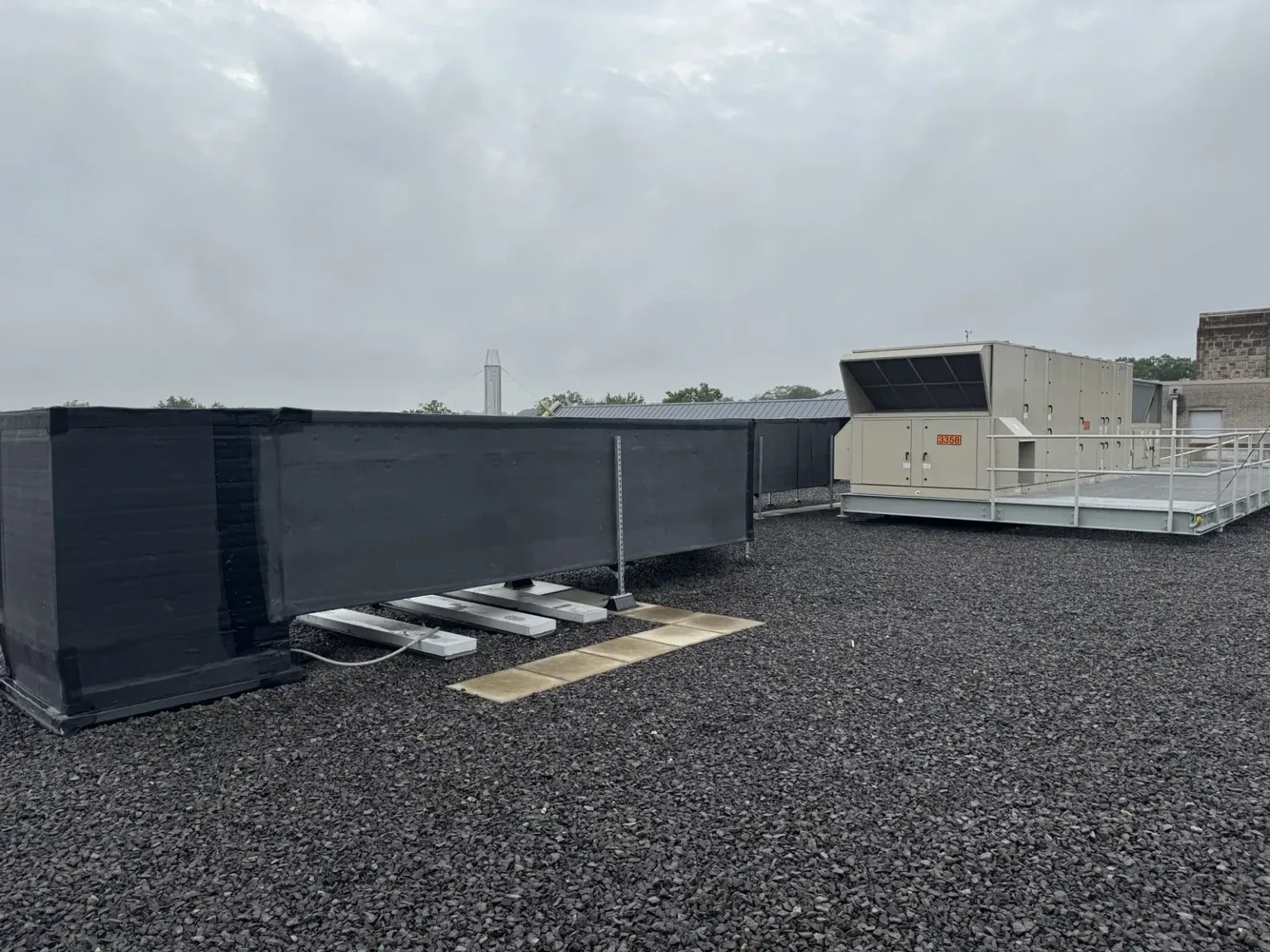
Roof Coating and Restoration
Before any coating is priced for a St. Paul roof, we press a small test patch onto the old membrane, let it cure and then try to pull it off. The result goes into the file beside the moisture readings and the core sample, because a coating is only as sound as the surface it grips. Restoration works when a roof is dry, tightly seamed and structurally sound, and it fails quietly when it is laid over wet insulation or a membrane that has lost its bond. The testing is slow, measured work, and it separates a restoration that extends service life from one that only covers a problem for a season.
Proving the Roof Is Sound Enough to Coat
A coating adds a new waterproof skin. It does not replace failed insulation, stiffen a sagging deck or reattach a membrane that is lifting from its substrate. So the first stage is a survey. We walk the surface, probe seams, check flashings and take moisture readings across a grid, then cut core samples at the doubtful spots to see whether the insulation is dry and the existing layers are tight.
If the readings show saturation in a limited area, that area is cut out and replaced before the coating goes on. If the wet area is broad, the record points toward a different scope, and we say so in writing. Roofs that qualify tend to have dry insulation, a membrane that is aged but intact, and seams that can be sealed. For a large roof, an infrared and core-cut survey is the usual way to draw that line.
Choosing Between Silicone and Acrylic for Standing Water
The two common liquid systems behave differently on a roof that holds water. Silicone coatings include products with published ponding-water resistance, but that property is system-specific and does not resolve drainage or structural concerns. Acrylic coatings are water-based, priced according to the complete system and generally selected where drainage meets product requirements, though prolonged immersion can break them down.
St. Paul adds a second test, which is ice. A coating on a roof where meltwater refreezes at drains and eaves has to flex through repeated freeze and thaw without cracking or debonding. We record the product chosen, the thickness applied and the reason for the choice. Where ponding comes from a blocked or misplaced drain, the cure is correcting the ponding first, and the coating follows.
Preparing the Surface Before the First Coat Goes Down
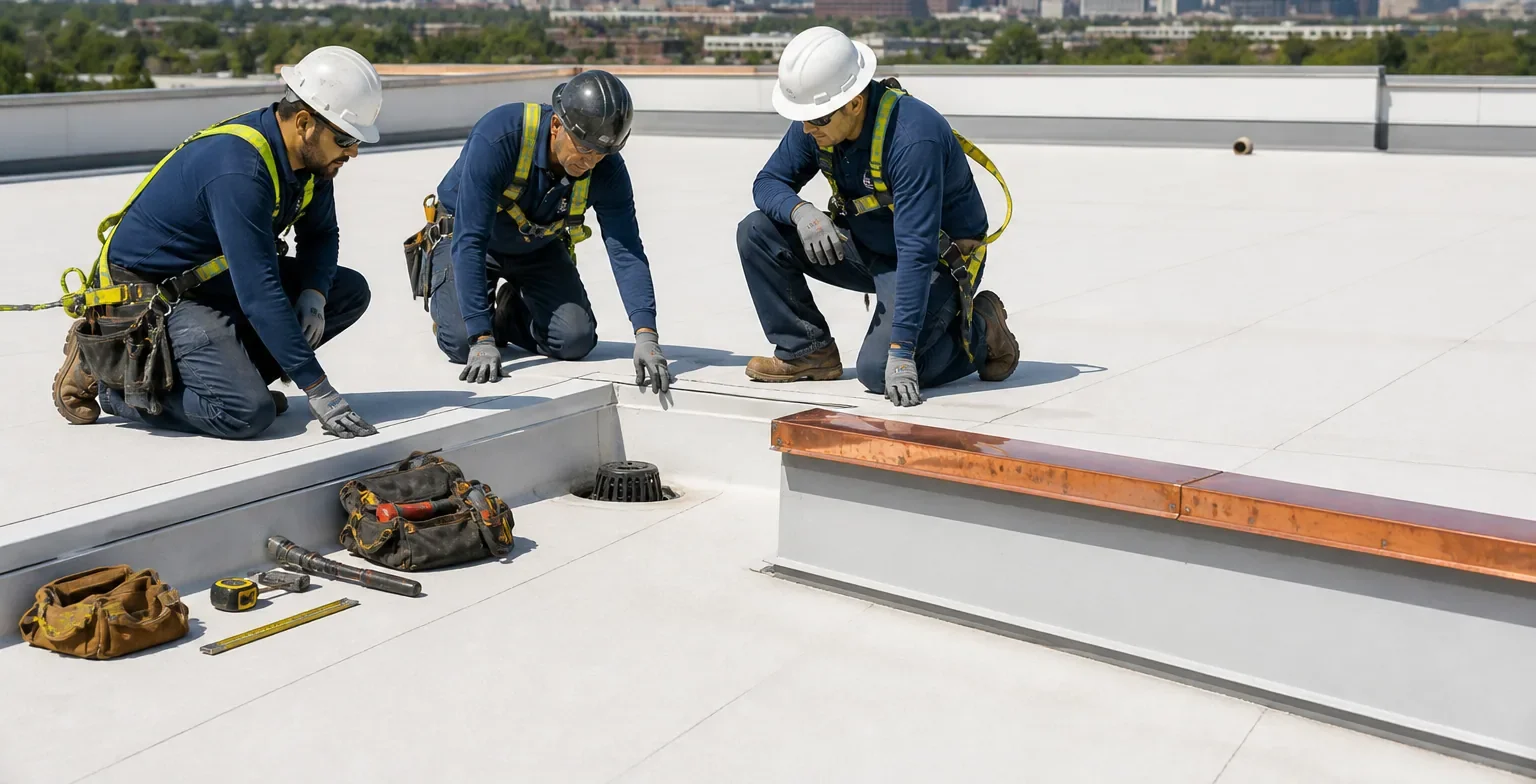
Surface preparation can be a substantial part of the work, and a good deal of the coating's performance is decided there. The roof is power washed to remove dirt, chalking and biological growth. Seams are sealed or reinforced with fabric, flashings are repaired, and fasteners that have backed out are reset. Open metal edges and penetrations receive primer where the manufacturer's instructions call for it.
We photograph the roof clean, then again after the seam and detail work, so the file shows the surface the coating actually met. Those before and after images matter later. If a coating is ever questioned, the photos document surface preparation alongside moisture and adhesion findings, which is what makes the work defensible to a manufacturer or an adjuster.
Applying Coats to a Measured Thickness Between the Frosts
Coatings cure inside temperature and humidity limits, and Minnesota gives a restoration crew a season rather than a year-round option. Application runs in the warmer months, with the schedule set by the product's limits for substrate temperature, dew point and rain. The 2013-14 winter, which piled up nearly 70 inches of snow and sank to -23 degrees in January 2014, shows how hard the finished surface will be worked once the coating cures.
The product goes on in coats at a measured thickness, and we check it with wet-film gauges as the work proceeds, because a thin coat shortens service life and an over-thick application can affect cure or integrity, depending on the product. The quantity used per area is entered in the file, so the owner sees the coating as installed and not only as quoted.
Weighing Restoration Against Replacement on Remaining Life
An owner of a light-industrial building in a district like Riverview, where Riverview and Riverview West together occupy 352 acres in the Port Authority inventory, weighs coating against replacement whenever the membrane is aging but still dry. Restoration usually costs less than a tear-off, reduces removal waste when the existing materials are suitable to retain and leaves tenants in place. It adds no insulation and does not change the system underneath.
A full roof replacement resets the entire assembly, and it is the better call when cores show wet insulation across much of the roof. The moisture findings inform that decision alongside adhesion, membrane condition, compatibility and drainage. Owners in Riverview and the West Side receive the same findings either way, in writing, with the numbers behind them.
Recording the System for the Next Owner and the Next Recoat
A coating changes how a roof is maintained. Cleaning practice, recoat timing and repair compatibility all depend on the product, so we leave a record of repair that names the system, the thickness, the application dates and the weather on each day, together with the final photo set. A buyer, lender or adjuster reading that file can tell what was done and on what evidence.
The restored roof then moves into a scheduled maintenance program, where the visit log shows how the surface is wearing and when a recoat should be planned from observation rather than from a calendar guess.
Before work, we place approved product data, adhesion results, preparation limits, the weather window and specified dry-film target in the project file. During installation, our log records batch information and measured coverage by roof zone. At closeout, we map repairs, terminations, drains and any areas excluded from the coating. Those details help a future owner distinguish the installed system from a later maintenance layer and determine what inspection or recoat work may be appropriate.
Questions We Hear
Can a coating stop a leak that is already active?
A coating can seal pinholes and hairline seam openings, but it will not cure a leak that comes from failed flashing or wet insulation. We trace the entry point first, repair it by hand and coat afterward, with moisture readings showing the area beneath is dry.
How long before a restored roof needs another coat?
Service life follows the product, the thickness applied, the exposure and how well the roof drains, so no single number applies to every building. The file records those inputs, and later maintenance visits show how the surface is wearing so a recoat is scheduled from evidence.
What if the core samples come back with wet insulation?
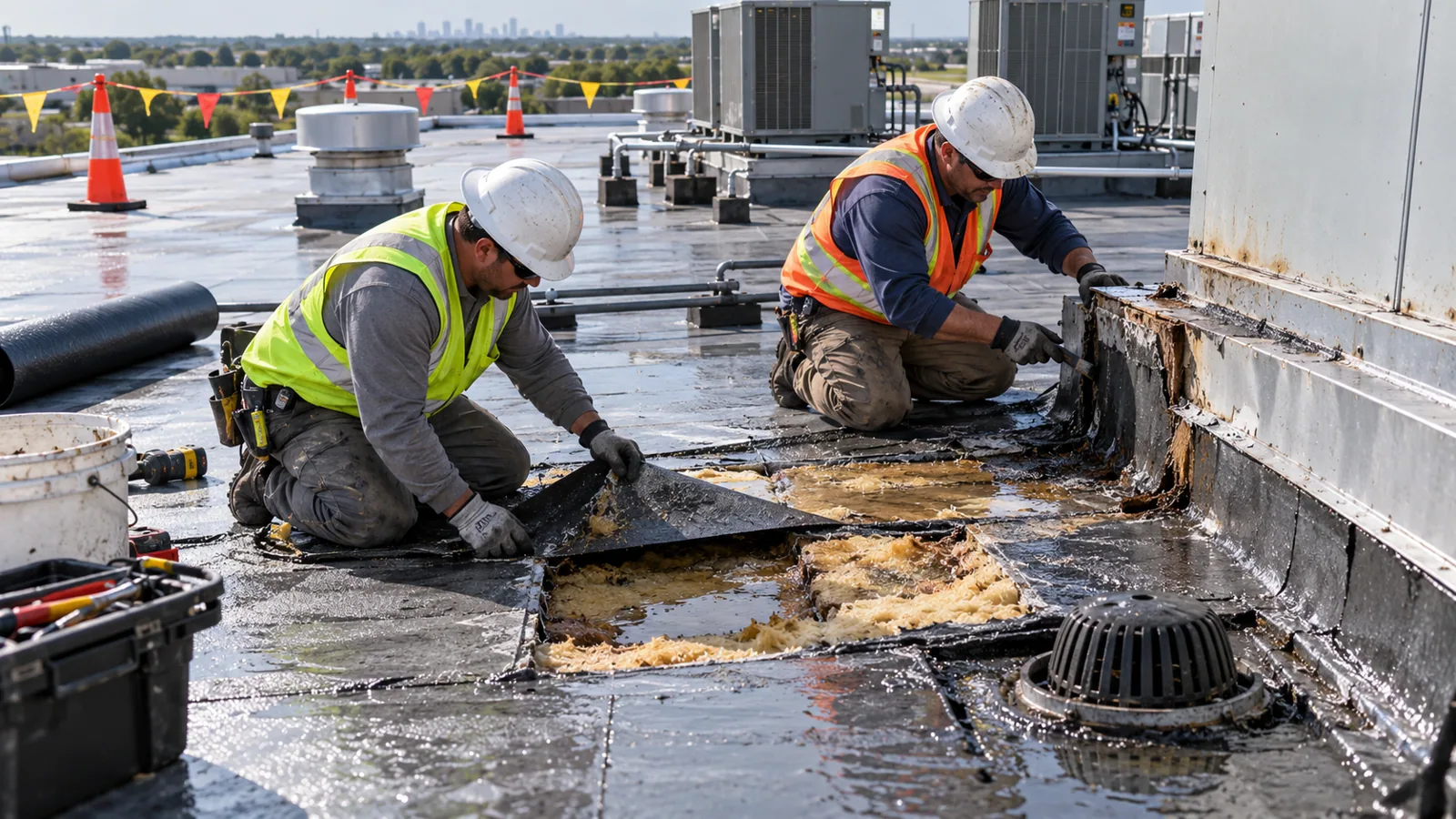
Wet areas are cut out and replaced before any coating is applied, because trapped water adds weight and pushes against the membrane from below. If saturation is widespread, replacement may be the sounder choice; a recover cannot simply conceal saturated materials, and the survey map is the evidence for that call.
Will a coating hold up on a roof that hail has already struck?
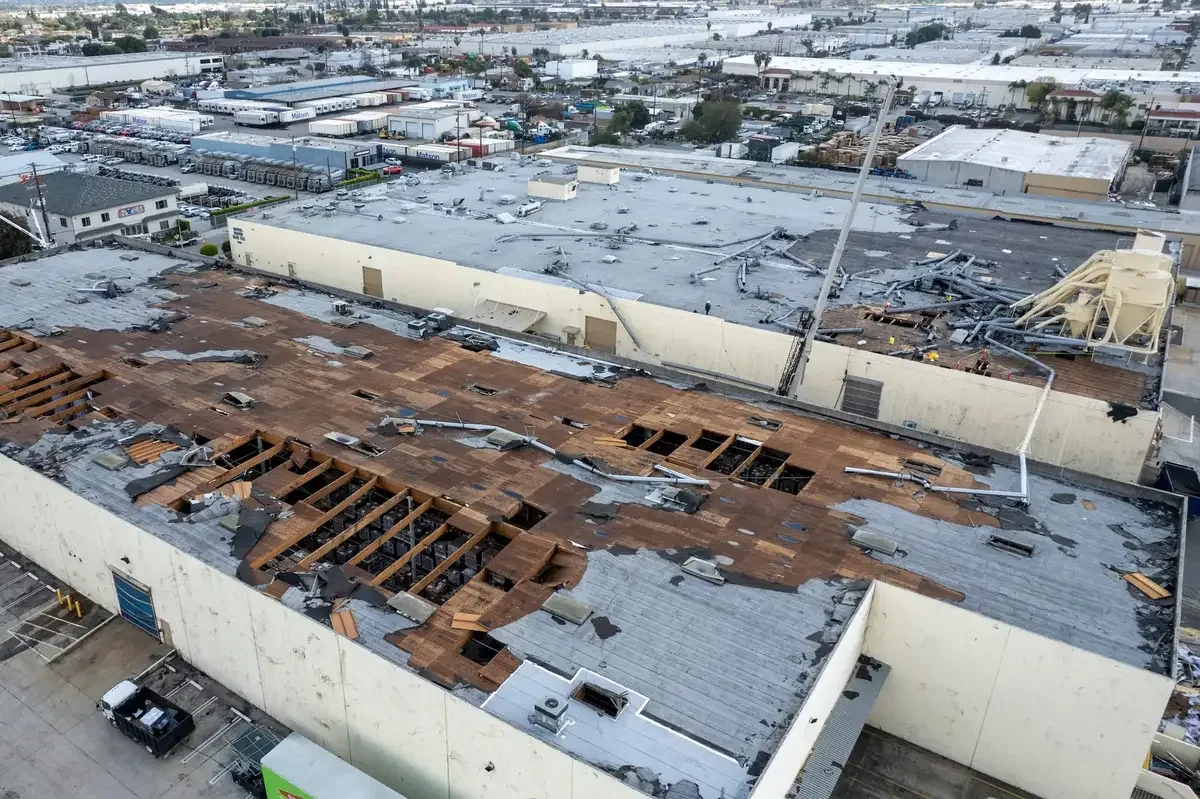
Hail bruising can fracture a membrane in ways a coating bridges only in part. After a storm like the one in July 2025, with hail the size of golf balls, we pull core samples to check for fractured reinforcement and crushed insulation. A damaged roof may belong in a claim file, supported by dated photographs and core findings, before it belongs on a coating schedule.
How are rooftop units and penetrations handled during coating?
Equipment stays in place. We clean, prime and flash around each unit, curb and pipe, and photograph the detail before the coat covers it. Overspray controls and intake separation are planned with the facility and mechanical team. Any shutdown uses an approved window that preserves required ventilation and equipment operation.