KEE Roofing in St. Paul, MN
KEE and PVC-alloy roofing in St. Paul, MN for grease-heavy rooftops, with exhaust mapping, degreased welds and a dated photo record of every repair.
Request a Roof Assessment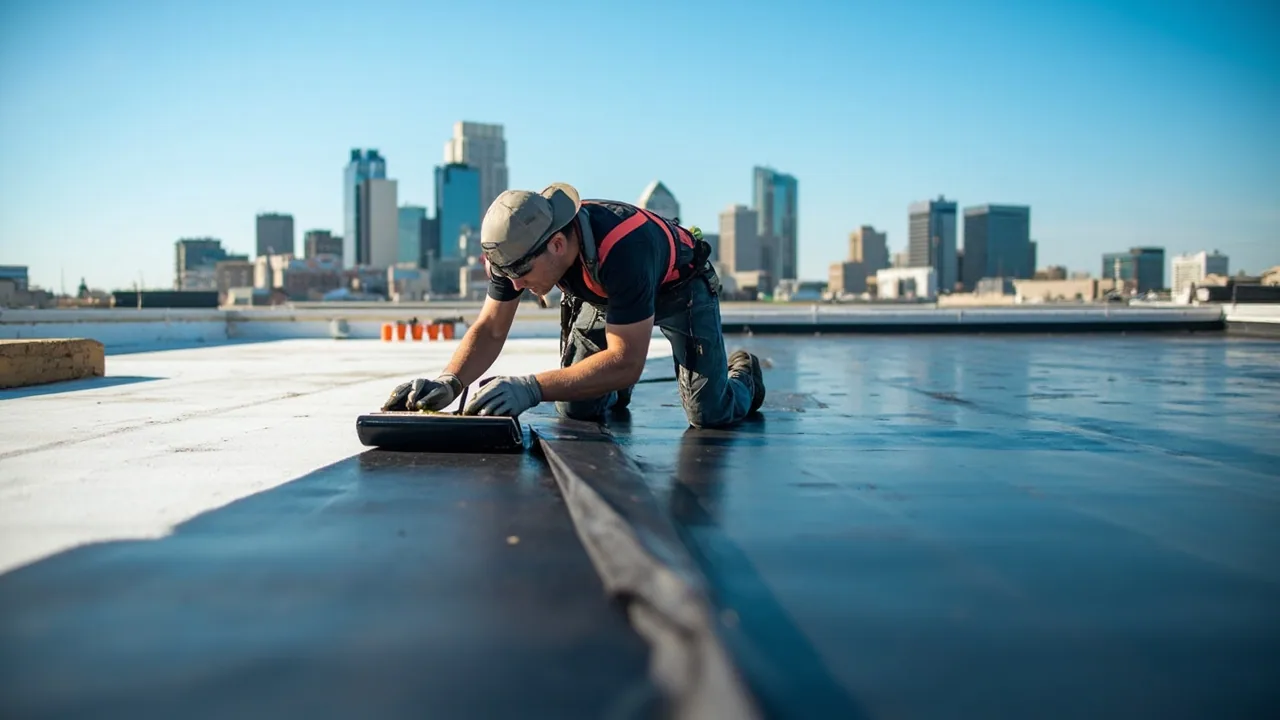
KEE Roofing
On a roof that receives kitchen or process exhaust, the first photograph we take is of the discoloration around each fan. A dark fan of residue downwind of a vent shows exactly where grease settles, and how far it spreads in a St. Paul wind. KEE roofing uses ketone ethylene ester as a polymer component in a thermoplastic sheet. Formulation, chemical resistance and weldability depend on the actual product; a PVC sheet with some KEE is not automatically equivalent to a KEE membrane. We map the residue, record the condition of the sheet beneath it and date every entry, so an owner can see how the roof is coping with what the building gives off.
Mapping Where Exhaust Lands and How the Sheet Responds
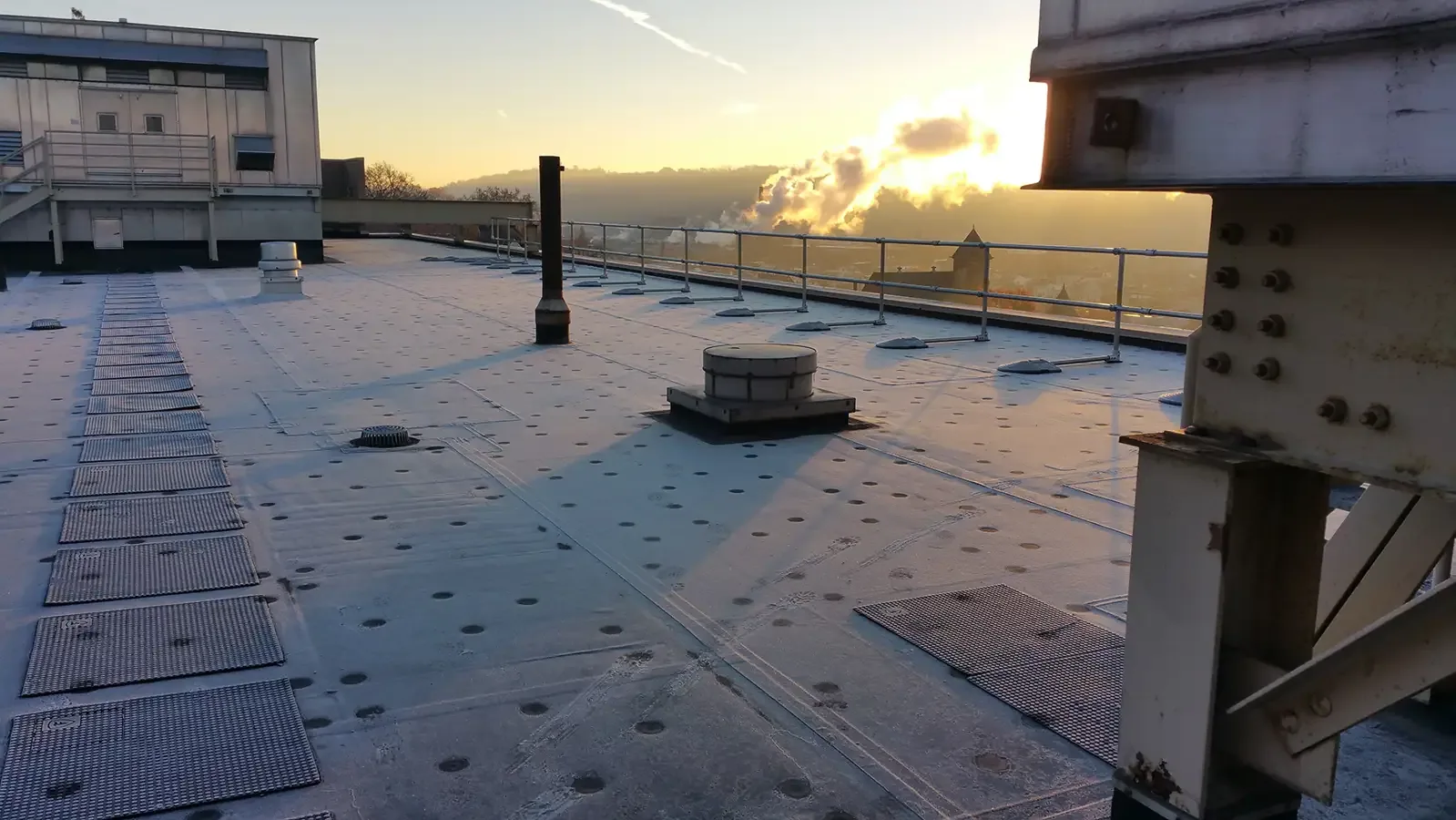
The map starts at the source. We walk the roof, mark every grease exhaust, flue and process vent, and photograph the surface downwind from each. A membrane that is holding up shows stained but firm, with welds that probe sound. A membrane in trouble shows swelling, a tacky feel or a surface that has gone soft. Each reading goes onto the roof plan with its position and date.
Moisture readings are taken in the stained zones as well, because contamination at the surface can hide a leak that has started at a seam. Residue builds up slowly, and nobody sees it from the ground, so the dated photographs give a property manager a first clear look at conditions that have crept in over seasons. Maplewood, which has two Cub Foods stores, and Roseville, home to Old Dutch Foods headquarters, show how widely food-related occupants are spread across the east metro, and the tenant's actual equipment and discharge list establish the roof exposure. A headquarters address or grocery name alone does not prove a process exhaust.
Understanding What the Alloy Adds to a PVC Sheet
KEE formulations use a polymeric component intended to retain flexibility. Chemical exposure still needs the named product's resistance data, including concentration and temperature. For food or process uses, we compare that data and the discharge conditions with the proposed PVC sheet rather than treating every PVC product as an unsuitable alternative.
The sheet is still heat welded, and it is still thermoplastic, which means every seam is a fused bond that can be probed and logged. Because the sheet stays supple, it follows the small movements of a deck through a hard freeze, while attachment and detail geometry still govern how movement reaches seams and corners. It does not remove the need for cleaning, drainage or inspection. The record tracks observed condition; flexibility alone cannot predict remaining service life.
Degreasing, Welding and Patching a Contaminated Surface
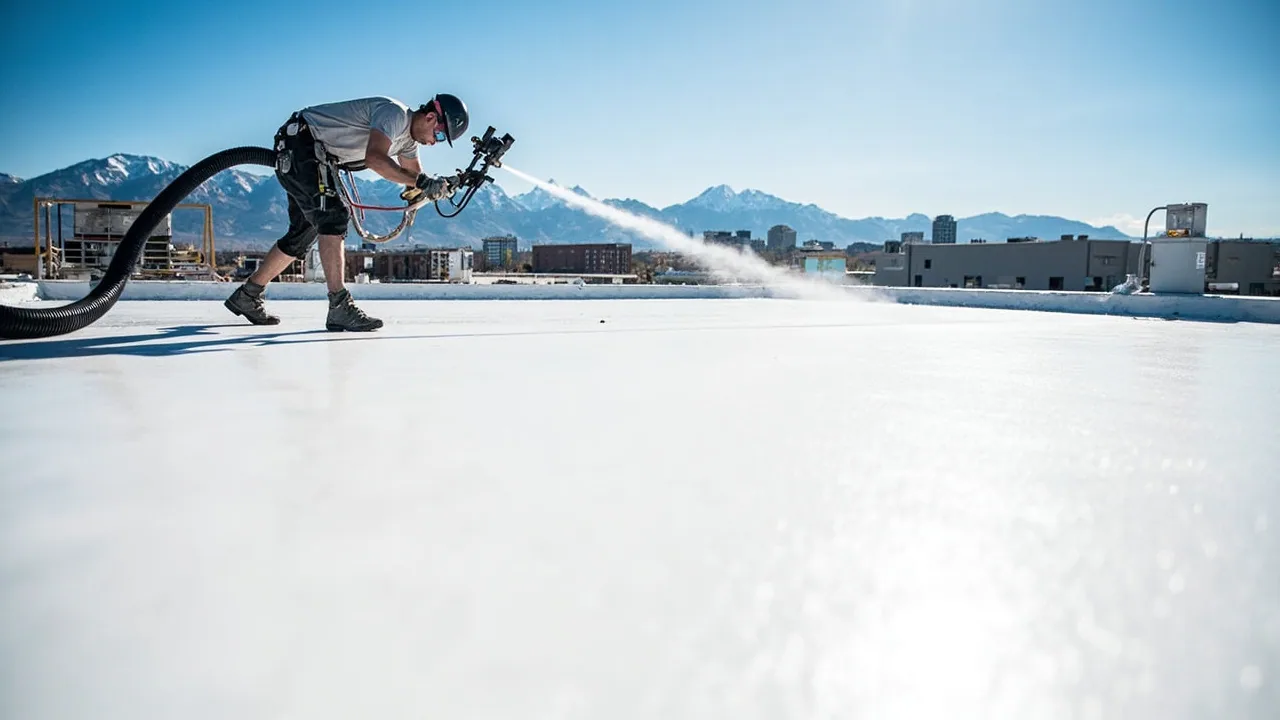
A hot-air weld will not fuse to a surface coated in grease, so every repair on a KEE roof begins with cleaning. We scrub the area with a membrane-safe cleaner, rinse it, let it dry, and weld a test strip beside the repair. The strip is pulled by hand, and the result is logged. A failed strip requires review of cleaning, heat settings, product compatibility and membrane condition. Repeated cleaning alone may not resolve it.
Details deserve the most care. Pipe boots, curb flashings and walls that sit near exhaust vents collect the heaviest film, so we degrease them before welding and photograph the finished seam beside a scale. A failed flashing found in this condition is repaired with a fresh weld rather than a bead of sealant, since sealant will not bond to the film that caused the problem.
Watching Drains, Ice and Hail on a Roof That Collects Grease
Grease travels with melt water and settles in drain bowls and low points, where it can slow the flow and coat the strainers. A slow outlet can retain meltwater while surrounding roof areas are already thawing, so the drain condition is recorded directly. We clear and photograph the drains and scuppers, note any film on the bowl, and record how quickly standing water leaves after a melt.
Grease and ice together make a slick surface, so roof access is planned with safety in mind, and we record the condition of walkways. July 2025 metro storm reports provide regional context for an impact inspection, and a sheet softened by residue can bruise more easily. We chalk and photograph every impact in a measured test square so that an adjuster sees the roof as it was found.
Choosing Between KEE, PVC and a Lower-Cost Sheet for a Grease-Heavy Roof
The choice turns on what the building will exhaust over the life of the roof. A restaurant roof or the roof of a grocery store places a heavy and permanent load of fats on the sheet. A warehouse with a few small vents does not. Rubber such as EPDM swells in contact with oils, which makes it a poor match under heavy exhaust. We price a KEE assembly and a lower-cost membrane side by side from measured quantities, so the owner can see what the premium buys.
Tenant turnover is the other consideration. A space that holds a bakery today may hold a call center in five years, and the roof is in place for decades. A preventive maintenance routine with a dated exhaust map keeps track of those changes, so the roof is judged against its actual exposure and not its original drawing.
Before we recommend a KEE repair, we identify the installed membrane and select a compatible cleaning and welding procedure. Grease, oils, coatings and previous patches can leave different surface conditions across nearby zones. A test weld on prepared material helps confirm whether the method suits the field. Our report identifies the tested area and any limits on the recommendation.
Questions We Hear
How can I tell if grease is damaging my membrane?
Softening, swelling or a tacky surface near an exhaust are the signs, along with welds that peel when probed. We photograph the stained area, press the sheet, and pull a test weld to compare it with membrane away from the vent. Those three records, dated, show whether the exposure is cosmetic or active.
Can an old KEE roof still be welded after years of grease exposure?
Only once the surface has been degreased and a test strip has been pulled. The alloy usually welds well when it is clean, because it keeps its flexibility. If a strip fails, we log the result and widen the cleaning. If it fails again, the discussion turns to replacing that section.
Where do grease and ice combine to cause trouble on a flat roof?
At the drains, mostly. Fat that washes into a bowl can slow the flow, and a frozen strainer then turns the first thaw into ponding. We clear the bowl, photograph the strainer and measure how long water stays behind. On a roof like this the drain record is as important as the seam record.
What belongs in the file for a grocery rooftop?
An exhaust map, dated photographs of the stained zones, weld test results and the moisture readings taken beside them. Add the drain log. A property manager can then show an insurer or a lender how the sheet has been tracked, and a new tenant can see what the roof has already absorbed.
Is KEE worth choosing if my tenants may change?
Tenant changes warrant review of possible future exposures rather than an automatic membrane choice. A roof outlasts several leases, and the next occupant may be a kitchen. A sheet that already resists grease keeps the building flexible, while the dated exhaust map shows what each tenant added. Owners with one steady tenant and no vents may prefer a plainer membrane.