
Grocery Store Roofing in St. Paul, MN
Roof inspection, repair and replacement for grocery stores in St. Paul, MN, with photo records around refrigeration equipment and work phased around the store.
Request a Roof Assessment
Grocery Store Roofing
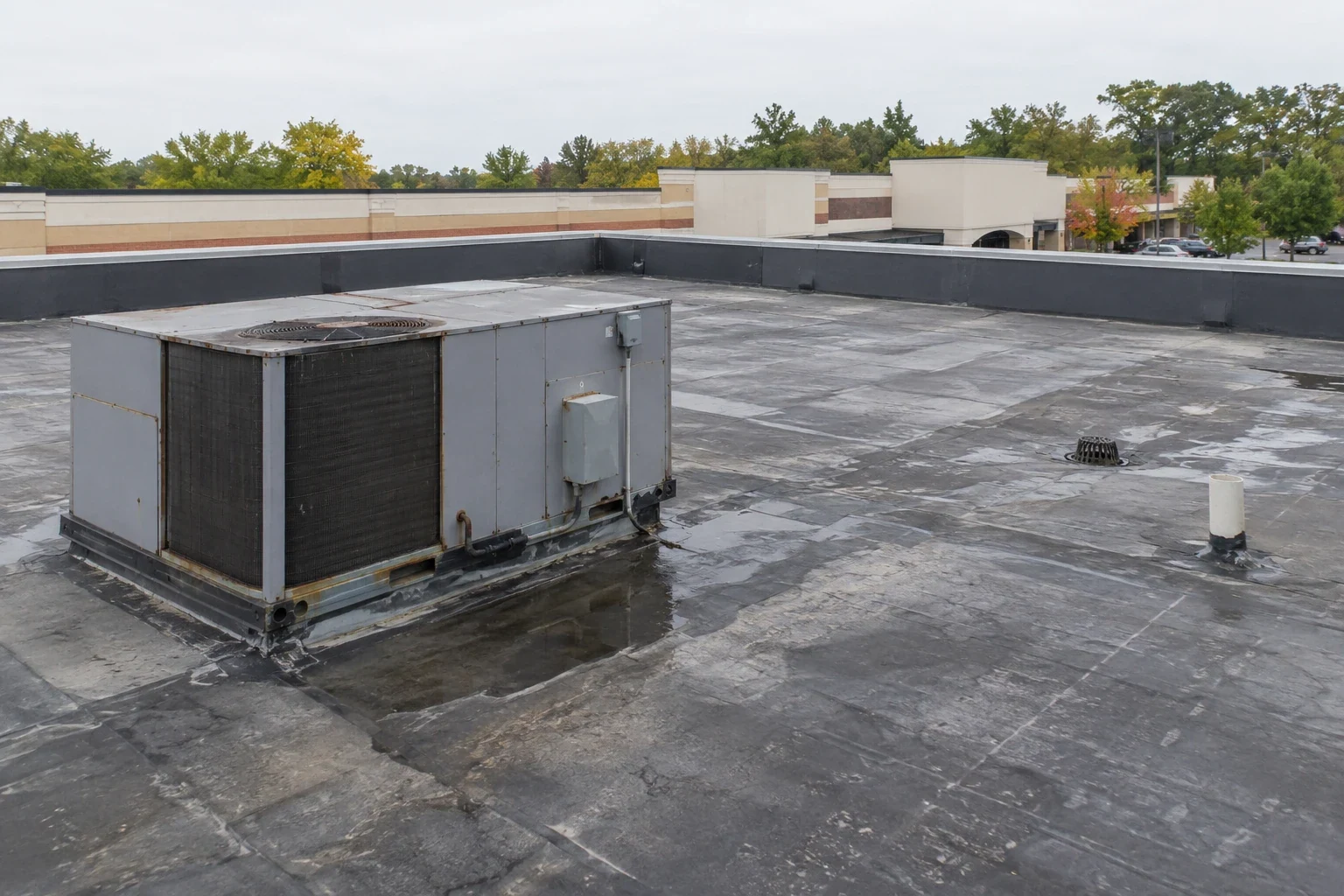
The log for a grocery roof begins at the refrigeration condensers, because the water, the vibration and the heat all arrive in that corner together. We photograph the pipe runs and supports, take moisture readings on the membrane at each unit and record how the condensate drains away. A grocery roof in St. Paul, MN carries machinery that never stops, over a sales floor full of product that cannot get wet, so the first entry in the file describes the condition of the roof exactly where an owner has the most to lose.
Recording the Roof Around Condensers and Piping
Refrigeration equipment sits on supports and runs pipe across the roof, and every support is a point where the membrane takes load or abrasion. Vibration works at the sheet beneath a frame, and a pipe saddle that has shifted can wear a thin spot through the surface. We examine each support, record the condition of the membrane under and around it, and photograph any wear we find.
Pipe penetrations deserve the same care. A line set that passes through the roof needs a boot or a flashing that is sealed to the pipe and to the membrane, and both bonds age. The flashing at skylights and penetrations is logged by location and date, which tells the owner exactly which seals have been renewed and which have not been touched since installation.
Protecting Food and Cases Below an Opening
A roof opening above a grocery store has to be sized to what can be protected below. Before we cut, the store staff clear the aisle beneath the work, and a temporary ceiling or cover goes up over the cases and the displays. The opening is kept small and is sealed before the shift ends, with a photograph taken at close so the condition is on record.
Leaks do not wait for slow hours, and grocery stores keep long hours. Our emergency roof repair response runs at any hour, nights and holidays included, so a reported overnight leak can be assessed for safe temporary protection, subject to access and weather. We photograph the damage before covering it, so the loss is documented for the adjuster while store personnel protect affected product.
Weighing Deep Cold and Heavy Snow Against Rooftop Equipment
The Twin Cities reached -23 degrees on January 21, 2014, in a winter that delivered 69.8 inches of snow, and a roof that works through such a season does it with equipment standing on it. Cold stiffens membranes and makes seams and flashings less forgiving of movement. Snow drifts against condenser frames and penthouses and loads the structure beyond the even layer, and the 50 psf ground snow figure used across Ramsey, Dakota and Washington counties is only a starting point for a roof whose actual equipment and drift loads must be reviewed by the designer.
Ice dams at the eaves above an entrance canopy are another winter entry. Where carts are staged and customers walk, falling ice is as serious as the leak that caused it. The record from a snow and ice damage repair visit includes the location of each dam, the heat loss or drainage fault behind it, and the correction made.
Matching the Membrane to Foot Traffic and Kitchen Exhaust
A grocery roof gets more traffic than most, because refrigeration technicians climb up for service all year. Walkway pads protect the route between the access hatch and the equipment, and we record any worn section so the pads are replaced before the sheet beneath is cut through. A single-ply sheet can be patched when a boot heel or a dropped tool cuts it, and each patch is logged with its date.
Stores with a bakery or deli add exhaust that can leave grease on the surface. A PVC roof needs product-specific compatibility review for the fats and oils actually deposited, and the grease problem is one that grocery roofs share with restaurant roofs. When a grocery store is reroofed, the choice of membrane follows what the exhaust leaves on the surface, not a default product.
Coordinate Phasing With Store Operations
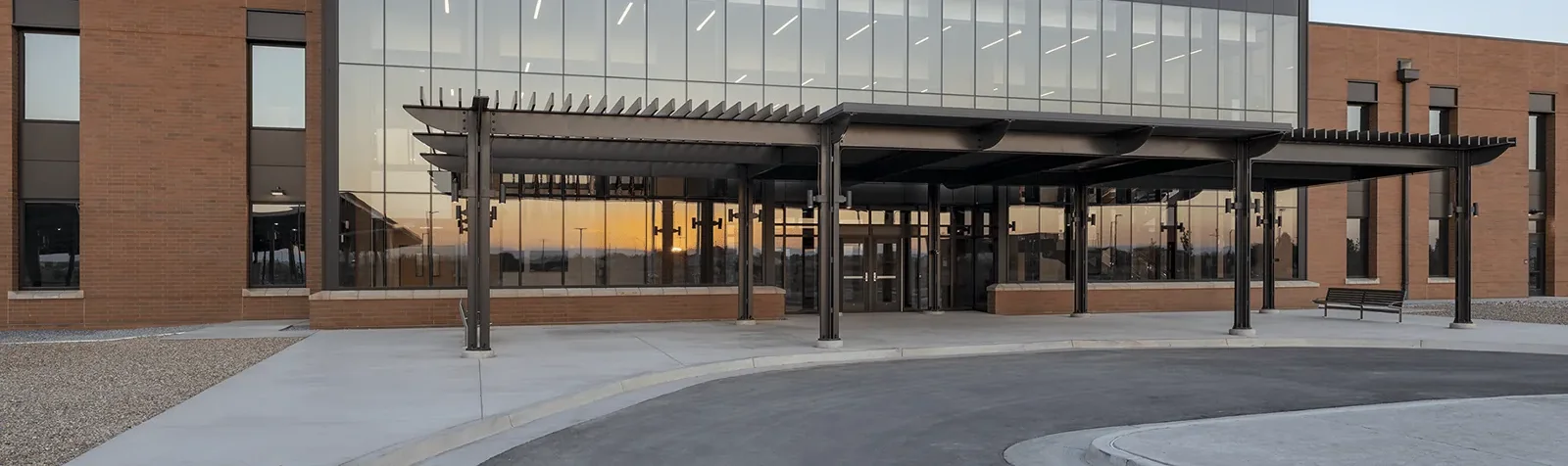
A replacement is planned in sections, with the first section chosen for the worst moisture readings and the equipment that can be shut down most easily. The refrigeration contractor lifts or isolates the units in the section being worked, and the roofing crew replaces the membrane and flashing before the equipment is set back. Each section is dried in, photographed and dated before the next is opened. Walkways to the loading dock stay clear, deliveries keep their windows, and the store manager receives the day's plan the evening before so receiving, stocking and roof access never share the same door at the same time.
Stores spread across the metro face the same sequence. Maplewood lists Costco and two Cub Foods stores among its larger employers, and West St. Paul runs a 2.5-mile line of shops down Robert Street. A store in the Midway, off University Avenue, is sequenced the same way. A larger store simply has more phases, and a supercenter is sequenced the way any big-box retail roof is.
Our phasing plan accounts for refrigerated cases, receiving hours and aisle protection. For roof zones above temperature-sensitive stock, it identifies the agreed operations contact and the update path if weather delays closeout. The roof plan shows the delivery route, protected interior area and next inspection, while store operations retain control of product handling.
Questions We Hear
Why do leaks near the refrigeration racks keep returning?
Vibration and movement keep working on the same few seals. A pipe boot loosens, a support shifts on its pad, or a condensate line drips on one spot. We locate the exact penetration with a moisture map, repair it with a detail matched to the pipe, and then log the date so a second leak at the same spot shows a pattern.
What happens when a roof leak starts over the produce aisle at night?
We assess safe exterior access and temporary measures for the reported entry while the store staff protect the product. Before anything is covered, the damage is photographed with a date, and the wet area is marked on a plan. The permanent repair follows when conditions allow, and the photographs go into the claim file.
Can condensers stay in place while the membrane beneath them is replaced?
Lifting the units, with the store's refrigeration contractor, is the usual route, because a membrane cannot be fully flashed under a frame that is bolted down. The sequence is planned in advance with the contractor so product temperatures stay under control, and each unit is set back onto a new support after the flashing has been inspected.
How cold can it be before roof work has to stop?
Each material has its own lower limit for adhesives, welds and sealants, and the limit is read from the manufacturer's instructions before work is scheduled. Minnesota winters pass those limits for long stretches, so planned replacement happens in the warm months, and winter visits are limited to repairs that keep the building dry.
What belongs in the file when a store changes owners or banners?
The file holds the roof plan, the dated photographs, moisture readings, core findings, the location of every repair and the warranty paperwork. A buyer's lender can review it and identify whether a new survey is needed to establish current condition, and the new operator can see which equipment is on the roof and which supports have been replaced.