
TPO Roofing in St. Paul, MN
TPO single-ply roofing in St. Paul, MN: seam probing, attachment choices for snow and hail, and a dated photo record of every weld we repair or install.
Request a Roof Assessment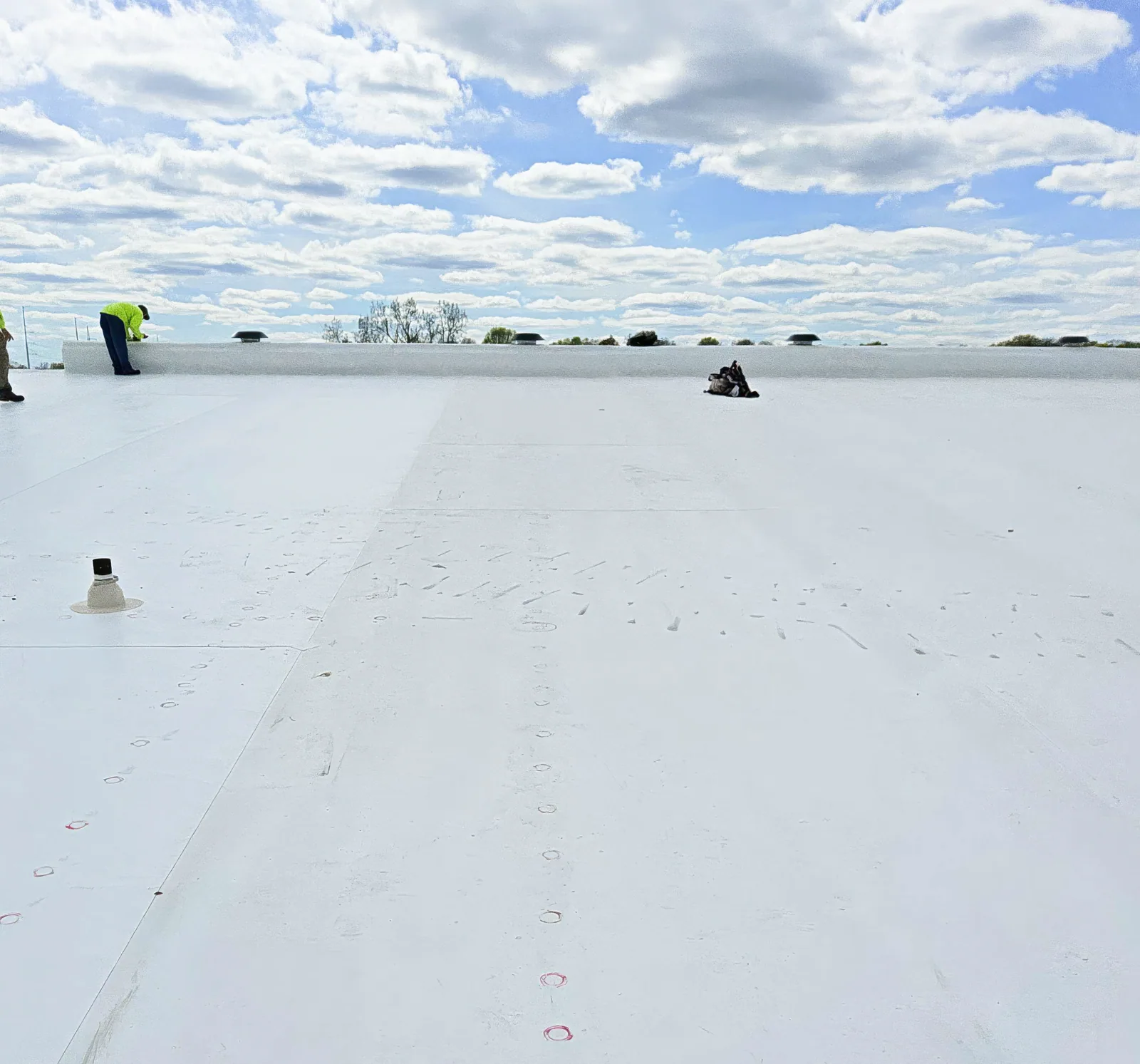
TPO Roofing
The first entry in our log on a TPO roof in St. Paul is the condition of its welded seams, because the seam is where a single-ply sheet either holds or lets go. TPO, short for thermoplastic polyolefin, arrives in wide white rolls that are joined with hot air into one continuous surface. We run a blunt probe along each weld, photograph any lift or open edge, and mark its position on the roof plan. That dated record tells an owner how the membrane is aging, and it gives a future buyer or an adjuster something firmer than a recollection.
Probing Welds, Flashings and Surface Wear on an Existing Sheet
A good TPO weld is a fused bond, not a glued one, so a failure usually shows as a thin dark line at the lap or a lifted edge that a probe slides under. We test along every lap and at every T-joint, where three layers meet and the weld is hardest to make well. Corners of parapets and the bases of rooftop units get the same attention, because the membrane is pulled tight there and tends to shrink away from the wall over time.
The surface tells its own story. Dirt that sits in ponded areas, scuffing around hatches and equipment paths, and pinhole cracking near heat sources are each photographed with a date and a position. Moisture readings follow wherever a flaw is found, so the log shows whether water has moved into the insulation beneath the sheet or stopped at the surface.
Matching the Attachment Method to Snow, Wind and the Deck Below
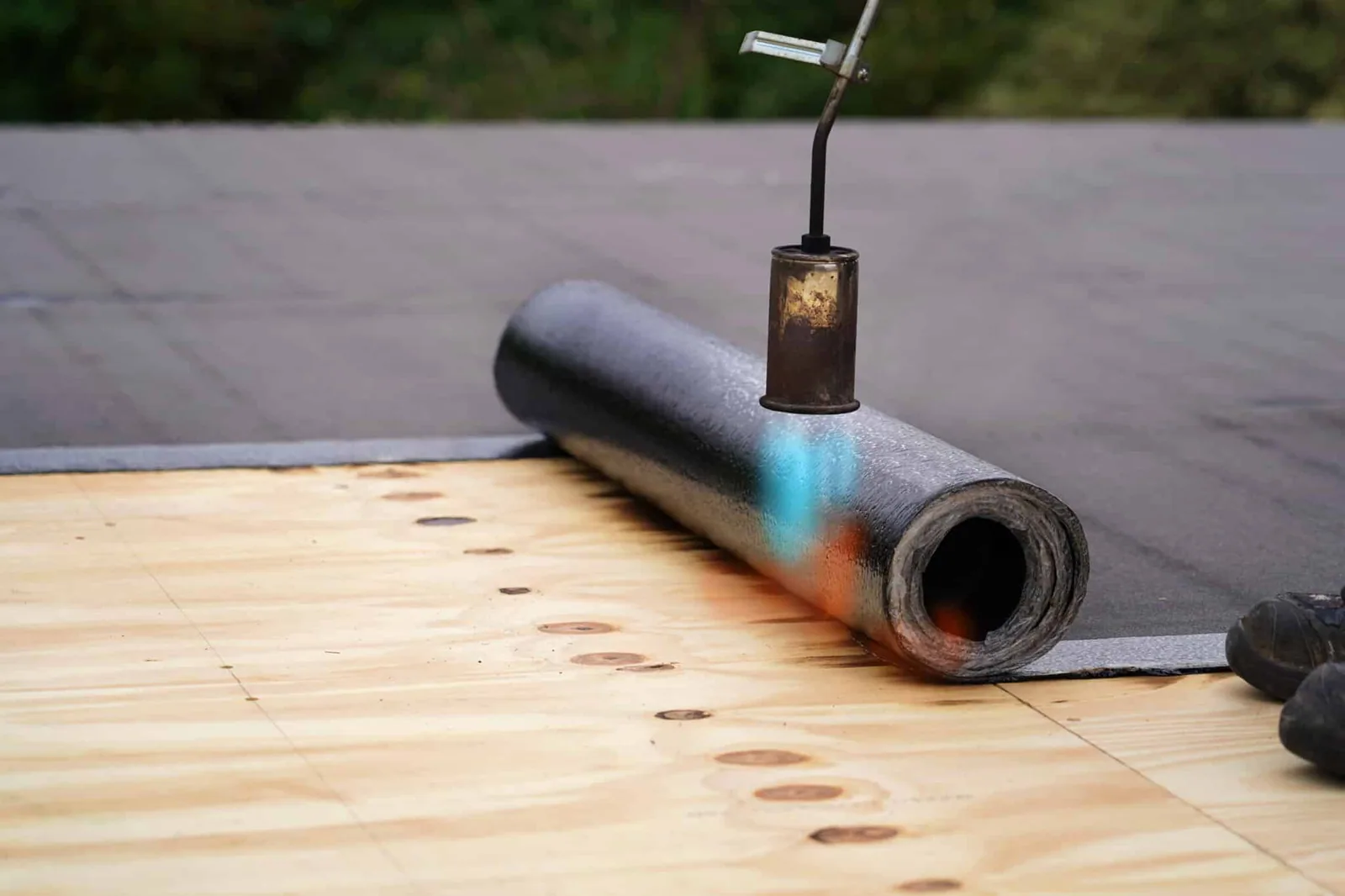
TPO can be held down three ways, and each has a different record to keep. Mechanically attached sheets are fastened in rows beneath the laps, which is quick and light but depends on the deck accepting fasteners and on the rows being spaced for wind. Fully adhered sheets are bonded to the insulation or a cover board, which spreads wind load across the whole surface and quiets the flutter that can wear a membrane at its fasteners. Ballasted systems rely on stone weight and are rare where a structure has little reserve.
In the St. Paul area, the cited county ground-snow input is 50 psf. The engineer derives roof loads and available capacity from the building design rather than treating that input as a load limit. We check what the existing deck and framing can carry before suggesting anything heavy. On the light-industrial and flex buildings held by the Port Authority's Energy Park and Westgate business centers, a lighter mechanically attached or adhered assembly is usually the first option we weigh.
Documenting Hail, Wind and Cold Against the Membrane
Regional July 2025 wind and hail reports provide an inspection prompt, while Woodbury was inside the flash flood warning that evening. Hail damage to a TPO sheet is not always a puncture. The stones bruise the surface and can fracture the polyester reinforcing scrim just under it, which leaves a roof that looks sound and leaks months later. We chalk each impact, photograph it beside a ruler and log the count in each test square.
Winter is the other test. A sheet that is stiff at 20 below zero can crack where it is bent over a curb or pinned under ice, and on January 21, 2014 the Twin Cities dropped to 23 below. A roof that went through such a stretch gets a seam and flashing check as soon as the snow clears, and we compare it against the previous dated photographs.
Weighing Repair, Recover and Replacement Before Any Welding Starts
Not every aging TPO roof needs a new sheet. Isolated open seams, a split at a flashing or a patch of hail bruising can be repaired by cleaning the membrane, hot-air welding a new cap, and probing the edges when it cools. Older TPO that has soaked up dirt needs a thorough cleaning first, since a weld will not take on a contaminated surface. When our infrared and core-cut moisture survey shows the insulation is dry, a recover over the existing roof can be evaluated further. Layer count, attachment, structural capacity and code eligibility must also support it. Wet insulation points toward full replacement.
Cost drivers are practical: how many penetrations the roof carries, the height of parapets, whether the insulation must be brought up to the current energy code, and how many hours the tenant allows the crew on the roof. A flat-roof re-roof in St. Paul does not go through express online permitting. The Department of Safety and Inspections reviews the plans, which must name the membrane, give the roof area and size the drains, so we measure and record those three items before pricing is final.
Filing the Record That Backs a Manufacturer or an Insurer
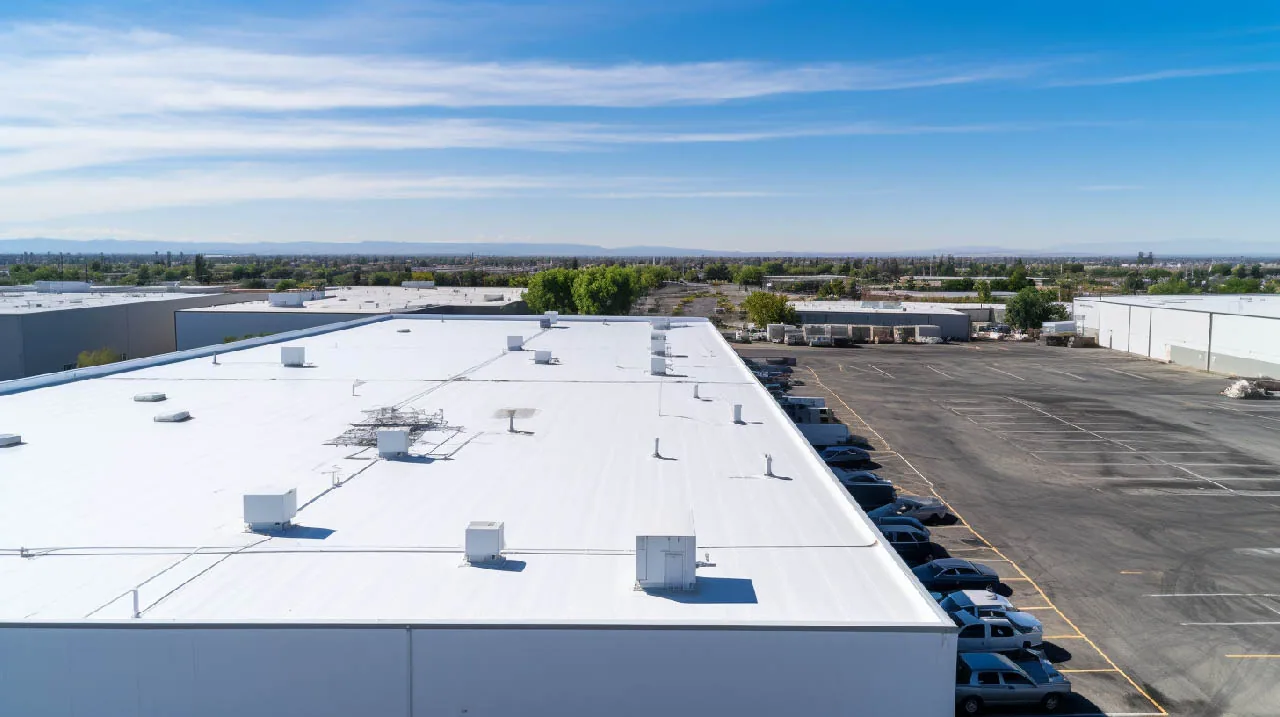
A manufacturer's warranty on a single-ply roof usually expects evidence that the roof was looked after, and an insurer expects evidence of what the storm did and what the roof looked like before it. Both are answered by the same file. Ours holds the dated inspection photographs, the seam probe results, the moisture readings, and a before-and-after set for every repair. A defensible claim is built from that sequence, not from a single photograph taken after the damage.
When a TPO roof is part of a larger portfolio, the file also lets an owner compare buildings and spend where the evidence says to. Pairing the log with a proper seam failure repair keeps each fix traceable to the finding behind it. An owner who is still comparing systems will want the same kind of record for PVC, which welds much as TPO does, and for EPDM, which is joined with tape or adhesive.
Questions We Hear
How can I tell whether a TPO seam is failing or only dirty?
A probe tells the two apart. We draw a blunt tool along the lap edge, and a sound weld resists while a failing one gives way or shows a gap. Dirt and shadows on the surface do not move under the probe. Each suspect seam is photographed beside a scale and logged with its location, so the next visit can show whether it has changed.
Does a white roof help or hurt on a building that sits under snow half the year?
Reflectivity can reduce summer surface temperature, but utility effects depend on building loads, insulation and shading. Snow cover varies rather than always concealing the roof in January. The designer confirms applicable energy provisions and evaluates insulation separately from membrane color.
What does golf-ball hail do to a TPO membrane?
Hail leaves bruised circles, and the harder impacts break the reinforcing scrim beneath the surface even when no hole shows. We chalk and photograph each hit, log the count in measured test squares, and note any punctures at seams. That record is what an adjuster needs when a storm like the one on July 28, 2025 passes over a roof.
Can new TPO go over an old built-up roof at a flex building?
Only after moisture, layer-count, substrate, attachment, structural and code review support the proposed recover. We scan, cut cores at the doubtful spots and read the insulation. A dry assembly may take a cover board and new sheet if those additional checks support the approved system. Saturated layers must come off, since trapped water adds weight to the deck and ruins the thermal value of the insulation under the new membrane.
What belongs in the file after a TPO repair?
Dated photographs of the defect before cleaning, the welded patch after it cools, and the probe results along its edge. Add the moisture reading taken beside the repair and a marked roof plan. Together they show a future owner, insurer or manufacturer exactly what was found and exactly what was done.