
Seam Failure Repair in St. Paul, MN
Seam failure repair in St. Paul, MN: probe testing of every lap, a numbered seam map and cold-weather timing for welds, tapes and cover strips.
Request a Roof Assessment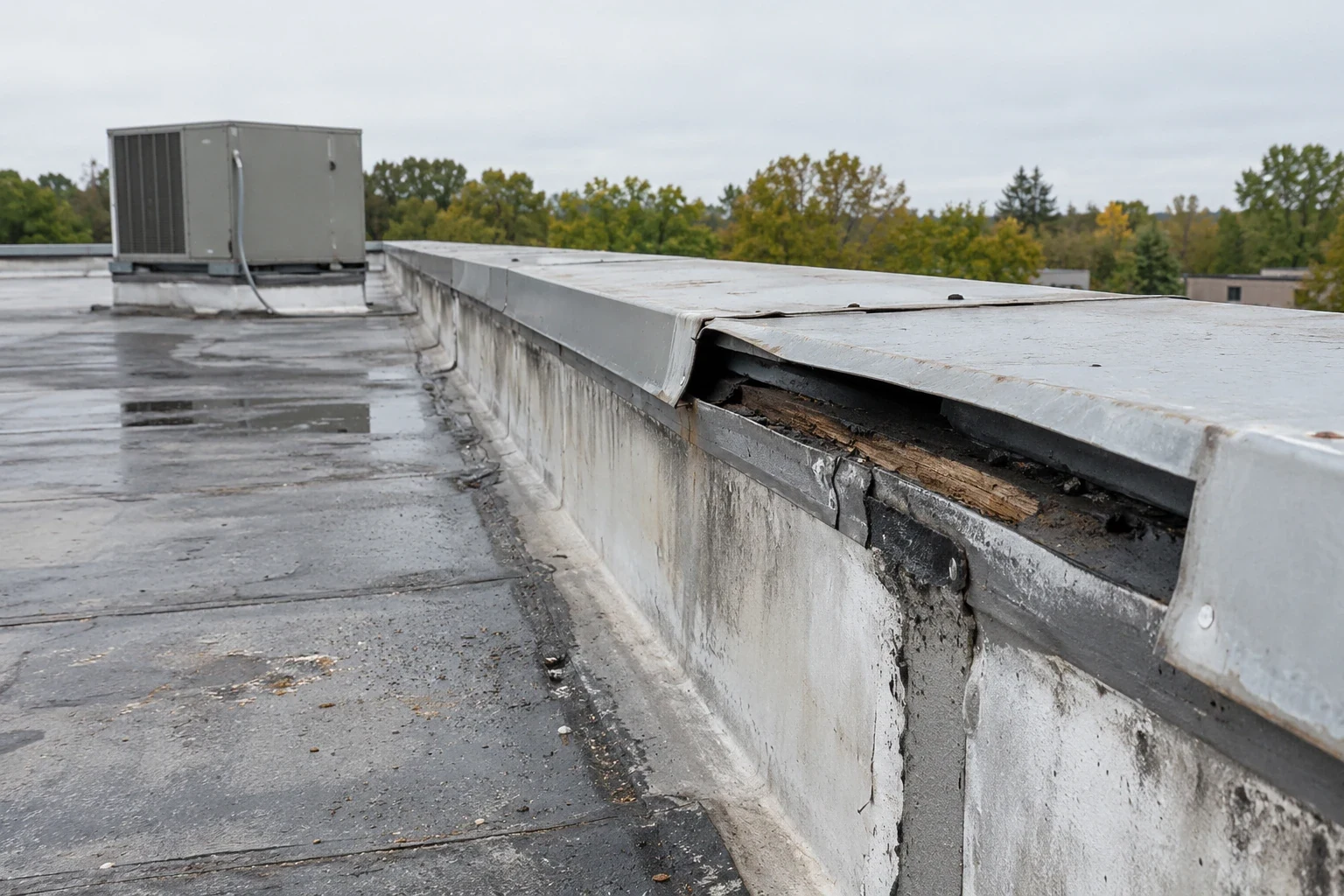
Seam Failure Repair
A seam probe drawn along a lap gives its answer in a few seconds: either the steel tip meets a solid bond, or it slides into a channel where the two sheets no longer touch. We walk a roof with that probe and a marker, and every open stretch gets a number on the membrane and a matching photograph. By the end of the walk, the owner of a St. Paul, MN roof has a seam map, which is a more useful thing than the general advice that seams are a common leak point.
Seams are where a flat roof is made, not where it is merely finished. A membrane arrives in rolls, and the building's waterproofing is only as continuous as the joints between those rolls. A seam that opens a quarter inch across a roof field gives water a path into the insulation, and it often does so long before a stain appears on a ceiling below.
Probing Every Lap, Weld and Splice for Open Channels
The method depends on the system. On a heat-welded PVC roof or a TPO roof, weld acceptance follows the manufacturer's width, probing and test-seam requirements. An edge bead alone does not prove a sound weld. We look for cold welds, where the sheets touched without fusing, and for skipped stretches where the welder paused. On an EPDM roof, seams are joined with adhesive or tape, and failure shows as a lifted edge, a dirty channel or a splice tape that has crept out of position.
We mark each open stretch with its length, its position on the roof plan and its condition, such as a pinhole, a clean separation or a stretch lifted by a fastener. We also test the seam on either side of any failure, because seams that open often do so in sequence along a line of stress. The photographs carry a date and a tape measure, and the numbers on the roof match the numbers in the written report.
Reading Tension Splits at T-Joints and Cold Corners
Not every seam failure is a bad weld. In a Twin Cities winter that reached -23 degrees on January 21, 2014, a membrane contracts hard, and the stress finds its way to the weakest point, which is usually a T-joint where three sheets meet or a corner where the sheet turns up a wall. A fishmouth is an unbonded wrinkle or opening at a lap, rather than a name for every tension split. We describe the observed defect before attributing its cause.
When the splits cluster along one line, they usually point to a fastener row, a deck joint or a long straight run with no allowance for movement. When they are scattered, the cause may be installation quality or an aged membrane that has lost flexibility. The pattern determines the repair. A single tension split calls for a patch and a closer look at the nearest fasteners. A roof with dozens of them calls for a larger conversation about how much service life remains.

Dating the Split Against Snow Removal and Foot Traffic
The clearing history belongs beside the seam record. Tools and routes differ between buildings, and seasonal snowfall totals do not identify which surfaces were worked or how they were handled. A metal tool pulled across a seam can score the lap, and a chunk of ice dragged over it can lift an edge. We look for linear scratches, gouges and scuffs that line up with a snow-clearing path, and we record them separately from splits that follow a stress line.
Any roof with rooftop units takes regular service visits, and each visit puts boots on the seams. Owners of large retail centers, with Rosedale Center in Roseville and Maplewood Mall in Maplewood among the best known in this market, can expect that traffic to build up over the years, so we log each repair against its date and read the scuffs in that light. A walk pad laid along the service route, once the seams have been repaired, protects the repair from the same traffic.
Choosing Between a Re-Weld, a Cover Strip and a Larger Repair
For a short open stretch on a sound membrane, we clean the area and re-weld or re-bond the seam. A cover strip, a band of new membrane welded or adhered over the seam, can serve a longer run or a seam on a membrane whose edges have been weathered. For T-joints, the approved junction treatment addresses the step and lap geometry. Depending on the system, that may require a target patch or manufacturer-specified sealant. Our commercial roof repair crews choose among these according to the condition of the sheet, not the convenience of the tool.
Cold weather limits what is possible. Hot-air welding wants a dry, clean membrane, and adhesives and primers have temperature ranges. In January we can often stabilize an open seam with a temporary seal, then return in spring to make the permanent repair. When seams are failing across a large share of a roof, replacement may cost less over time than a long series of repairs, and we lay out both paths with the seam count beside them.
Filing the Seam Map With the Warranty and Maintenance Records
A numbered seam map is a living document. Each year the same seams are re-probed, and the map shows which repairs held, which new openings appeared and where the membrane is aging fastest. That history supports a preventive roof maintenance budget and gives a lender or buyer a defensible picture of the roof's condition.
Warranties treat seam failure in different ways. Some cover defects in workmanship or materials for a stated period, while others exclude damage from ponding water or foot traffic. We record what the seam looked like, what repair we made and who made the original installation, if the owner knows, and we leave the coverage question to the warranty documents and the manufacturer. Where a seam failure follows a storm, our wind damage file shows the connection, and our record of ponding water shows whether a pond was already stressing the lap.
Questions We Hear
Can a split seam be welded in winter?
A temporary seal can go on in cold weather, often with a cold-applied adhesive or tape, but a heat weld needs a dry, clean sheet in suitable temperatures. Where a compatible temporary treatment is feasible, we photograph it and record a return plan. Permanent welding can occur before spring if the product and site conditions permit.
How wide should a heat-welded seam be?
Manufacturers set a minimum weld width for each membrane, and the figure differs between products. We measure the seams on your roof against the specification for the sheet in place and record any stretch that falls short, whether or not it leaks today.
Does an open seam mean the whole roof is failing?
Not by itself. One or two open stretches on a membrane that is otherwise supple is a repair. Dozens of them, especially on a brittle sheet, suggest the roof is reaching the end of its service, and the seam map shows which description fits.
Why do seams split at T-joints first?
The overlap creates a thickness transition that can leave an unsealed channel if welding or junction treatment is incomplete. Movement may add stress, but it is not the only cause. Repair follows the installed system's approved T-joint detail rather than a universal molded patch.
Who pays when seams open on a roof that is under warranty?
Coverage turns on the warranty's wording, the cause of the failure and whether maintenance has been kept up. We supply the dated photographs and the seam map, and the owner takes them to the manufacturer or the original installer with a clear account of what was found.