
Wind Damage Roof Repair in St. Paul, MN
Wind damage roof repair in St. Paul, MN, with dated photographs of lifted edges, loose membrane and failed fasteners that an adjuster can verify.
Request a Roof Assessment
Wind Damage Roof Repair
The photograph that carries a wind claim is the one taken before anyone touches the damage. A cap that has slid off a parapet, a membrane edge curled back on itself, a row of fastener plates standing proud of the sheet: each of these is evidence for a few hours, until a tarp or a repair crew changes the scene. For a St. Paul, MN owner, the July 2025 metro storms provide a dated event to compare with roof observations. Regional reports include 70 mph wind and widespread outages, but they cannot establish wind pressure or damage at the property.
The first visit records displaced materials and the current openings. Failure order is stated only where evidence supports it, and temporary protection is assessed within weather and access limits. The dated file we build also separates fresh wind damage from the slow loosening of seams and edges that comes with age, which is the distinction an insurer will look for first.
Photographing Lifted Edge Metal and Displaced Caps
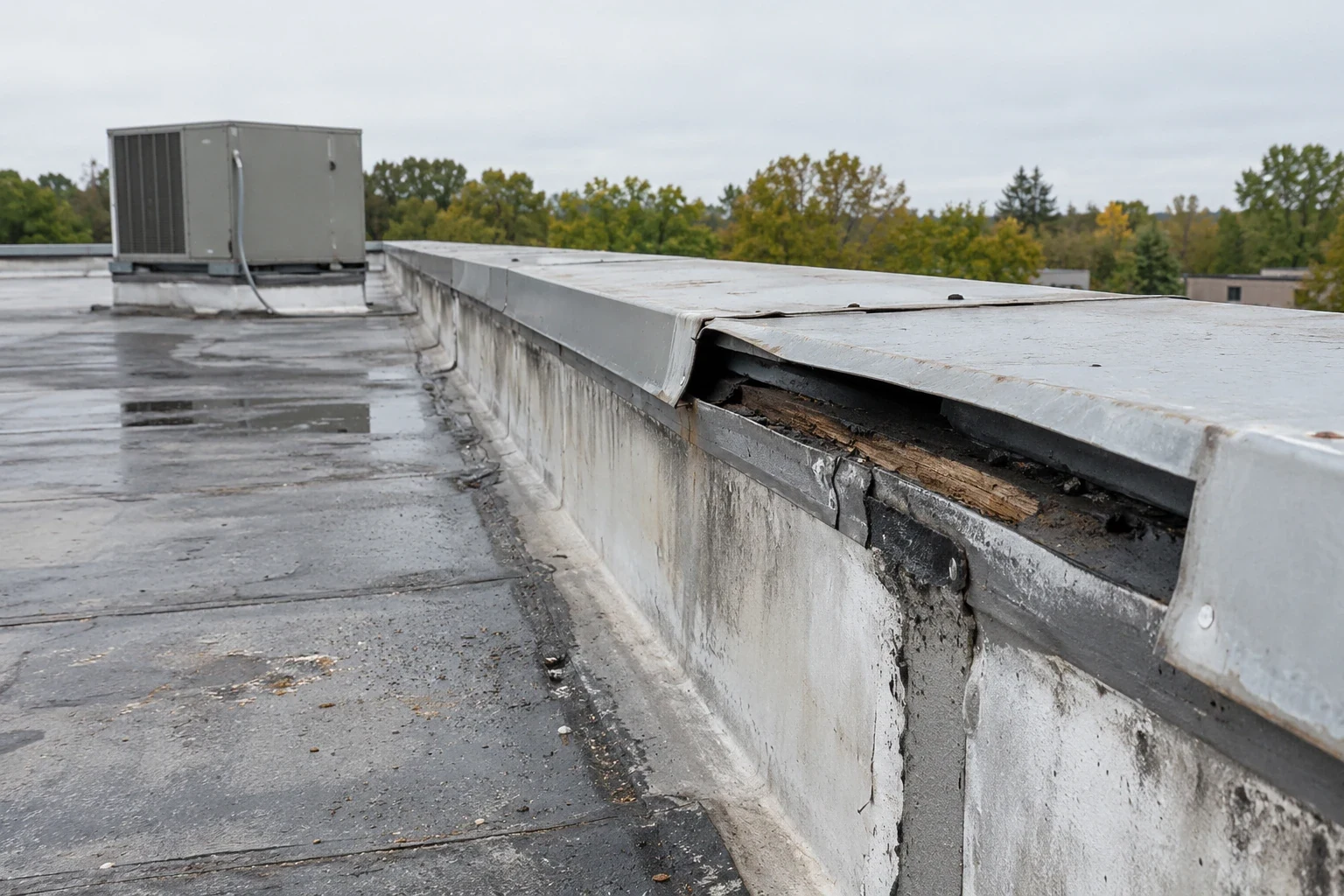
Perimeters and corners warrant close attention because uplift demand can be high there. Airflow at roof edges can create suction that challenges the attachment, so we start by walking the full outline of the roof and photographing every length of edge metal, coping cap and gravel stop from two angles. A recently exposed surface may show bright metal where a cleat released, a bent flange, or a cap sitting a few inches out of line with its neighbors.
A parapet wall that faces a street carries its capping in plain view. Lowertown's listed buildings include conversions to lofts, breweries and restaurants, and a loose cap above a sidewalk there is a falling hazard before it is a leak path, so we log its position, secure it, and mark where the sealant joints have opened. A time, plan location and photograph identify each finding for later repair.
Measuring Billowing and Fastener Pullout Across the Field
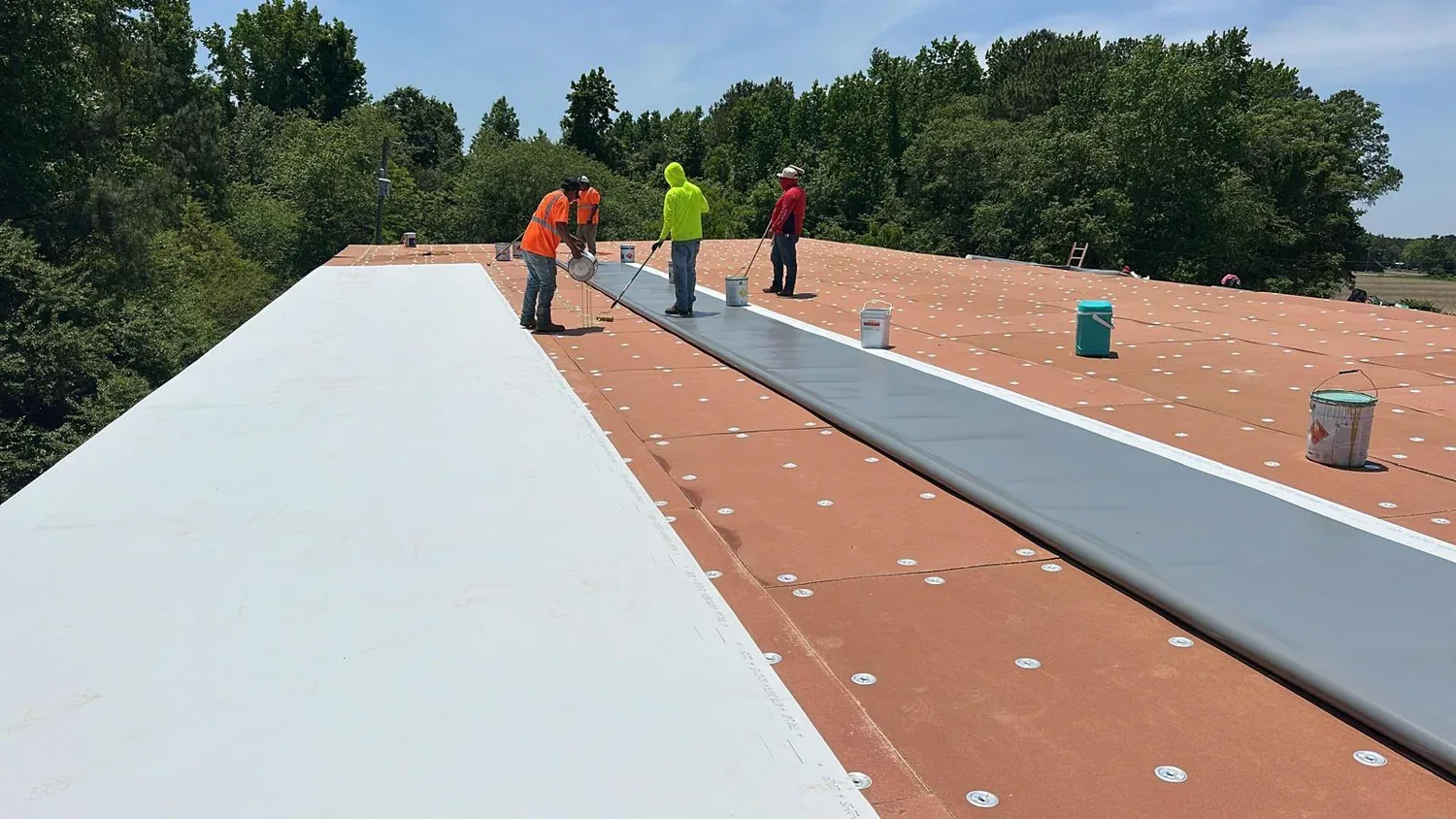
Past the edges, the membrane tells its own story. A mechanically attached sheet that has flapped in a gust leaves rows of crescent-shaped stress marks at each fastener line, and the plates under those marks may have lifted, tilted or pulled through. We press along each row, mark any plate that moves, and photograph the pattern. A fully adhered sheet fails differently: it separates from the substrate in a blister or a long tongue, usually beginning at a corner or beside a rooftop unit.
The Port Authority's Energy Park and Midway business centers hold light-industrial, warehouse and flex buildings, and each property needs its own review of building geometry, exposure and attachment. A ballasted EPDM roof can lose stone from the windward side while the leeward side stays untouched. We map where the stone moved and where the sheet beneath it was exposed, without assuming a single windward displacement pattern applies to every roof. For single-ply systems such as TPO, the same map shows whether the damage is a localized lift or a sign of weak attachment across the whole deck.
Telling Wind Uplift From Cold-Weather Shrinkage
Some of what looks like wind damage is not. A membrane that contracts in a Minnesota January, such as the one in 2014 when the Twin Cities reached -23 degrees, can pull away from flashing at a wall, and thermal stress can crack a seam long before any storm arrives. An insurer will ask which came first, and a defensible answer comes from the evidence on the roof rather than from the date on the calendar.
We take moisture readings under the disturbed areas, cut a core sample where the insulation looks compromised, and note the condition of the edges that did not fail. Dirt lines, algae, old sealant and weathered fastener heads indicate a condition that built up over seasons, while clean, bright tears and scattered debris on the day after a storm point to a recent event. Both observations go into the file, but surface weathering alone does not date a failure.
Securing the Roof Before the Next Gust
Further weather can enlarge an existing opening. An emergency assessment considers feasible closure and restraint while controlling exposure to loose materials and unsafe access. That can mean a temporary membrane patch, screws through the lifted edge metal into solid backing, or a tarp held down with battens rather than loose weights.
Every temporary measure is photographed after it is placed, and the removed pieces are bagged and labeled when an adjuster may want to see them. Over a hospital such as Regions Hospital on Jackson Street, a breach is an interior-protection problem before it is a roofing one, and the same discipline applies at any scale. Our emergency roof repair work is built to stabilize the building and leave a clean trail for the permanent repair.
Writing the Wind Event Into the Claim File
A wind claim rests on three dated items: the weather event, the condition of the roof before it, and the condition after. We pull the storm date from the public weather record, attach our photographs and moisture readings, and describe each repair in plain terms, with the method, the materials and the temperature on the day. Our roof insurance claim assistance starts from that file.
A re-roof in St. Paul goes to plan review that identifies the roofing material, the roof square footage and the drain size, so scope matters to the permit as well as the budget. When the damage is limited to edges and a few fastener rows, a targeted repair is usually the right scope. When the pattern runs across the whole attachment, we say so and lay out the larger options, including commercial roof replacement. Woodbury sat under the same flash flood warning as St. Paul on July 28, 2025, so an owner in Woodbury can end up with wind and water questions in one claim, and a written roof condition report keeps the two apart.
A lifted perimeter can require flashing failure correction as well as field attachment review. We repair the examined extent and identify its receiving material. The event dates the comparison; roof construction sets the repair detail.
Questions We Hear
How can I tell wind damage from a seam that failed on its own?
Compare the observed pattern with pre-event records, maintenance history and available weather evidence. A wind event leaves clean tears, displaced edge metal and damage that follows the direction of the gust, often on one side of the building. A seam that failed on its own usually shows weathered edges, dirt trapped in the opening and no matching damage at the perimeter. We photograph both conditions and state where attribution remains uncertain; clean or dirty edges alone cannot settle it.
What wind speed does it take to peel a flat roof?
No single figure applies, because the attachment, the edge detail and the height of the building change the load on each roof. Edge metal rated to a recognized test standard resists much more than a cap held by a few old nails. A reported regional wind speed does not establish the pressure at the roof. A failure still warrants attachment review, and we record it as such.
Should loose coping be fastened back down right away?
Restrict the area below and have qualified personnel assess safe securing, taking photographs when feasible and preserving removed fasteners and cleats. Nailing a cap back into the same worn holes often fails again at the next gust. The permanent repair replaces cleats and fasteners into sound backing, and the record of the original failure stays in the file.
Will a tarp last through a St. Paul winter?
A tarp is a short-term measure, and snow load, freeze-thaw cycles and wind will tear one that is left over a roof for months. Temporary protection has a defined inspection and return plan based on its materials and exposure. Wind, snow and thaw can defeat it, so the owner needs the limits and signs of failure in writing.
Does a roof need to be leaking before wind damage counts?
No. Lifted edges, displaced fasteners and strained membrane warrant assessment even while the interior remains dry. Damage extent and its cause need documented findings. We record the condition when it is found and the dated photographs let an owner or adjuster return to the question later.