
Roof Insurance Claim Assistance in St. Paul, MN
Roof insurance claim documentation in St. Paul, MN: dated photographs, core results, line-item scopes and support at the adjuster visit, all in one claim file.
Request a Roof Assessment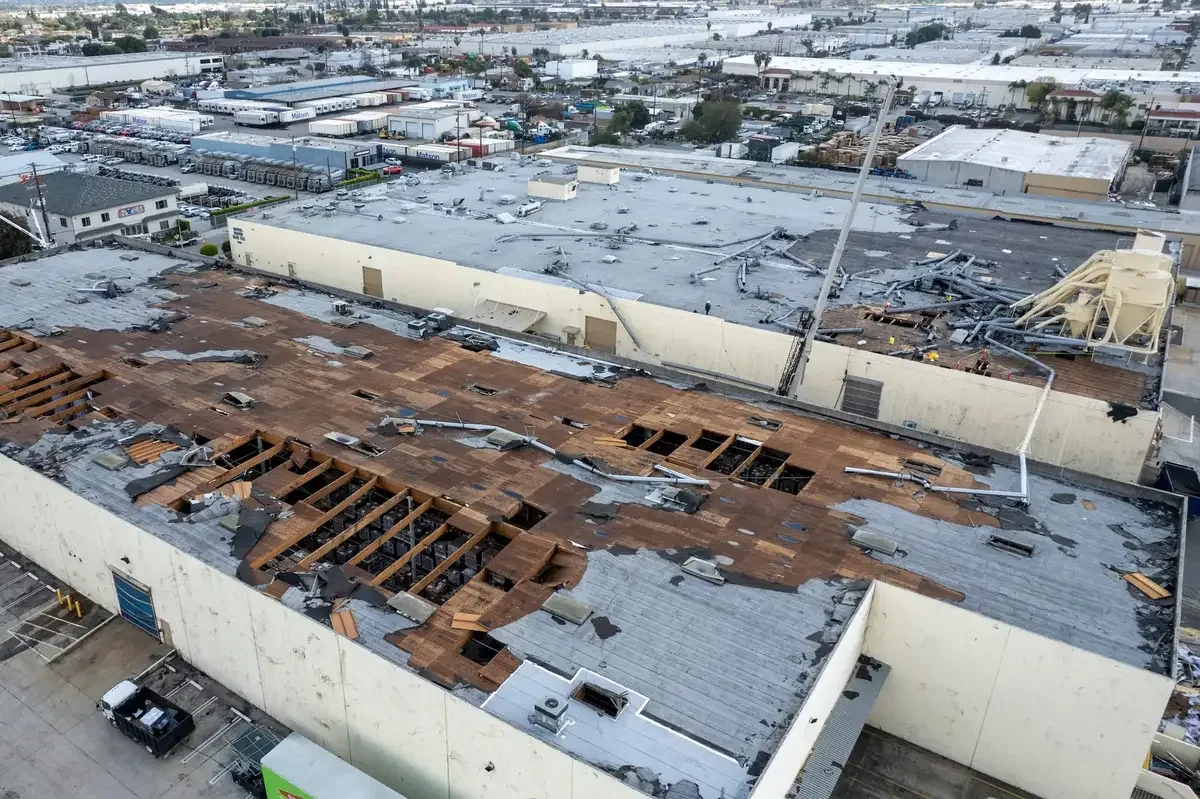
Roof Insurance Claim Assistance
The adjuster's first question on a roof claim is when the damage happened, and on a flat roof the answer is rarely visible to the eye. A bruise from last summer's hail and a bruise from yesterday look much alike unless a dated photograph exists from before the loss. That is why the strongest claim file starts long before any storm, in an inspection log with a condition record the insurer can compare against. When no earlier record exists, we build the next best thing: a careful documented walk, taken promptly, with every observation fixed to a date and a location on the roof plan.
Establishing the Date of Loss From Dated Photographs
Regional weather records identify event dates, while the roof survey documents conditions at the property. During the July 2025 metro storms, flood warnings included St. Paul, Woodbury and Maplewood. Neither a warning nor a regional wind maximum proves the cause of a particular roof defect. An owner whose building lost power at the same time as it took roof damage needs a record that stands apart from the confusion of that week.
We compare fresh impact marks with weathered ones, check whether the dents in soft metals follow the direction of the storm, and read the earlier repair history from the log. Where a prior roof inspection exists, we set the new photographs beside it. The comparison identifies observed changes between the recorded dates, which is the point an adjuster is trying to establish.
Building the Claim File Piece by Piece
A complete file is assembled while the work is happening, not afterward from memory. For each affected roof area we put together:
- Dated photographs of the damage as found, wide shots and close-ups
- A roof plan with each finding located and numbered
- Moisture readings and core sample results, with cut locations marked
- A description of temporary measures and the receipts for them
- A line-item scope with measured quantities
- Before and after photographs of every repair
The package is arranged by roof area so that an adjuster, a lender or an owner's attorney can find any item quickly. If an emergency storm repair was needed, its photographs open the file.
Walking the Roof With the Adjuster
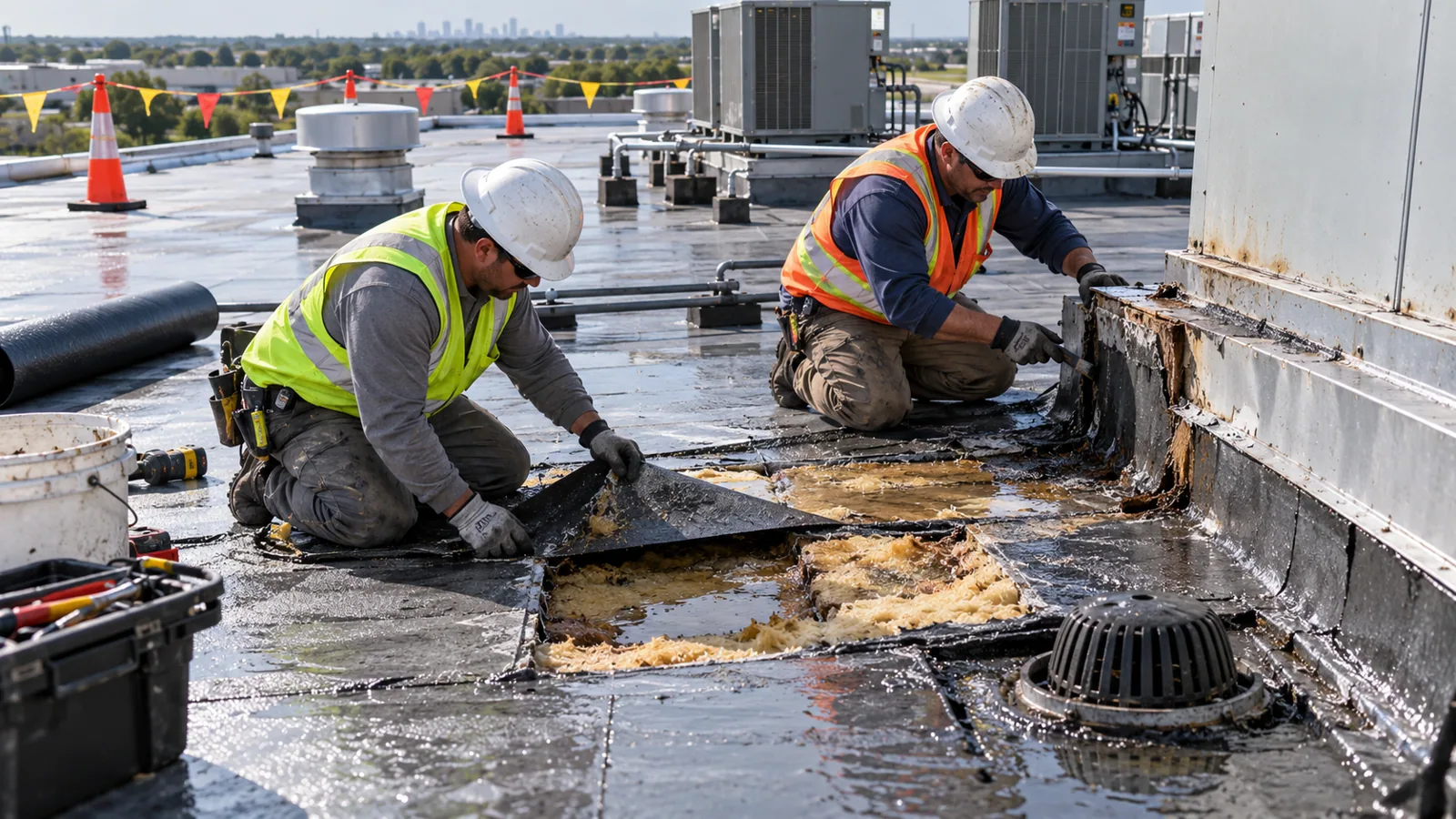
The insurer's adjuster decides what the policy covers. Our part is to attend the roof visit, show where each finding sits, hand over the photographs and core results, and answer technical questions about how the membrane failed. Having the person who documented the roof on site shortens disagreements about what the evidence shows.
Where the adjuster's estimate leaves out an item we recorded, we point to the photograph and measurement for that item and submit a written supplement with the evidence attached. The supplement describes the condition and the repair method plainly, so the reviewer has material to work from. Whether the insurer agrees remains its decision, and the file makes the request clear. A supplement also records the date it was sent and the reply that came back, so the paper trail runs in order from first photograph to final payment decision.
Pricing the Scope in Lines That Match the Findings
An estimate a reviewer can check against photographs moves faster than one written as a lump sum. We price in lines: membrane area to be replaced, linear feet of flashing and edge metal, insulation replaced at the cores, drains and penetrations affected, and temporary protection already installed. Quantities come from measurements taken on the roof, and each line cites the finding number it addresses.
Cost drivers are named in plain terms: membrane type, the depth of wet insulation, access for equipment and the season the work will fall in. When a roof needs work beyond the damaged area, the lines separate what the loss requires from what the owner chooses to add.
Recording Ice Dam and Snow Load Losses in Winter
Winter claims read differently. A winter claim records the accumulation and thaw conditions actually observed. Seasonal snowfall is not roof weight, and the cited 50 psf county ground-snow input is not roof capacity. Structural loss questions require the building design and engineering findings. Heat escaping through a roof assembly melts the snow above it, and the water refreezes at the eave as an ice dam that can push meltwater back under the roofing.
We photograph the dam, the icicle line and the interior ceilings, take moisture readings through the insulation and write down conditions on the day. Cause matters in these files, because an ice dam from heat loss, a blocked drain and a membrane failure each read differently to an insurer. A snow and ice damage record kept this way gives the reviewer observations, confirmed causes and unresolved alternatives separately.
Documenting Repairs on Historic Buildings
Lowertown's historic district counts 37 contributing properties from the 1870s through the 1920s, many of them being converted to lofts, breweries and restaurants. When damage reaches a roof on a building like that, matching existing profiles, flashing details and finishes can become part of the scope, and an adjuster needs to see why. Photographs of existing conditions, measured drawings of the parapet or edge detail and a written reason for each material choice make that case.
The same habits apply across the downtown office core, where an insurer reviewing a loss wants one clear file for each roof, and where insurance restoration work depends on that file being complete.
We keep the repair record distinct from the coverage decision. Before a destructive test or removal changes the evidence, we document the condition and confirm the owner’s authorization. When urgent protection is needed, we record its location, materials and limits, then preserve photographs before permanent repairs begin. The owner, insurer and consultants can compare the proposed scope with observed roof findings; policy interpretation and payment remain their decisions. Our closeout lists completed work, remaining damage, areas not inspected and any follow-up observation. This chronology keeps requested repairs connected to the inspection evidence and the work actually performed.
Questions We Hear
What if I have no inspection record from before the storm?
A prompt documented walk still helps. We photograph the damage as found, compare marks for freshness, check weather records for the date and note any signs of earlier repair. The file cannot replace a prior baseline, but it gives the adjuster a clear and dated picture.
Is it safe to protect the roof before the adjuster visits?
Emergency protection should not wait, because added water damage can enlarge the loss. Photograph first, keep removed material, save receipts and tell the insurer what was done. Permanent repairs usually wait for the adjuster's visit.
Who writes the scope that goes to the insurer?
We write the roofing scope from our measurements and findings. The owner submits it, or has us submit it with the owner's permission, and the insurer then reviews the numbers and the evidence next to its own estimate.
Can you represent me in a dispute with the insurer?
Representing a policyholder in a coverage dispute falls to a public adjuster or an attorney. Our part is the technical record: photographs, readings, measurements and repair documentation that either of them can use.
Will code upgrades become part of a claim scope?
The designer confirms applicable requirements for both repair and replacement; a repair is not automatically exempt from all code provisions. Required insulation or detail changes are identified for the actual scope, with any exceptions documented. We price that difference on its own lines, so the insurer sees what the loss required and what the code adds.