
Roofing for Manufacturers in St. Paul, MN
Roof inspection, repair and replacement for manufacturing plants in St. Paul, MN, with dated records, moisture readings and work planned around production.
Request a Roof Assessment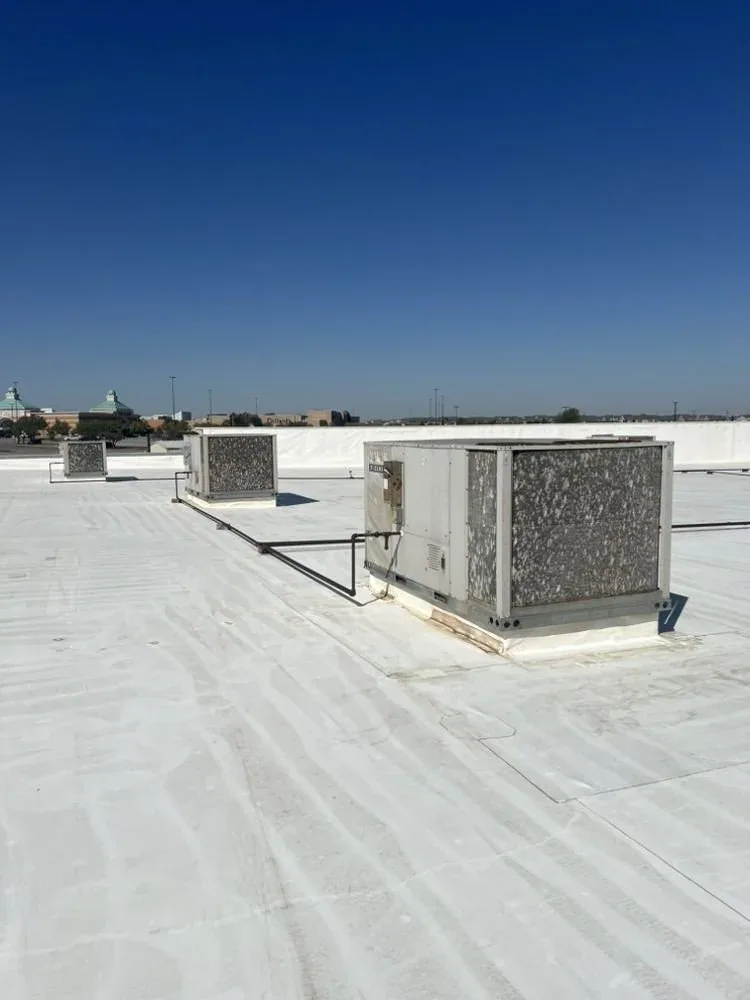
Manufacturers
The first entries in an inspection log for a plant roof record what leaves the building through it: exhaust stacks, make-up air units, process vents and the pipe runs that carry steam or cooling water. Each of those is a penetration, and each has a flashing, a sealant joint and a stain pattern that tells us what has been coming out and whether it is reaching the membrane. We photograph the surface around every one, take moisture readings beside it and date the sheet. A manufacturer in St. Paul, MN keeps its roof in service for as long as the building runs, and the record lets a plant manager see where wear is concentrating before a leak lands on a production line. The same log serves the roofs of manufacturing plants of any size.
Tracing Residue and Condensate Around Process Penetrations
Exhaust leaves a plant carrying more than air. Oils, solvents, steam and fine particles settle on the membrane downwind of a stack, and some materials soften or swell when they sit in contact with a sheet that was not chosen for them. We look for dark staining, tacky surfaces, blistering and softened seams in the zone around each discharge, and we sketch the pattern on the roof plan so the direction of the plume is on record.
Condensation is the second source of false alarms. In a Minnesota winter, humid process air meets a cold deck and turns to water that drips like a leak. Readings above the line, an assembly review and operating-temperature records help distinguish possible entry from condensation, and the answer sends the repair to the right place. Where a defect is real, the commercial roof leak repair goes to the exact spot we marked, and the location is logged for the next visit.
Scheduling Roof Work Around Runs, Shifts and Shutdown Weeks
Plants in the Twin Cities run on different clocks. The 3M plant in Cottage Grove has made adhesive products, industrial polymers and reflective road-sign materials since 1947; the Totino's factory in Fridley opened in 1970; and Burnsville holds Pepsi-Cola Bottling and UTC Aerospace Systems among its larger employers. Whatever a plant makes, the roof schedule has to fit the production calendar, so we ask for the shutdown weeks, the shift changes and the days when deliveries peak before a date is set.
The work is sequenced to keep forklifts, trucks and workers away from the roof edge, to keep hot work away from stored materials, and to close the opening at the end of each shift. Where a shutdown week is available, the biggest tear-off sections go into it. Where one is not, the roof is divided into small bays and the production team approves the protection and access restrictions below. Each phase is photographed on completion.

Checking Rooftop Equipment Against the Deck and the Drifts
Manufacturing roofs carry heavy rooftop units, and over the years more equipment is added. Each new unit brings dead load, a set of supports and a penetration. Snow adds live load, and in Ramsey, Dakota and Washington counties the cited ground-snow design input is 50 psf. An engineer converts that input into project roof loads with the relevant factors and drift cases; it does not state available capacity. A drift against a tall unit is deeper than the snow on the open field, and the combination can strain a deck that has already deflected.
We record equipment positions, support types and the ponding that has formed near them, because a puddle beside a support can result from blocked flow, insulation shape or structural movement. Its cause needs investigation. The readings go to the plant engineer along with photographs. Where supports have worn the membrane or let in water, rooftop equipment curbs and supports can be rebuilt with proper flashing, and the engineer's sign-off on loads stays in the file.
Matching the Membrane to Heat, Oils and Washdown Water
The right system depends on what the roof is exposed to. A plant with grease or oil in its exhaust asks more of a membrane than an assembly plant with clean air. Some PVC and KEE roofing have published resistance information for particular chemicals, and a liquid-applied coating can restore a sound membrane in place when the exposure is mild. Heat exposure also needs a product-specific limit; choosing bitumen does not establish suitability beside a hot discharge.
We ask a plant for its exhaust and chemical list before we recommend a system, and we test an unfamiliar surface with a small patch before committing the whole roof. The system choice, the adhesion test and the manufacturer's data on chemical exposure all go in the file, so a later owner knows why a sheet was selected and what it was tested against.

Keeping Hot Work Permits and Insurer Papers in Order
A plant's insurer looks closely at roofing because hot work, torches and heated materials have started fires on many industrial roofs. We follow a written hot work plan with a fire watch, extinguishers on the roof and a check of the area after the crew leaves. Where the roof allows, we choose methods that avoid open flame, and we list the permit, the watch period and the final check in the project record.
The same record helps when a loss occurs. After a fire or storm, fire damage roof repair and any insurance claim depend on proof of what the roof was before the event. Our inspection logs, taken on each visit under a preventive maintenance schedule, provide earlier condition evidence, with gaps in coverage identified. A plant owner who also leases space to a logistics tenant, or who works with insurance restoration teams, can hand the same file across without rewriting it.
Questions We Hear
Why does one part of a plant roof deteriorate faster than the rest?
Exposure differs across the roof. Membrane downwind of an exhaust stack takes oils, heat and particles, and the area around heavy equipment takes foot traffic and movement. We map the wear on the roof plan and compare it with the plant layout, which narrows the wear to a short list of zones.
How can we tell condensation from a real leak over a production line?
Readings and timing separate them. A leak follows rain and snowmelt, while condensation follows interior humidity and outside cold. We take moisture readings in the insulation, check the vapor path and photograph the ceiling over several days. A dry sample only describes its location. We compare rain timing, indoor humidity, surface temperatures and additional observations before excluding a roof defect.
Can a single shutdown week handle the whole roof?
Often only a part of it. The largest sections go into the shutdown, since tear-off and installation can run within the agreed shutdown access and protection limits. The remaining sections are phased through the year, a bay at a time, with each closed in daily. We lay out the split on a plan so operations can approve it.
What happens to the roof when a plant adds new equipment?
The engineer checks the structure, and we record the roof around the new base. Photographs and moisture readings taken before installation show the membrane as it was, and the curb or support is flashed as the equipment goes in. A later leak at that spot can then be investigated against a documented starting condition.
Does a chemical-resistant membrane cost more to maintain?
Maintenance cost depends on the exposure, cleaning needs and detail count, not the resistance label alone. We check the seams and the areas near discharge points for softening or staining, and we clean residue where the manufacturer allows it. The costs that matter most are repairs made late, so the dated log earns its place by catching wear before water enters.