
Commercial Roofing in Fridley, MN
Inspection-led commercial roofing in Fridley, MN for medical, retail, industrial and rail-side buildings, with dated records from the St. Paul metro team.
Request a Roof Assessment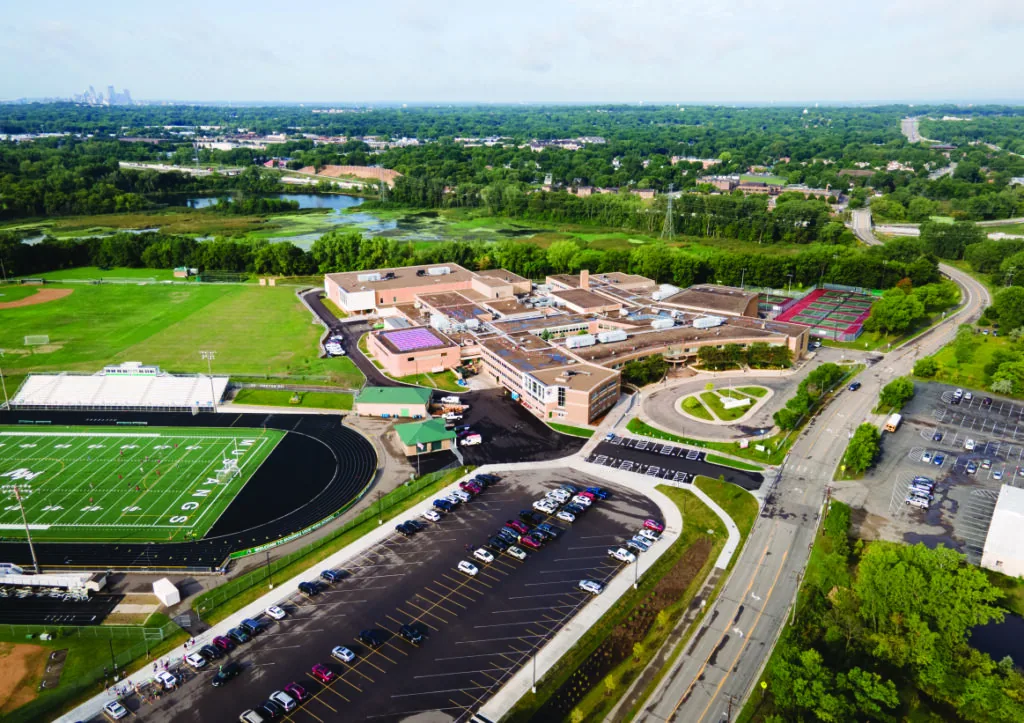
Fridley
A moisture reading taken on a Fridley roof is worth the most when it can be set beside the next one, taken by the same method, in the same place, with the date attached. That habit is how we approach commercial roofs in a city whose large employers range from Medtronic's operational headquarters to Target, Unity Medical Center and Cummins Power/Onan. Those varied occupancies guide access planning and interior protection. Inspection and installation records establish the roofing assembly.
From St. Paul, MN, we inspect, repair, recover and replace low-slope and metal roofs in Fridley, and we keep the photograph, the reading and the written finding together in one file the owner can use. Water entry reported tonight begins an emergency assessment, with dispatch subject to available crews, weather and safe access.
Fitting the Inspection to Each Kind of Occupancy
A Fridley facility may combine offices, treatment rooms, production areas or retail space under several roof sections. Before inspection, we obtain the room-use plan and ask which operations must continue during repair. The report then ties roof findings to those locations, with separate priorities for active water entry, damaged details and planned maintenance.
A building where patients are treated cannot absorb a leak into a clinical space, so the log pays close attention to penetrations over interior rooms and to drains. A manufacturing building with process exhaust needs the curbs and fan supports checked for corrosion and sealant failure. A retail building cares about sales-floor ceilings and loading areas. In every case the first walk produces the same things: a dated roof sketch, tagged photographs, moisture readings where the surface is in doubt, and a ranked list of what needs work now and what can wait.
Inspecting Roofs Beside Active Rail and Highway Corridors
The BNSF Northtown Classification Yards occupy a large area of Fridley on the BNSF transcontinental main line, and I-694 and MN 47 and 65 are the city's primary highway routes. A roof near a busy rail yard or highway can pick up soot and particulate that darkens the surface and settles into drains and scuppers. We look at what has collected, photograph the buildup and note whether runoff is moving freely or sitting.
Fasteners, rooftop supports and loose flashings receive their own condition entries. Proximity to a rail yard does not establish vibration damage; a reported movement concern requires evidence from the building and, where necessary, engineering assessment. Where a mechanically attached system is in place, we check a sample of fasteners for backout and compare the result against the last visit. Highway access also shapes logistics: the routes tell us how crews, lifts and materials reach a site, and we put that in the work plan so the schedule is realistic from the start.
Proximity to a transportation corridor makes safe access and observation conditions part of the inspection plan. We establish the property boundary, approved roof entry and any areas where vibration, noise or dust could affect occupants. Photographs are taken from safe positions and labeled by roof zone; we do not treat nearby rail or highway activity as proof of a roofing defect. If the roof has equipment that must remain operating, the building contact identifies it before testing begins. Findings that require a closer look are listed with the access or shutdown condition needed to complete that work.
Logging Drifts and Cold Against the Engineer's Figure
A Fridley snow assessment uses the applicable design criteria and the particular building’s supporting assembly. Ground snow is one design input, not the final roof snow load or available spare capacity. An engineer evaluates loading where the observed conditions raise concern. Our measurements are the depth and position of drifts, the condition of the roof beneath them and the way the roof drains when the melt begins.
Cold-weather findings include open laps, damaged corners and changes at wall transitions. Material response varies with the installed system and condition, and an ice dam at the eave can push water behind the flashing when the temperature swings. We photograph both conditions with dates, so spring repairs rest on evidence. The documented findings define any needed snow and ice roof damage repair follows the same sequence.
Watching Exhaust, Moisture and Condensation on Process Buildings
Food production puts moisture and heat into a building, and the local industrial history includes the Totino's frozen pizza factory opening in 1970. At a process building being inspected today, actual exhaust equipment and operating conditions establish which flashings need closer examination. Grease, steam and chemical vapor can also attack sealants and some membrane types.
We check exhaust penetrations, record what is staining the surface near them and take moisture readings in the insulation below. Condensation can occur when interior moisture reaches a sufficiently cold layer. Rain entry and condensation can coexist, so diagnosis includes interior humidity, the vapor-control arrangement and the timing of reported water. If the roof's chemistry has to match a particular process, a PVC roofing or KEE roofing system may be considered after the specific product’s compatibility with the actual exposure is reviewed, with the cost drivers laid out beside the others.
Weighing Repair, Recover and Replacement on the Evidence
Findings point to a decision. Moisture findings are considered with adhesion, attachment, drainage and deck observations. A sound compatible assembly may support repair or coating. Saturated layers require removal; a recover needs a suitable retained base, while extensive deterioration may require replacement. Deck condition, the number of penetrations and the roof's remaining life all change the numbers.
The proposed re-roof scope identifies the applicable energy, attachment and drainage requirements for the assembly. Existing layers and structural concerns are addressed during project review rather than treated as automatically suitable for another roof. We confirm the permit requirements for the proposed Fridley project before the scope is priced. The result is a written proposal that separates each option, with the factors that drive cost and timing named.
Preparing Storm Evidence Before the Adjuster Arrives
When regional severe weather is reported, we inspect the Fridley property for bruising, punctures and displaced flashings, take moisture readings and record observed conditions. That claim file supports a hail damage repair scope and gives the owner a defensible basis for any insurance discussion. Owners with more than one building can ask for the same format at each, including at Energy Park and downtown St. Paul.
Questions We Hear
Which part of a process building's roof fails first?
Exhaust curbs and penetrations merit close inspection when heat, vapor or chemicals contact nearby materials. We document the actual exposure and observed defects without assuming those details failed before the roof field. Product compatibility and attachment are reviewed where a material change is proposed.
Does a building near the BNSF yards need a different inspection?
Use the same systematic inspection and record any accumulated debris, blocked outlets or attachment concerns. Nearby traffic does not prove the source of a deposit or movement. Comparisons with earlier entries help identify changes that need investigation.
How does a clinic or medical building keep working during a re-roof?
The facility agrees on work windows, interior protection and air-handling controls before mobilization. Open sections are limited and temporary closure is checked before the crew leaves. Material staging and product use are reviewed with the facility team; moisture testing records only the areas actually examined.
What should be in the file when a Fridley building is sold or refinanced?
A dated condition report, photographs by roof area, moisture readings, a log of repairs with materials and dates, and any documents on warranties or permits. A lender or buyer can follow that file without a site visit, which shortens the review.
Which snow load applies to a roof in Fridley?
The applicable criteria must be established for the Fridley address and actual construction. An engineer evaluates ground snow inputs, roof geometry, exposure, drifting and the supporting assembly when assessing loading. Drift measurements document conditions but cannot by themselves establish that the roof is safe.