
Snow and Ice Roof Damage Repair in St. Paul, MN
Snow load and ice dam damage on St. Paul commercial roofs, recorded with dated photos, drift measurements and moisture readings, then repaired in sequence.
Request a Roof Assessment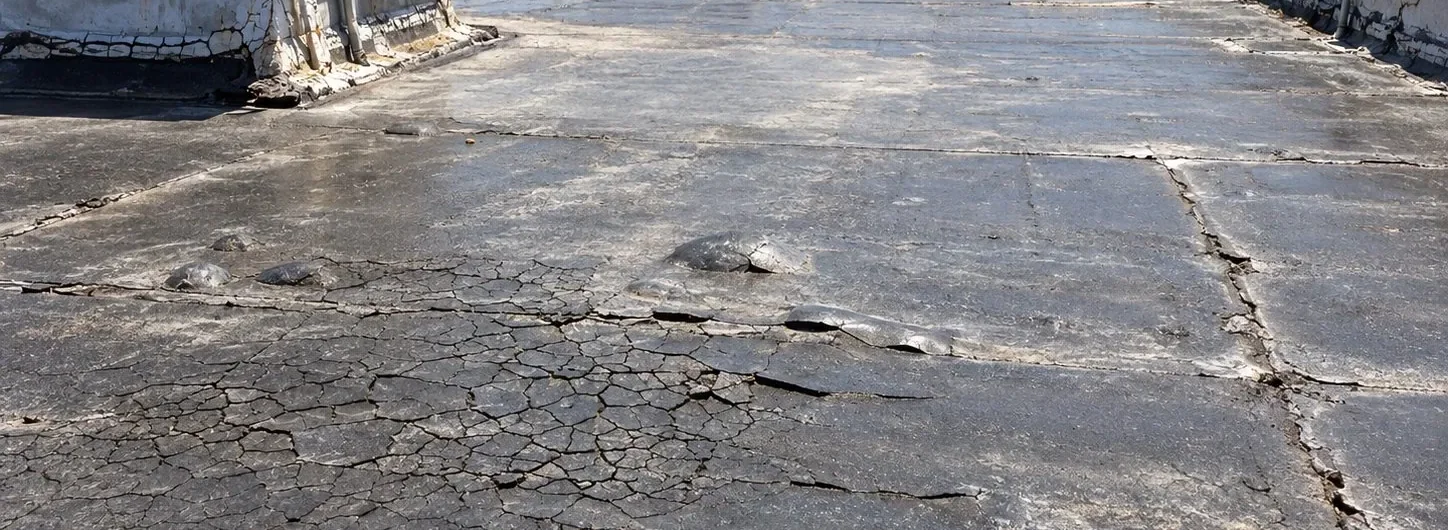
Snow and Ice Roof Damage Repair
A band of ice along an eave is a reading that does not last. Its length, its thickness and the height of the water pooled behind it describe how the roof behaved this winter, and the next thaw erases all three. On a commercial roof in St. Paul, MN, dated photographs locate the ice and reported interior moisture for comparison.
Snow load follows the same logic. A drift against a penthouse is an observable accumulation today that may disappear during a later thaw. Its weight requires density information as well as dimensions. So the work begins with a dated record of the snow and ice as found, moves to the membrane, flashing, drains and insulation underneath, and ends with repairs the owner can defend to an insurer, a lender or a buyer.
Documenting Drifts for Structural Load Review
The design ground snow load is 50 pounds per square foot for Ramsey, Dakota and Washington counties under state rules, in the cited state design reference. Engineers derive roof design loads for the building; that ground input neither states the roof's safe limit nor its remaining capacity. A flat roof seldom carries an even blanket, though. Drifts settle along parapets, against rooftop units, behind stair bulkheads and in the lee of any step in roof height.
On a winter visit we measure the drift at each of those spots, photograph it with a tape in frame and sketch the locations on a roof plan. We are roofers, not structural engineers, so we note the signs that a roof is working hard: a deck sagging between supports, a drain sitting above the surface around it, ceiling tiles below that have begun to drop. The observations go to the owner's engineer promptly.
Tracing Ice Dams Back to Heat Loss at the Edge
An ice dam forms when snow over a warm part of the roof melts, runs to the cold perimeter and refreezes there, trapping the next round of meltwater behind a ridge of ice. Heat loss can contribute, as can solar warming and drainage restrictions. The investigation records the conditions rather than assigning a cause solely from the ice ridge. On a low-slope roof the trouble spot is often the lowest line: a scupper frozen shut, a gutter packed solid, or a parapet holding water against its own flashing.
We record where the ice sits, where the roof is warm beneath it and where water has passed the first line of defense. An infrared moisture survey may locate temperature patterns when the assembly and weather support interpretation. Patterns can have several causes; readings and selected openings are needed to confirm moisture, and thermal observations alone cannot identify missing insulation.
Inspecting Seams and Flashing After a Hard Freeze
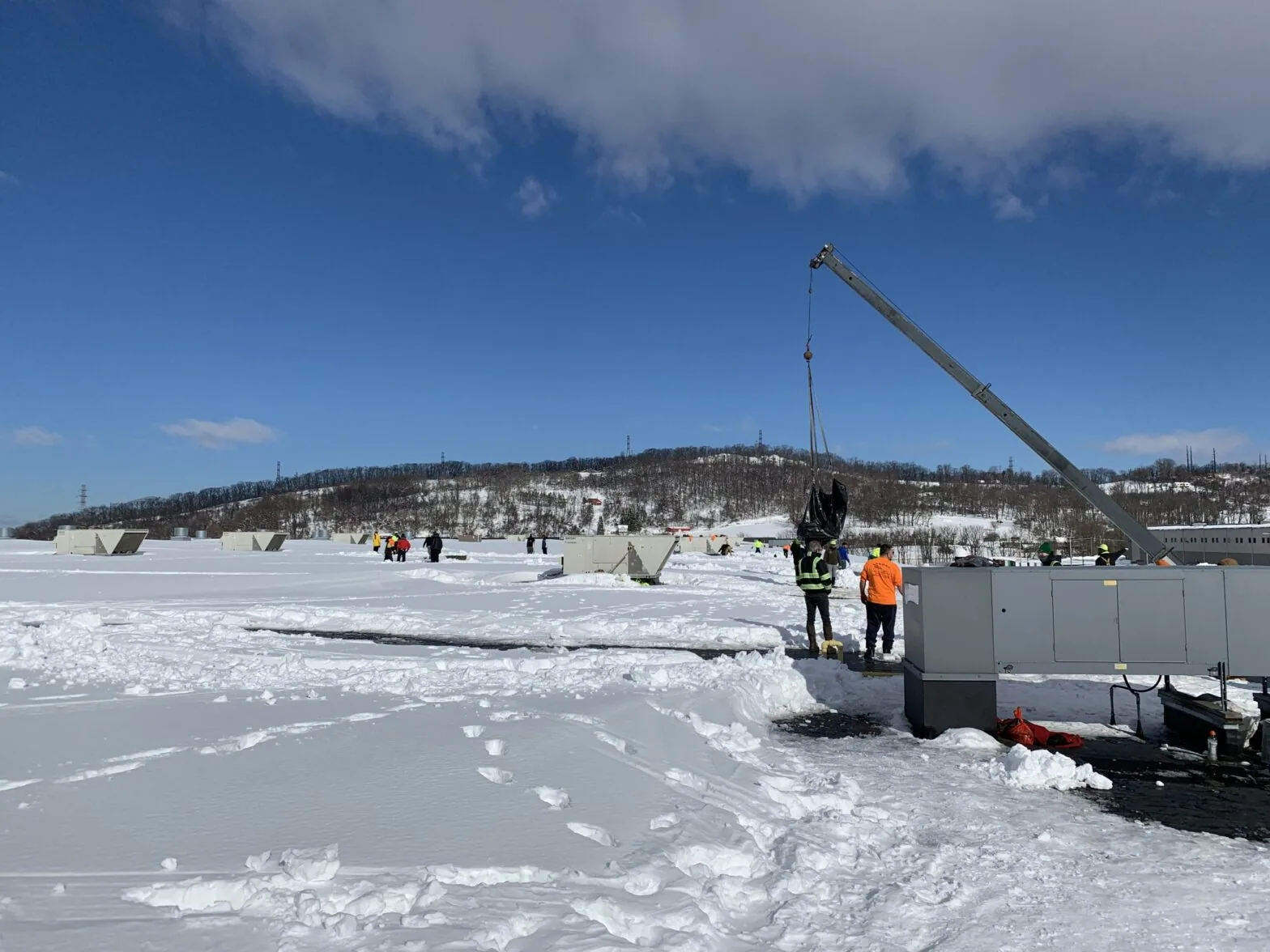
Deep cold stiffens a membrane and pulls it taut. Laps, corners and wall flashings carry that stress first, so a seam that held in October can open in January, and the winter of 2013-14, which reached -23 degrees on January 21, 2014, showed how far the thermometer can fall here.
Once the weather allows, we press along every seam, check each termination at walls and curbs, and photograph every defect with a scale and the date. Open laps are logged for seam failure repair, and edge metal knocked loose by moving ice can look much like wind damage, so we separate the two causes in the notes.
Checking Drains for Ice Blockage and Refrozen Ponding
A drain that freezes at night and thaws at midday keeps water on the roof exactly where the building cannot afford it. Meltwater collects around the sump, refreezes after dark and adds ice weight to a roof already carrying snow. The Port Authority's Westgate and Midway business centers in the Midway hold a dense mix of light-industrial and office buildings, and a blocked drain on any of them can leave a pool that nobody at street level would suspect.
We probe each drain and scupper, record whether it is open, partly iced or blocked, and measure the extent of standing water once it melts. The numbers show which areas need ponding water repair and which only need clearing, while work on drains and scuppers is priced separately.
Removing Snow and Ice Without Cutting the Membrane
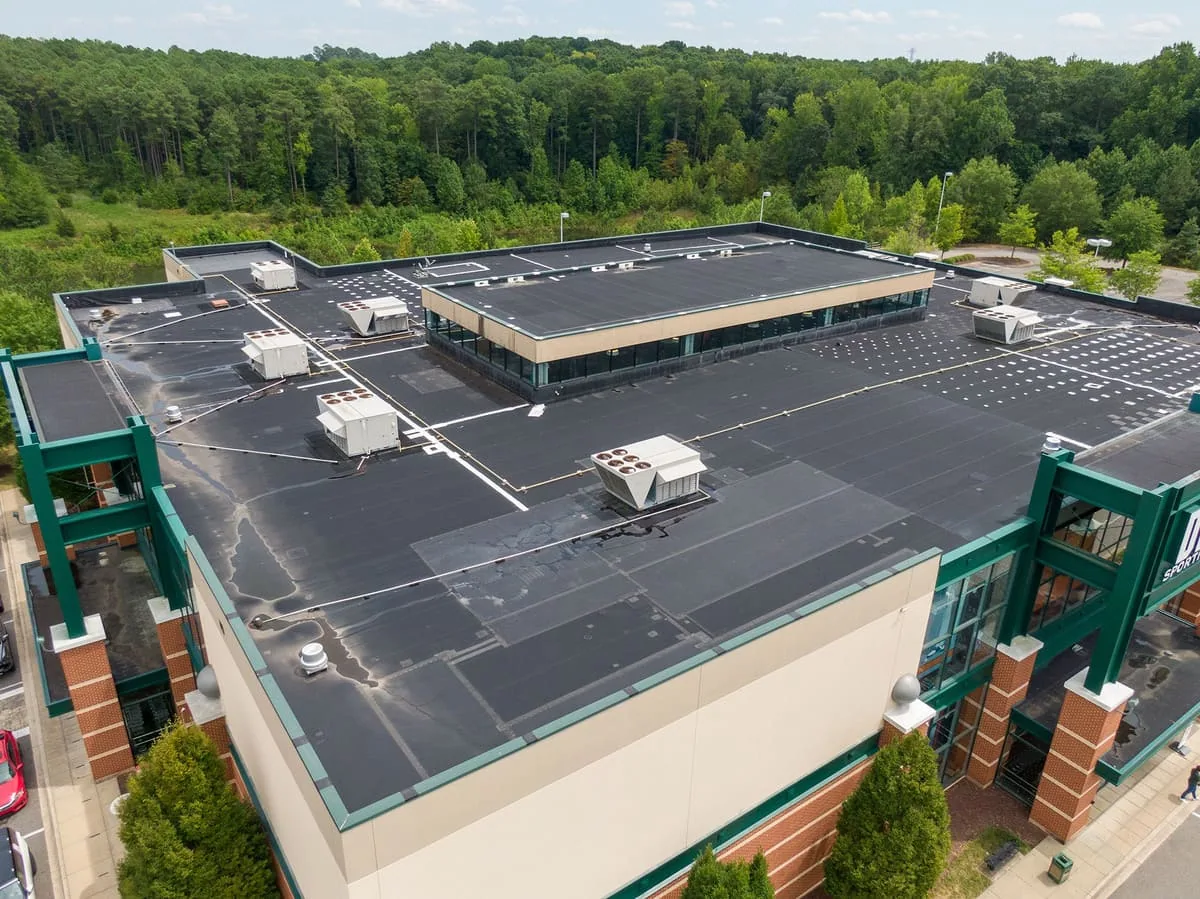
Clearing a roof is where winter damage is often added. A metal blade or an ice pick can slice a membrane that was sound an hour earlier, and snow hides skylights, curbs and the roof edge. Removal needs an engineer-informed loading sequence, fall protection and identified hidden openings. Suitable nonmetal tools and avoiding direct scraping can reduce damage, but they do not make an unsafe roof accessible.
We photograph the area before and after, so a puncture that appears later can be checked against the record. When a roof starts leaking in a thaw, our emergency crews respond at any hour, holidays included. For the businesses at the Port Authority's Energy Park center, between Lexington Parkway and Snelling Avenue, the removal date has to be set around operations as well as the forecast.
Sequencing Permanent Repairs Around Frozen Weather
Cold limits what a welded seam or an adhesive can do, so winter work is usually temporary: a compatible patch, a protected penetration or safely cleared drainage. Heating methods require approval for the materials and site conditions. We date and number every temporary repair so it can be found and replaced when the permanent work becomes possible.
Some winter damage points past a repair. Wet insulation over a large area can turn a scope into a re-roof, and the designer confirms applicable insulation and envelope requirements for the replacement scope, including any permitted exceptions. St. Paul's Department of Safety and Inspections reviews commercial flat-roof re-roof plans, and the submittal names the roofing material, roof area and drain size, so we record those during the winter inspection.
Filing a Winter Loss With Dates an Adjuster Can Follow
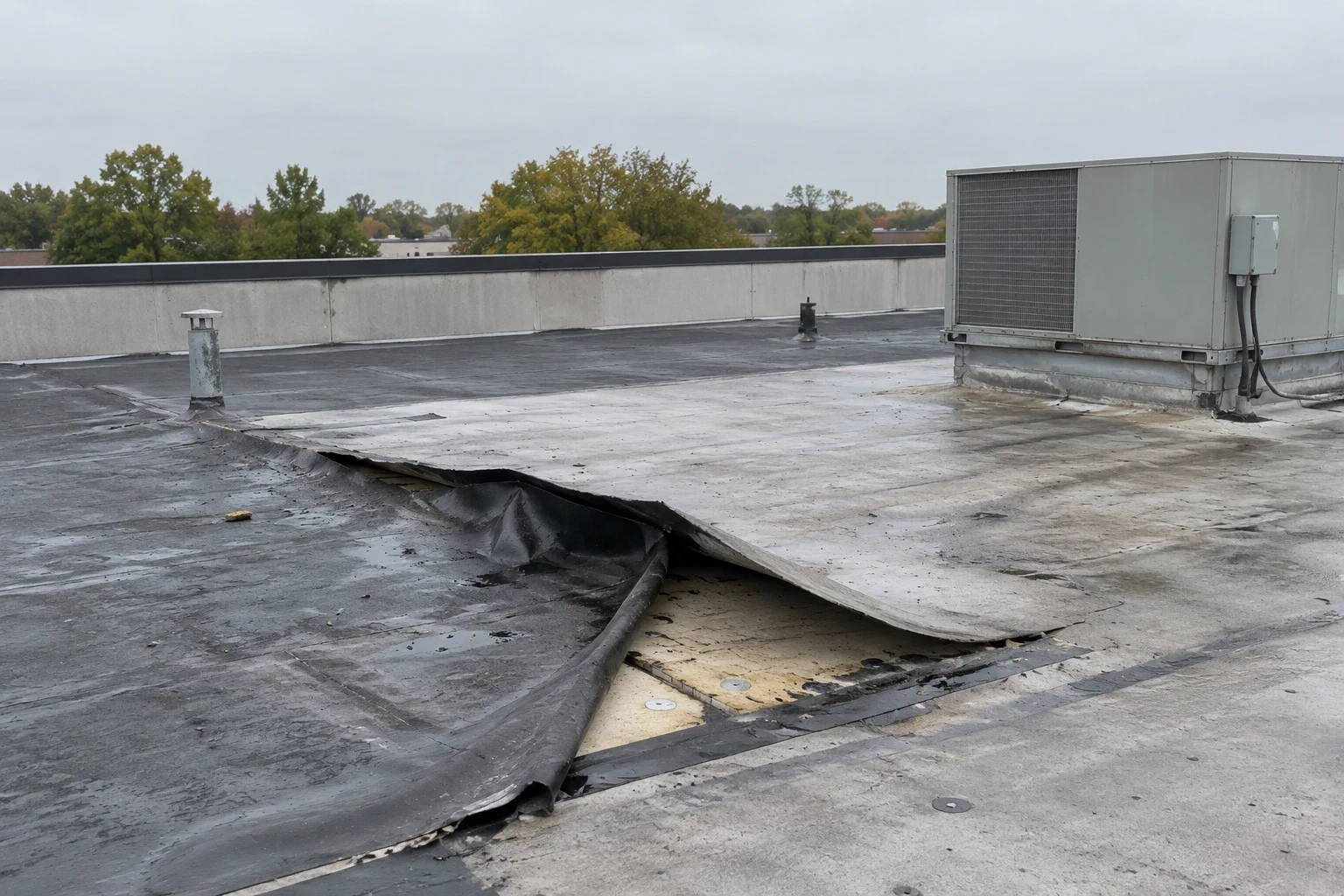
Winter losses are harder to date than a hailstorm because snow builds and ice dams develop over days. Adjusters tend to weigh whether water entered suddenly or seeped gradually, so the record shows a sequence: when the snow or ice accumulated, when interior moisture first appeared, and what the roof looked like before. The coverage decision belongs to the insurer. Our roof insurance claim assistance arranges the photographs, drift measurements and readings into the file behind it. Interior damage is logged by location and date, including sensitive departments at Regions Hospital on Jackson Street.
Questions We Hear
How much snow is too much for a flat commercial roof?
The building's structural design sets the limit, not the depth on the surface. Wet snow weighs far more than powder, and drifts concentrate weight against parapets and rooftop units. We measure and photograph the drifts and flag visible warning signs, then pass the record to the owner's structural engineer, who judges the load itself.
Will an insurer treat ice dam leakage as sudden or gradual damage?
Most adjusters weigh how long water has been entering the building. A leak traced to one thaw cycle reads differently from staining built up over several winters. Dated photographs, moisture readings at the first wet ceiling and notes on the roof's earlier condition lay out that timeline, and the insurer makes the coverage call.
Can our maintenance staff shovel the roof themselves?
Edges, skylights and curbs disappear under snow, and a metal shovel cuts a membrane in seconds. Anyone on a snow-covered roof needs to know where every edge and opening lies. Depth alone cannot establish safe access. Qualified personnel need a clearing sequence that addresses structural loading, fall protection and concealed openings; staff should follow that approved plan rather than improvise from the edge.
Is a winter repair worth doing, or should it wait for spring?
Temperature on the day of the work is the first filter. Welds and adhesives need conditions that January rarely offers, so some winter repairs need temporary materials with limited service expectations. Others can be permanent under approved conditions. The record states which treatment was installed and when it needs reassessment. Leaving an open seam under ice is the riskier choice.
Will adding insulation stop ice dams on a flat roof?
Insulation may help when investigation confirms heat loss, often alongside air sealing and drainage corrections. A temperature pattern alone cannot select the remedy. For a planned replacement, the designer establishes energy compliance and details the perimeter so added thickness does not create a new drainage restriction.