
Logistics and 3PL Roofing in St. Paul, MN
Roof inspection, repair and replacement for logistics and 3PL operators in St. Paul, MN, scheduled around peak season and documented with dated photo records.
Request a Roof Assessment
Logistics and 3PL Roofing
On a distribution building the roof log starts at the dock wall, where canopy flashing meets masonry or metal panel, because that is the line where trailers, forklifts and rainwater all converge. We photograph the canopy edge, record the sealant condition and take a moisture reading on the roof side of the wall, then date the page. For an operator working out of St. Paul, MN, the interstates make the geography simple: Mendota Heights holds the junction of I-35E and I-494, a key freight crossing south of the city, and a building near any freight junction is read the same way as any other: one dock edge at a time. An operator who must meet service commitments for customers cannot afford a roof surprise in December. The record gives a distribution center manager a way to see that coming in June.
Planning Around a Peak Season That Overlaps the Snow
The operator identifies peak weeks from its own freight calendar. Winter can restrict roof work during those weeks, but snowfall totals cannot show the amount or weight retained on a particular building. The practical result is that roof work is compressed into the stretch from spring to early autumn, and any project that slips past October risks landing in the peak with a tear-off half done.
We therefore plan the roof calendar a year ahead. The winter survey records which sections are failing, the spring visit confirms the scope and the crew is booked for the quiet months. Large sections go in during the slowest weeks of the operation, and small repairs are slotted between inbound waves. If a leak occurs mid-season, temporary protection is checked at an agreed interval and permanent repair is scheduled as soon as conditions and operations allow, with the photographs to prove what was done.
Shielding Racking, Sprinkler Lines and Stock From Roof Work
Under a distribution roof, the structure carries more than the deck. Sprinkler piping hangs from it, lighting and conduit run along it, and racking stands directly beneath in rows. Before work starts we walk the aisles under the work area with the operations lead and log what is hung from the deck, what is stored beneath it and which bays can be cleared for the day.
Fastening a new membrane into a steel deck can transmit vibration and drop debris through joints, so protective sheeting goes up below where stock is sensitive. A roof recover avoids much of that disturbance when the existing roof is dry enough to keep, and cores confirm selected locations. Recover eligibility also needs layer-count, attachment, structural and code review. The daily plan names the bays, the hours and the gates the crew will use, and the dock doors remain free for trucks.
Logging Truck Courts, Canopies and Drainage at the Roof Edge
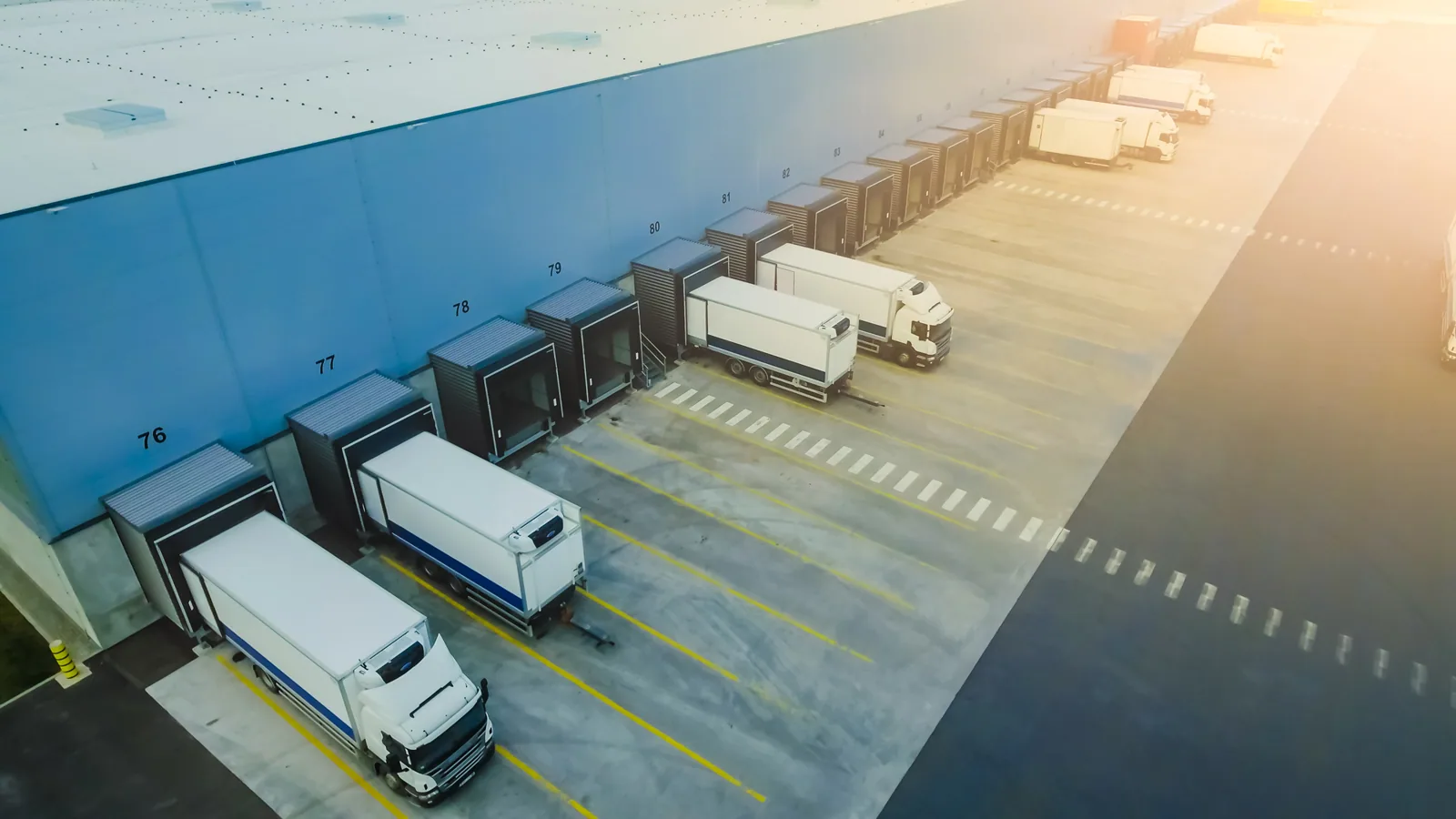
Water leaves a distribution roof at the edge, and the edge is where trucks work. We trace each scupper and downspout to its discharge point and record whether water lands on a truck court, a dock apron or a drain. In winter, a scupper that empties onto pavement builds ice in the path of drivers, which can become a safety problem before it is a roofing problem. We photograph that ice and mark the spot, and the log identifies a drainage problem for design review; outlet sizing, discharge routing and slope changes need confirmation before work.
Edge metal and coping take the strongest wind and the most knocks. Loose fasteners, open joints and dented flanges are logged one by one, and the work orders cover roof drains and scuppers alongside the metal. Canopies are checked for ponding at the low corner, because a trailer parked beneath a leaking canopy is a damage claim waiting to be filed.
Documenting the Roof Through Tenant Changes and Fit-Outs
Third-party operators change suites, add customers and take on temperature-controlled work. A conversion to cold storage adds refrigeration equipment to the roof and changes how the assembly behaves, which is why the condition report for a cold storage space asks different questions from the one for dry goods. Every unit added means a curb, a penetration and a new place for water to enter.
Eagan hosts a UPS hub with about 1,500 employees, and a distribution-center project was reported at the former Thomson Reuters campus in the 2025 local record. We keep a condition report at each move-in and move-out, with dated photographs and moisture readings, so landlord and operator agree on the roof's state at both ends. Landlords who hold such buildings as part of a wider investment portfolio use the same record for their own planning.
Surveying a Network of Sites in One Route
A logistics operator rarely has one building. It has a hub, a cross-dock, an overflow yard and perhaps a site near the rail yards. The BNSF Northtown Classification Yards occupy a large area of Fridley, barge and rail facilities support St. Paul's port with the Port Authority's Riverview centers on the south side of the river, and Mayflower Distributing is headquartered in Mendota Heights. A network of sites in places like these is surveyed along the same corridors the freight uses, which keeps the travel short and the format identical from site to site.
The outcome is a ranked list of roofs with a common scale, the kind of document that supports multi-site roof programs and a budget that can be defended to finance. A manufacturer that ships through the same operator can read the same condition data for any shared space, and the findings arrive with photographs and dates, not opinions.
Questions We Hear
How late in the year can a distribution roof be replaced in Minnesota?
Cold limits the schedule more than snow does. Adhesives need temperatures within the manufacturer's range, welds need dry surfaces, and a tear-off cannot sit open ahead of a storm. Major sections are planned around the product limits and forecast, with time for temporary closure. Some approved systems can be installed in colder conditions; the work plan records which components and methods remain suitable.
What if the wet area is directly over a pick module?
We isolate the area first, protect the module and take readings to define the extent of the wet insulation. The removal boundary is checked as the roof opens, since readings do not define it perfectly. The daily opening is sized for closure under the expected conditions. Photographs before, during and after go to the operations lead, who can show a customer what was done and when.
Do trailers backing against the canopy damage the roof?
They damage the edges more than the field. Strikes bend flanges and open joints in the edge metal, and rainwater then enters behind the canopy. We log every dent and open joint with its location, and the pattern shows which doors take the most impact so that guards or bumpers can be placed.
Can a tenant with a short lease justify a coating?
A coating makes sense when the cores show dry insulation and the lease term is long enough to benefit. A short lease does not make an unsound roof repairable. The assessment must first establish whether a limited repair can address the defects and how it will be monitored. We outline both options with the evidence, and the landlord and tenant choose together.
How is a leak report handled when a customer's goods are damaged?
Operations first protects people and stock, while the roof crew assesses feasible water-entry protection. Photographs are taken when safe, without delaying movement of threatened goods. We record the time, the source and the readings, and we log the repair when it is made. That sequence gives the operator, the customer and an adjuster the same dated facts to work from.