
Commercial Roofing in Mendota Heights, MN
Commercial roof inspection, repair and replacement in Mendota Heights, MN, with dated photo records, moisture readings and snow load checks for owners.
Request a Roof Assessment
Mendota Heights
The first line in a Mendota Heights roof log names what sits under the membrane, because that decides how much a small leak can cost. Patterson Companies, Mayflower Distributing and Esslinger & Co. are all headquartered in this first-ring suburb south of St. Paul, MN, and management identifies the occupied rooms and equipment that need protection during roofing. After that line comes the walk itself: membrane, seams, flashings, drains, edge metal and every rooftop penetration, each photographed with a date and a position on the roof sketch.
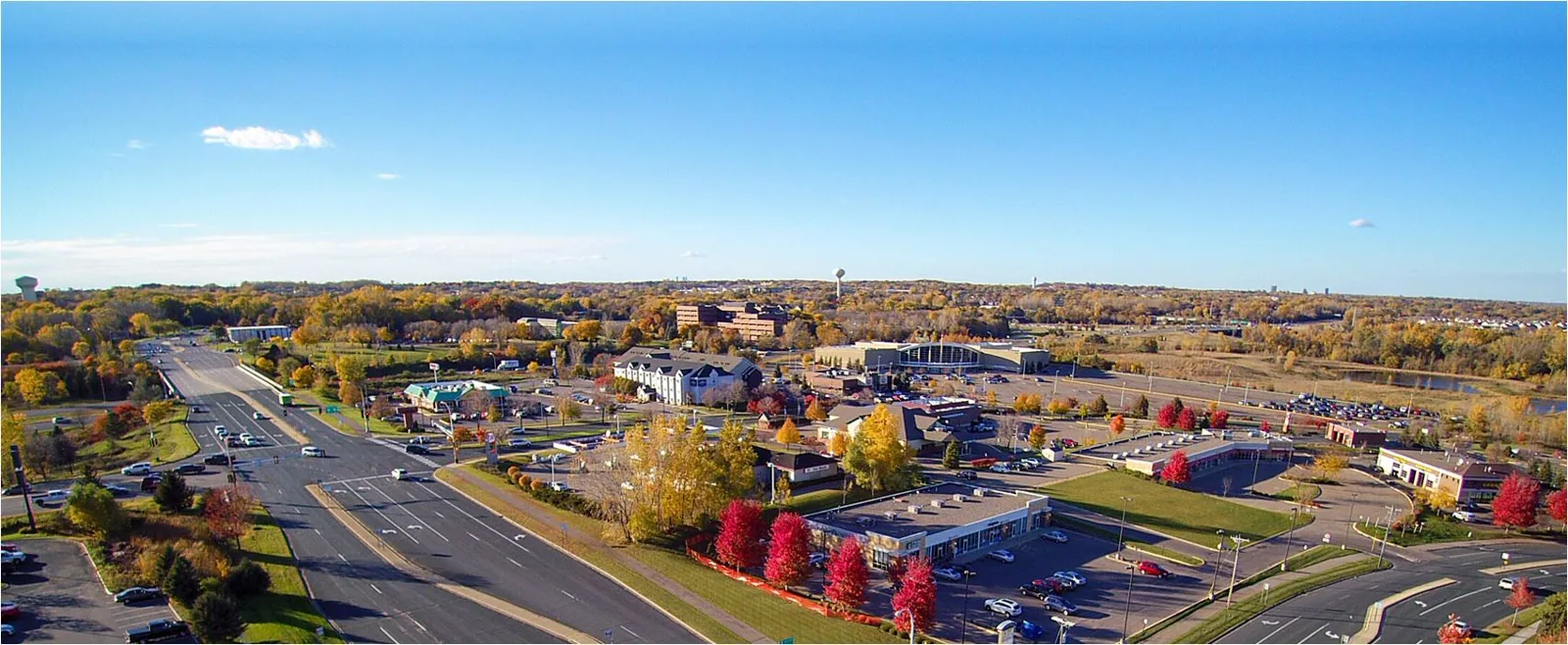
The suburb sits close to I-494, I-35E and Minnesota highways 55 and 62, and the I-35E and I-494 interchange at mile 99.7 is a key freight junction between the city and the southern suburbs. For a roof owner that means crews and materials arrive by several routes, and the property's entrance and permitted unloading route are confirmed before scheduling. A hands-on commercial roof inspection is where every repair decision here begins.
Recording What the Roof Is Protecting Below
Ceilings, light fixtures and carpet show a failure first, and by then water has usually traveled along the deck some distance from the opening. On an office or headquarters building we begin indoors: stained ceiling tiles, a damp grid, rust on a hanger wire. Then we go up and work backward from each stain, taking moisture readings along the likely path and photographing every penetration, curb and drain inside it.
The findings sort into patch items and fix items. A cracked pipe boot is a patch. A seam that has opened along a long run of lap is a fix. We price the two separately and write them into the log in that order, so an owner with a budget for one and not the other can see what each choice leaves exposed. Staff keep working in the rooms below, so hoisting, tear-off and noisy fastening are scheduled for hours the occupants can live with, which is how office building roofs are handled.
Measuring Drifts and Ice Dams Before the Spring Melt
The severe Twin Cities winter of 2013-14 provides context for maintaining a winter observation log. On the inspected roof, drift location and depth document distribution rather than weight. Structural adequacy and roof-snow loading require roof-specific engineering evaluation where concerns arise. Wind off an open roof field stacks snow against parapets, penthouses and rooftop units, so the inspection record includes tape measurements and photographs of the accumulated snow at those obstructions.
Eaves tell a different story. Escaping heat can contribute to snowmelt. Refreezing at a colder eave can obstruct later drainage and allow water entry at vulnerable details; the ice location does not establish insulation thickness or the heat path. We record ice thickness at each eave, the state of the edge metal and any uneven insulation below. Those dated entries show an adjuster that the roof was watched through the winter, and they show the owner whether the next fix belongs to the roof or to the ceiling space beneath it. Damage from that cycle is repaired as snow and ice roof damage, with the log attached.
Comparing Moisture Readings With What the Surface Shows
A membrane can look sound over insulation that has been wet for years, so the surface alone is never the finding. An infrared survey under suitable conditions can identify suspect thermal patterns. We compare them with construction, use appropriate confirmation methods and record local sample findings where needed. Moisture readings and samples do not establish every concealed layer beyond the inspected locations. Every reading is dated and placed on the roof sketch.
The map sets the scope. A confined wet area is often cut out and replaced, with new membrane tied into the old. Scattered confirmed damage can require broader removal. A recover requires suitable retained material after needed corrections, not simply a new layer over wet areas. The same map gives a replacement bid its quantities from measurement. Reading those scans correctly is the work of an infrared moisture survey.
Weighing Patch, Coating, Recover and Replacement
Four things drive the choice and its cost: how much insulation is wet, what the deck underneath is doing, how many penetrations and edges must be detailed, and how the building can be reached and occupied while work goes on. A restoration coating suits a sound membrane over dry insulation. A roof recover requires suitable retained layers, supporting condition, attachment and workable detail heights, with wet material corrected first. Tear-off becomes the right call once wet insulation is widespread.
The proposed assembly needs review against applicable building and energy requirements. We confirm submission instructions for the Mendota Heights property and compile measured material, roof area and drainage information. Supporting questions and additional project documents are identified before a replacement bid is final.
Keeping a Claim File That Holds Up After a Storm
Twin Cities severe weather in July 2025 is a reason to maintain dated storm records. The inspection establishes actual impact signs and opened details at the Mendota Heights property. A storm like that is why a dated condition record matters on any metro roof: the adjuster asks what changed, and a log made before the storm answers it. Regional event observations remain separate from the damage findings and any unresolved cause at the building.
After a storm we repeat the walk, photograph impact marks and lifted flashings, and set the new entries beside the old ones. The before-and-after set goes into a claim file the owner can hand to an insurer, a lender or a buyer. Emergency calls are answered at any hour, holidays included, and the first visit documents the opening before it is covered. Owners in Burnsville, at the other end of that stretch of I-35E, and in West St. Paul can use the same file structure.
Questions We Hear
What decides whether offices below can stay in use during repair?
The scope of tear-off decides it more than the roof size does. A patch or a coating leaves the existing membrane in place and creates little disturbance below. Full removal opens the deck, adds noise and needs a plan for protecting ceilings. We lay out which stages are quiet and which are not, then set the loud ones for hours the occupants can accept.
How soon after a hailstorm should the roof be walked?
Arrange assessment when safe access and conditions allow. Dated photos before cleanup or further disturbance can preserve useful impact and displacement evidence. We examine actual splits and moisture concerns rather than assume every visible bruise will admit water or establish its cause from timing alone.
What does an owner receive after the first walk?
A written report organized by roof area, with each item carrying a location, a photograph, a condition rating and a patch or fix label. Moisture readings and any core sample results sit beside the item they explain. The report is dated, so it works as the baseline for the next walk and for any claim.
Why would two bids for the same roof differ so much?
Usually the quantity of wet insulation and the number of details are assumed rather than measured. One bid may price a full tear-off while another prices a recover, because each started from a different guess about the deck. Our bids come from the moisture map and the roof sketch, so the quantities can be checked against the record.
Which papers should a headquarters owner keep for a sale or refinancing?
The most recent condition report, the record of every repair with dates and photographs, and any warranty paperwork tied to the current membrane. A lender or buyer reading those can see the roof's age, its history and what remains open. Inspection limits and missing history are identified so the parties know what remains unresolved.