
Storm Damage Roof Repair in St. Paul, MN
Storm damage assessment and repair for St. Paul, MN commercial roofs, with hail counts, core samples and dated photographs that support the claim file.
Request a Roof Assessment
Storm Damage Roof Repair
After a hailstorm, the first thing we record on a St. Paul roof is the pattern of the hits, because the pattern helps assess possible storm effects alongside prior photographs and maintenance records. Impact and deterioration patterns can overlap. Bright edges, weathering and nearby dents are described as observations; they cannot date each mark or prove its cause on their own. We chalk a grid onto a test area, photograph it, count the hits in each square and log the result with the date. Within a few weeks rain and foot traffic soften those marks, so the early record often carries the most weight.
Mapping Hail Hits Before Debris Is Swept Away
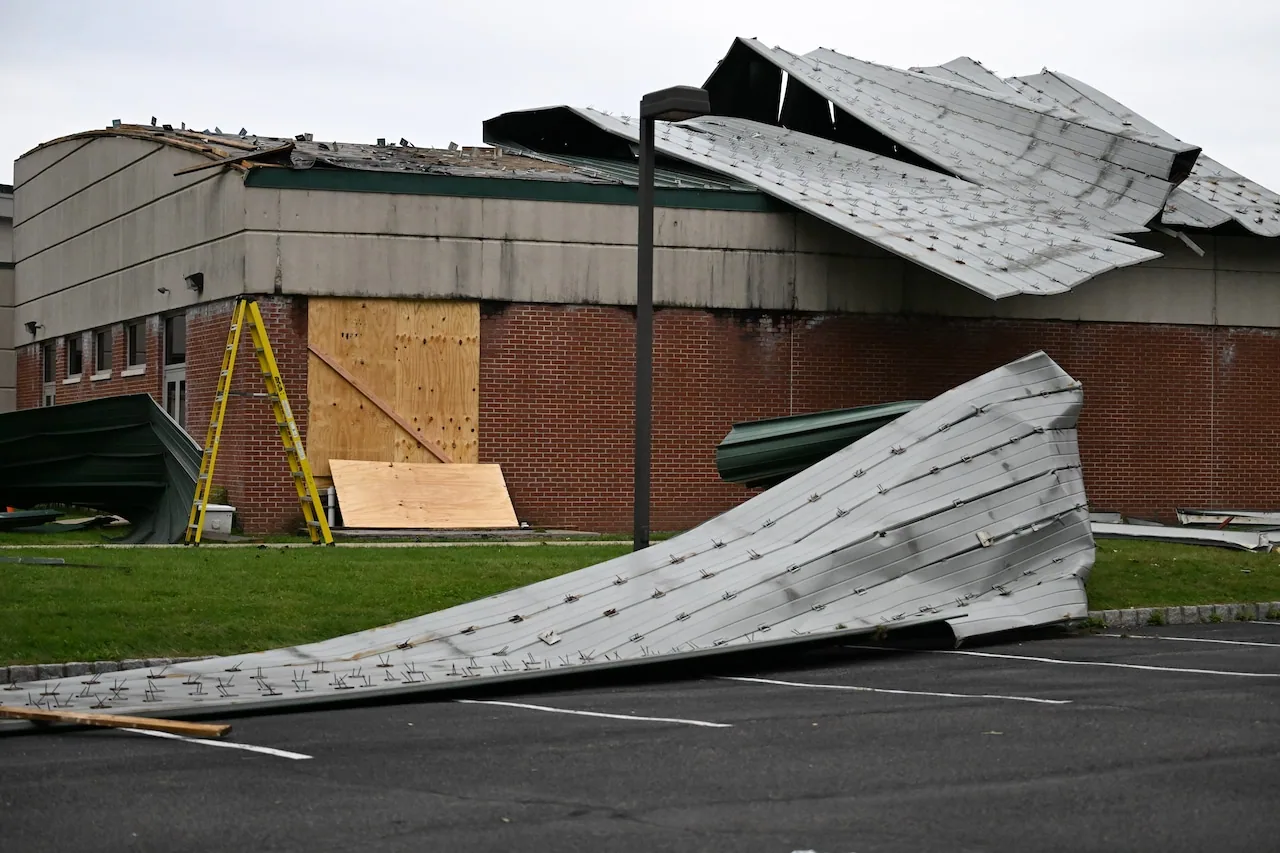
The July 2025 Twin Cities reports describe golf-ball-size hail. Very large hail in the separate May outbreak was reported in west central Minnesota and western Wisconsin; that report cannot establish the hail size at a St. Paul building. Hail that size can fracture the reinforcing scrim in a membrane, split seams and crush insulation without leaving a visible hole. The roof can look intact from the ground, and the water arrives weeks later.
We lay out test squares on each roof area, count and measure the hits, and photograph soft metals such as vents, drip edge and equipment housings, which provide impact evidence affected by metal thickness, support and angle. A hail damage assessment built on those counts gives the owner a defensible number instead of an impression.
Checking for Wind Lift at Edges, Corners and Rooftop Units
Regional July wind reports do not establish the pressure at a particular roof. Wind damage starts where a roof is most exposed: perimeter edges, corners, parapet caps and the sides of rooftop units where air is forced upward. We look for lifted edge metal, billowing marks in the membrane, torn flashing and displaced ballast, and we pull on termination bars and coping to see whether they have loosened.
A fastener that has backed out leaves a bulge in the membrane. The bulge can look minor, yet it is where the next gust starts a larger tear. Each finding is located on the roof plan and tied to a photograph. Where edges have lifted, wind damage repair means resecuring the metal and the membrane beneath it and replacing any fastener that has pulled.
Cutting Below the Bruise to See What Is Wet
Storm damage and storm water often hide under a surface that looks sound. At the worst-looking hits we cut a small core sample and read what sits underneath: whether the scrim is fractured, whether the insulation has crushed, whether water has entered. Readings around the cut identify suspect moisture for confirmation and boundary checks as repair areas open. On a large roof, a drone survey maps where the damage is concentrated so that cores are placed in the right spots.
Each cut is patched the same day and recorded as a before and after pair. The outcome is a damage map with numbers behind it, which tells the owner which areas need repair, which need replacement and which need only monitoring. Moisture readings taken again after the first heavy rain following the storm help check for new entry alongside interior observations, without assuming residual moisture means the repair failed, and those later numbers are added to the same dated record.
Making Temporary Repairs That Leave the Evidence Intact
Water entering a damaged roof calls for quick action, and nothing in a claim asks an owner to wait while the building floods. The sequence still matters. We photograph the damage as found, with the date visible, before tarping or patching. Pieces of damaged membrane or flashing are kept when the adjuster may want to see them. The emergency work itself is the around-the-clock dry-in response we run for any roof failure: tarp, temporary seal, cleared drains.
Receipts, photographs and a written description of what was done go into the file. An adjuster can then see the damage as it was, the steps that limited the loss and the cost of those steps, which is the material that insurance claim documentation is assembled from.
Separating Storm Damage From Older Wear
A storm claim is stronger when it does not overreach. Owners in Woodbury and Maplewood, where flash flood warnings stood alongside the severe wind and hail of July 28, 2025, may find new storm damage and older conditions on the same roof: worn flashing, ponding stains, earlier patches. We label each finding as storm-related, age-related or unclear, and we give the evidence for the label.
That separation protects the claim. The reviewer can see the evidence and uncertainty behind each proposed item. It also lets the owner set aside budget for the worn areas, so the next storm does not find the same weakness a second time.
Scheduling the Permanent Repair Once the Weather Allows
Permanent work waits on three things: the adjuster's inspection, the manufacturer's repair conditions and the temperature. Winter delays welds and adhesives, so a spring window can set the date, while suitable summer conditions may permit earlier work. Access, approvals and actual product availability establish the return date. Material lead times also matter when a large section of membrane or specialty metal must be matched.
Should the damage grow into a full re-roof, St. Paul's Department of Safety and Inspections will review the application as a plan, naming the membrane, the roof area in square feet and the size of its drains. We take those numbers from the same survey, so the damage record and the permit package agree. Smaller repairs follow our regular roof repair process and are logged with before and after photographs.
Before temporary protection is covered or removed, photograph its location, attachment and limits. Track new water reports and inspect the protected area after weather changes, while keeping the original damage record intact. The permanent scope should identify materials that can be retained, areas needing confirmation and any unrelated maintenance items found nearby. Claim decisions belong to the policy parties; the repair file should describe roof conditions and completed work without deciding coverage.
Questions We Hear
How long do hail marks stay readable on a membrane?
Readability varies with the membrane, exposure and type of mark; no fixed period applies. Rain, foot traffic and sun soften fresh bruising, and sweeping away debris erases the pattern of impacts. Soft metals keep their dents longer, which is why we photograph them first. A survey booked soon after the storm preserves the best evidence.
How is a storm repair different from an ordinary repair?
Storm work carries a claim file with it. Beyond fixing the defect, we record cause, extent, date of loss and the temporary measures taken, then write the scope so it can be matched against what the adjuster reviews.
Does hail with no leak still count as damage?
Yes, when the hits have fractured reinforcement or crushed insulation, even before any water shows inside. Cores reveal the hidden condition. Where the membrane is intact and the marks are cosmetic, we say that as well, because overstating damage weakens a claim.
What should be kept once the repair is finished?
Keep the dated photographs, core locations, moisture readings, the scope with prices, receipts for temporary work and any removed samples the adjuster asked to retain. We assemble them in one file with a page for each roof area.
Will a storm repair interfere with my membrane warranty?
Terms differ from one warranty to the next. Some restrict who may touch the membrane, and some exclude hail altogether. Send us the document before work starts, and we will record every product and method used so the file lines up with its conditions.