
Silicone Roof Coatings in St. Paul, MN
Silicone coating systems for St. Paul, MN commercial roofs: ponding mapped first, surfaces tested for adhesion, film thickness measured and every coat dated.
Request a Roof Assessment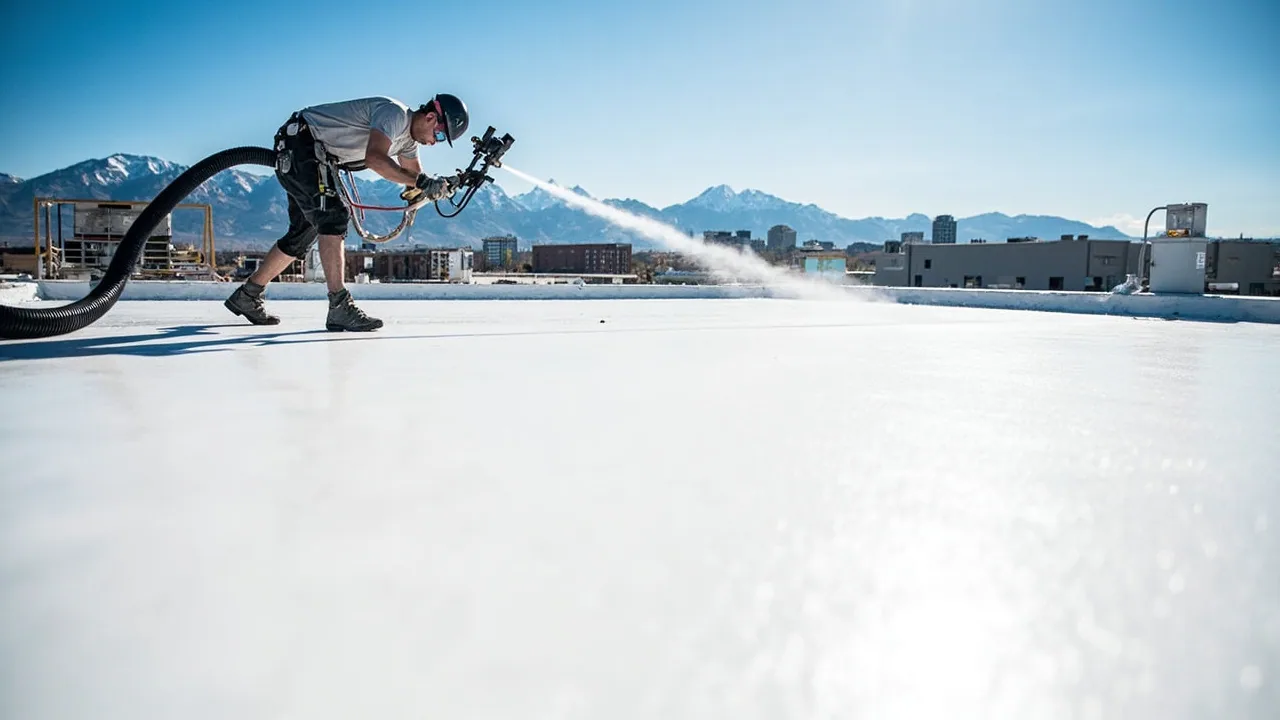
Silicone Roof Coatings
Water that is still sitting on a flat roof two days after the thaw is the first thing we write down when a silicone coating is under consideration. In St. Paul, MN, a low spot near a drain can hold meltwater through repeated freezing nights, and the depth, the area and the hours it lasts all go into the log with a date and a photograph. Some silicone systems publish ponding-water resistance, but suitability and coverage depend on the selected product and substrate, which is why the reading matters so much to the choice.
Silicone forms a protective film over a suitable existing substrate. It does not repair concealed failures, so the assessment comes first.
Mapping Standing Water Before a Coating Is Chosen
A flat roof in the Twin Cities rarely drains perfectly, and water locations guide checks of slope, drainage and substrate condition. A puddle cannot establish deck deflection by itself. We survey the roof after a rain or a melt, mark each pond with chalk, measure its depth with a straightedge and photograph it from a fixed point. The plan records each pond's location and extent.
Acrylic coatings tend to break down under constant immersion, while the selected silicone product may have published resistance to ponding exposure, subject to its application and maintenance requirements. That difference is the reason silicone is the usual specification for roofs with persistent ponds. Coating does not fix the cause, so the plan also records whether drains, scuppers or added tapered insulation could shrink the ponds. Owners comparing the cost of correcting slope against the cost of living with water can read it straight from the log, and the options for ponding water repair can be priced against the coating itself.
Cleaning the Surface and Testing Adhesion in Test Patches
Silicone bonds to a clean surface and clings poorly to a dirty one. Dust, oxidation, algae and old chalking all work as a release layer, and a coating applied over them peels in sheets. Our crews wash the roof, let it dry and then lay down small test patches at several spots. After the cure, we pull on each patch and record how it comes away.
The substrate decides what comes next. A thermoplastic membrane may take the coating directly or need a primer. A modified bitumen roof or a gravel-surfaced built-up membrane can bleed oils that discolor or soften the coating unless a barrier layer goes down first. Every patch result and primer choice is written beside its location on the plan, so nobody has to guess later why a certain section was treated differently from its neighbor.
Sealing Seams, Fasteners and Penetrations Ahead of the First Coat
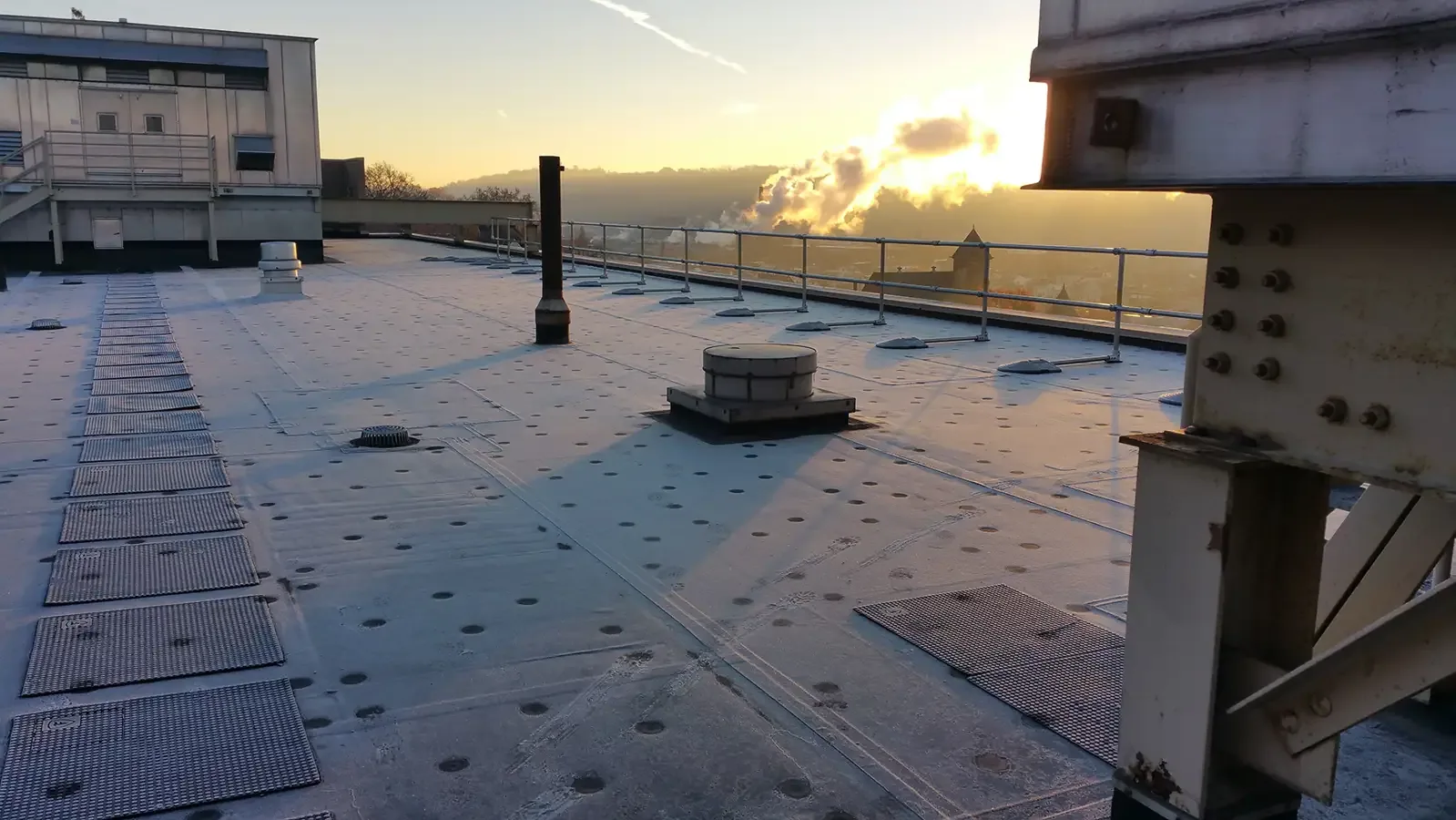
A coating is only as watertight as the roof beneath it. Before any liquid is poured, we walk the roof and repair open seams, loose flashings, lifted laps and backed-out fasteners. Cracks are treated with the approved detail materials; fabric and mastic are used where the specified system requires them. Numbered photographs record each repaired detail before coating conceals it.
Penetrations get the most attention. Pipes, vent stacks and rooftop unit curbs concentrate stress, and a thin film over a sharp corner fails early. We build up those spots with extra coating and fabric, which is the same discipline used for skylight and penetration flashing. Coat sequence follows the specified system rather than a universal two-coat rule, and we measure the film at test points to confirm the specified thickness was reached.
Timing Application Around Minnesota Cold and Moisture
Liquid coatings cannot be applied when the day will not allow them to cure. Cold surfaces, dew, frost and rain on the way all spoil the film. A winter like 2013-14, when the Twin Cities dropped to -23 degrees on January 21, 2014, shows how far the weather can fall outside any working range. Silicone is a little more forgiving than acrylic about cool and damp conditions because it cures from moisture in the air, yet it still needs a dry surface and a forecast with room to spare.
Application dates follow the actual forecast and product limits rather than a fixed seasonal opening or closing date. We start the season with the repairs that ought to be done earliest, such as a commercial roof repair to seams and flashings, and we log the surface temperature, humidity and dew point on every coating day, whether the roof sits in Midway, in Lowertown or at the edge of Highland Park. The weather record then explains why a given section went on when it did.

Coating Roofs Where a Tear-Off Would Disrupt the Building
Coatings suit buildings that cannot easily absorb the noise, debris and exposure of a tear-off. Regions Hospital, a HealthPartners teaching hospital with more than 550 beds and a Level I trauma designation, has patients under the roof for every day that demolition would run. Downtown office buildings, where Securian Financial employs about 2,600 people, have staff under the roof every working day. On a building like that, coating a sound roof can postpone a replacement for years while the owner plans and budgets for it.
The work is quiet and clean by comparison, with less membrane disposal when existing materials are suitable to retain and little new weight on the structure. We give each owner a written comparison for a hospital roof or an office roof, showing coating, recover and replacement side by side, with the moisture, adhesion, compatibility and drainage findings behind the recommendation. The same review applies in downtown Saint Paul and elsewhere.
Documenting Film Thickness and Warranty Conditions
Thickness is one contributor to coating durability alongside preparation, product, exposure and maintenance, and the only way to prove thickness is to measure it. During application, wet-film readings are taken at spaced points and written onto the roof plan with the date. After the cure, the dry film is checked against the total applied. Any section that came up short gets another pass before the crew leaves.
That file is the foundation of any coating warranty. Manufacturers set terms for surface preparation, thickness and later maintenance, and an owner who can hand over the dated readings can show those terms were met. We track inspection dates and renewal coats in the same file, as part of roof warranty management for the building. The same file helps a buyer or lender judge a coated roof, because it shows what was done and when.
Questions We Hear
Will silicone hold up on a roof where water sits after every thaw?
Silicone is the coating most often chosen for that condition, because the cured film tolerates standing water without softening the way many acrylics do. The coating does not remove the pond, and long immersion with freezing still adds stress. We measure the ponds first and recommend slope or drain corrections where they would pay off.
Can a roof that has leaked in the past still be coated?
Past leaks matter less than the insulation under them. Moisture readings and core samples show whether the insulation stayed dry or took on water. Dry roofs can be repaired and coated. Wet sections are cut out first, since coating over trapped moisture seals the problem in and invites blisters that lift the film.
Why does cleaning take so long before the coating goes on?
Dirt is a leading reason silicone fails, and a clean surface is cheap insurance against peeling. Silicone does not grip contamination, so every layer of dust, oxidation and biological growth has to come off. The test patches check adhesion at selected locations before the full roof is covered.
How do I confirm the film is as thick as the specification calls for?
We take wet-film measurements while the product is still liquid and verify the dry film after the cure, at marked points on the roof plan. A section below the target gets another coat, and the final figures go into the file with the date, so thickness is a record and not an assumption.
Can I put a different coating over silicone down the road?
A different coating is not assumed compatible with cured silicone. A silicone recoat or a specialty transition must have written product approval, suitable preparation and adhesion testing. Since that choice locks in the family of product, we record the type, the batch and the coating dates in the roof file before the crew leaves.