
Solar-Ready Roofing in St. Paul, MN
Prepare a St. Paul commercial roof for solar arrays with core samples, moisture readings and a dated condition record that keeps the roof repairable.
Request a Roof Assessment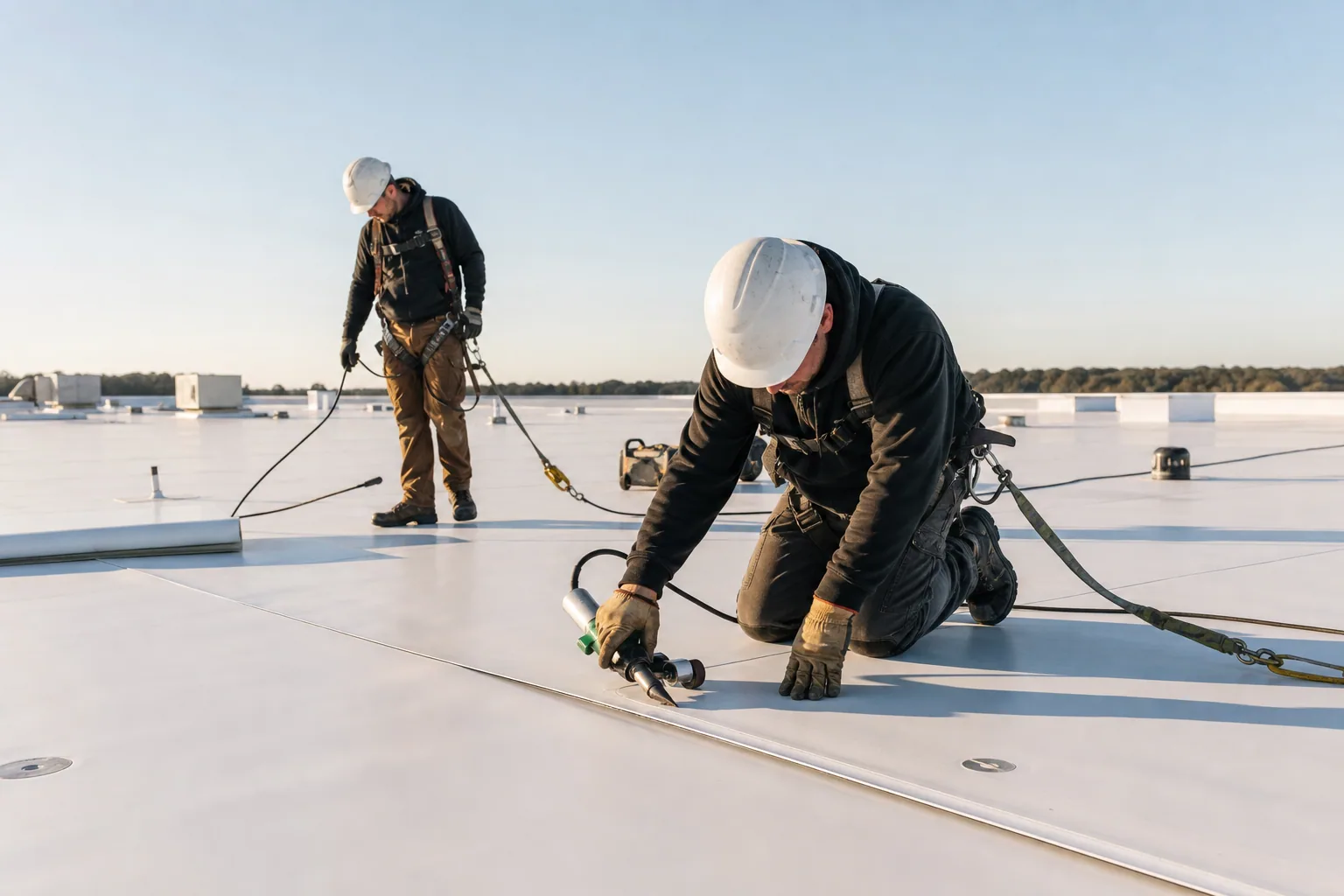
Solar-Ready Roofing
The question that decides a solar project on a St. Paul roof is how much life the membrane has left, and the place to find the answer is the inspection log. An array can outlast the membrane beneath it. Later reroofing may require electrical isolation and removal or relocation of racks, adding cost. So before a single mount is priced, we record the age signs of the roof, the moisture in its insulation and the state of every seam the array will cover.
Solar-ready roofing means the membrane, insulation and deck are in a condition to carry an array and stay watertight beneath it, and that the roof can still be inspected and repaired afterward. Our part is the roof. We prepare it, we document it and we work around the panels once they are in place.
Dating the Roof Before an Array Is Priced
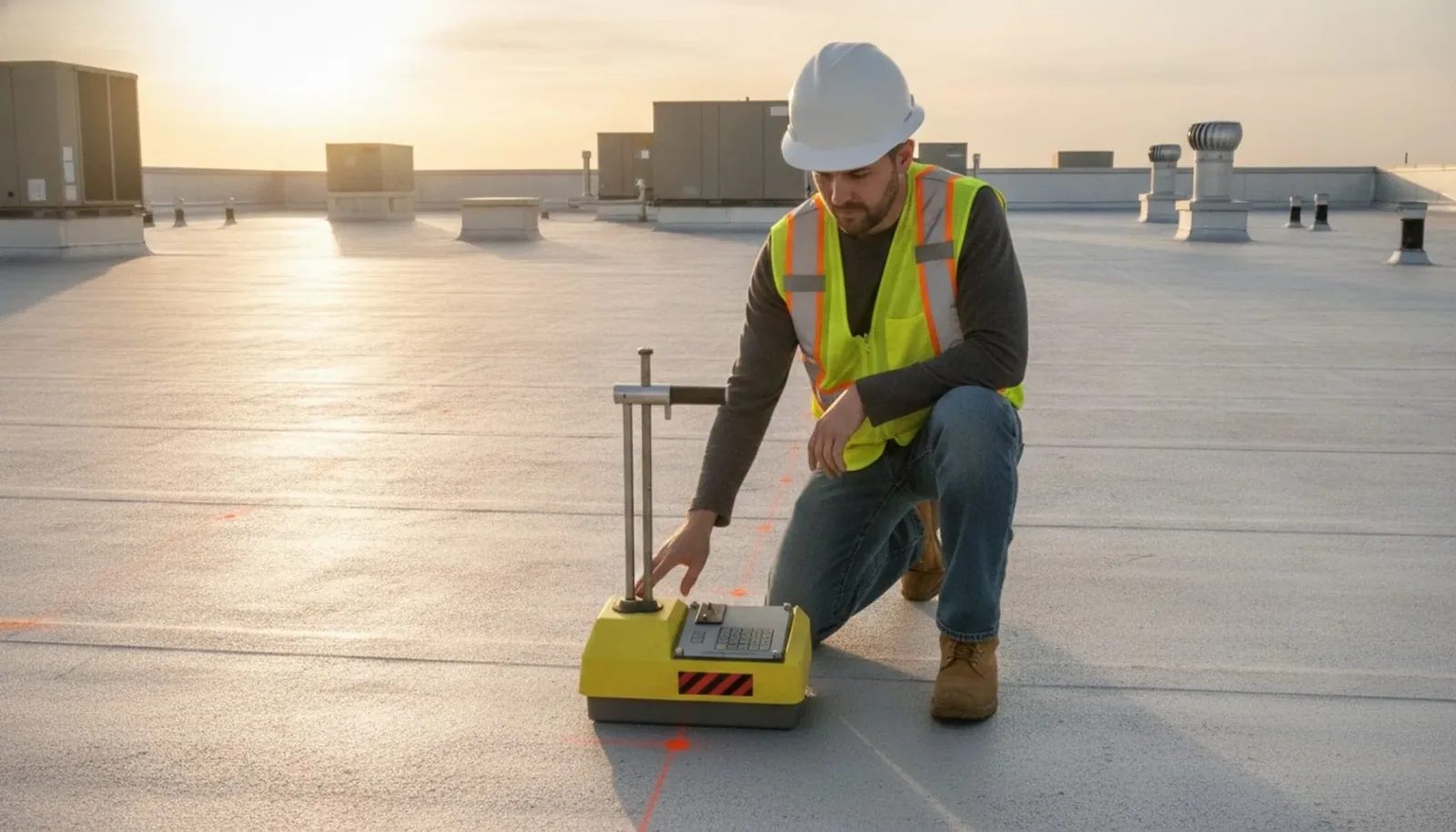
We walk the full roof and log what the surface shows: seam condition, blistering, shrinkage at the flashings, granule or coating loss and any patched areas. Moisture readings come next, taken across a grid and recorded by location, with core samples where the readings climb. A core sample shows the layers directly, including how many membranes sit on the deck, how wet the insulation is and the deck condition visible at that sample location. Structural suitability and attachment resistance need separate review.
The point is to separate a roof with long service ahead of it from one that is already near the end. A dated report maps readings and ranks findings for the developer, engineer and lender.
- Seam, flashing and surface condition across the whole field
- Moisture readings by location, with core samples at wet areas
- Drain, scupper and edge condition where array rows will end
- Deck and fastener condition visible at the cores
Adding Array Weight to a Deck Already Carrying Snow
The cited county ground-snow design input is 50 psf, while seasonal snowfall is accumulated precipitation. Neither value states the roof's allowable load or available capacity for an array. An array adds dead load to a roof already designed around that snow, and it changes how snow behaves. Rows of panels catch drifts, trap snow between rows and shed it in sheets at the lower edge, where it can land on a parapet, a drain or the membrane itself.
We do not perform the structural analysis. That belongs to the owner's engineer. What we contribute is a record of the deck and roof as they stand, including ponding that requires drainage and substrate investigation before it can be attributed to deck deflection. After the first winter with an array in place, we measure where snow collected and where meltwater ran, then log any change at drains or edges. The harsh 2013-14 winter, when 69.8 inches fell, is historical exposure context, not a structural design benchmark or a roof-load measurement.
Choosing Between Replacing, Recovering or Restoring First
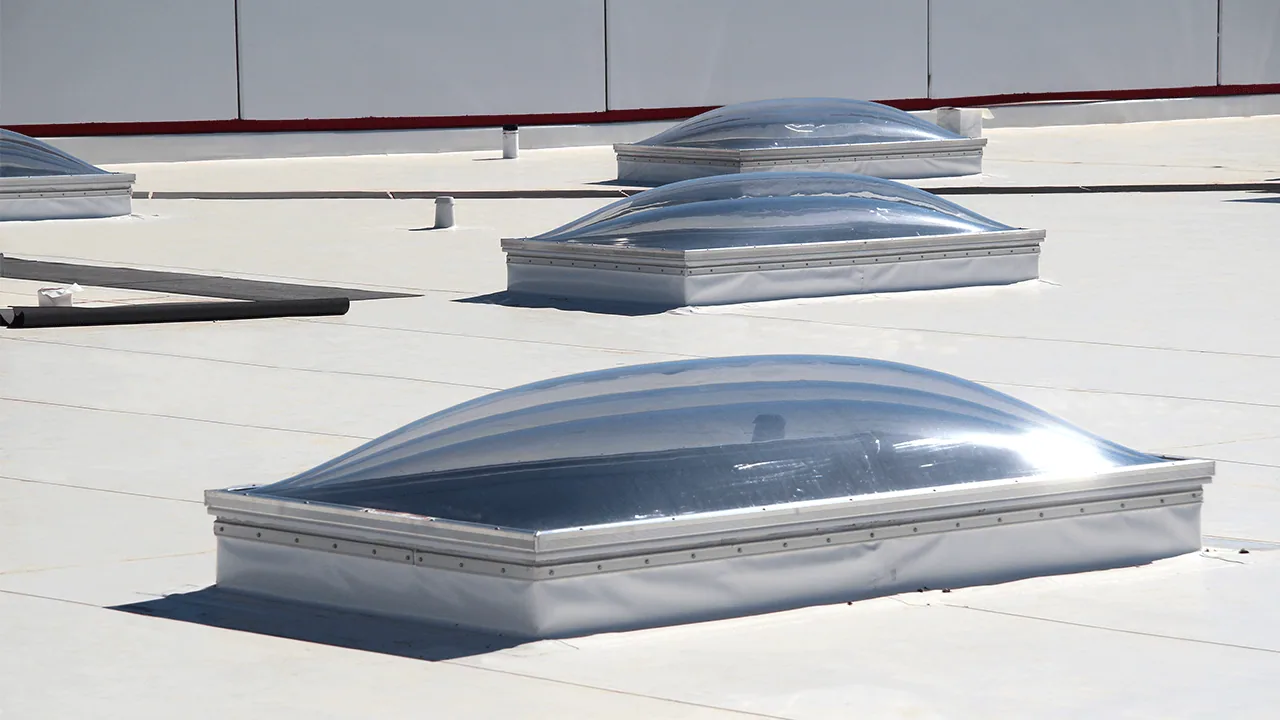
If the findings show a roof near the end of its life, the cleanest path is to complete the roof work before the array goes on. A full replacement gives a new membrane, fresh flashing and, where the building needs it, new insulation, all before any mount is installed. A recover over a dry roof can serve when the moisture readings are clean and the code allows another layer. Coating a sound roof with a restoration system can extend its life when the substrate is dry and the remaining service period matches the array's.
The review compares both service periods. If the roof will wear out well before the array does, the owner is looking at a replacement partway through the array's life, and the cost of that event should be known in advance. A planned replacement allows the membrane and array details to be coordinated. A heat-welded TPO membrane and a standing seam metal roof both accept arrays, though they attach in very different ways.
Setting Mounts, Walkways and Flashing Details
Every attachment point is a penetration or a heavy contact point. Ballasted racks sit on the surface and push weight onto protective pads. Attached racks go through the membrane to the deck and need flashing at every foot. On a standing seam metal roof, clamps grip the seams without drilling through the panel. Each approach has a different failure mode, and each gets its own entry in the log.
We also plan for access. Rows need clear aisles so a technician can reach seams, drains and flashing, and walkways should be marked and protected where crews will cross membrane to reach equipment. Drains and scuppers need a clear path, because a row of panels that blocks a drain turns an ordinary rain into a ponding problem. The roof plan we leave with the owner shows where the aisles run and where each mount has been flashed.
Keeping the Roof Warranty and the Array Record Together
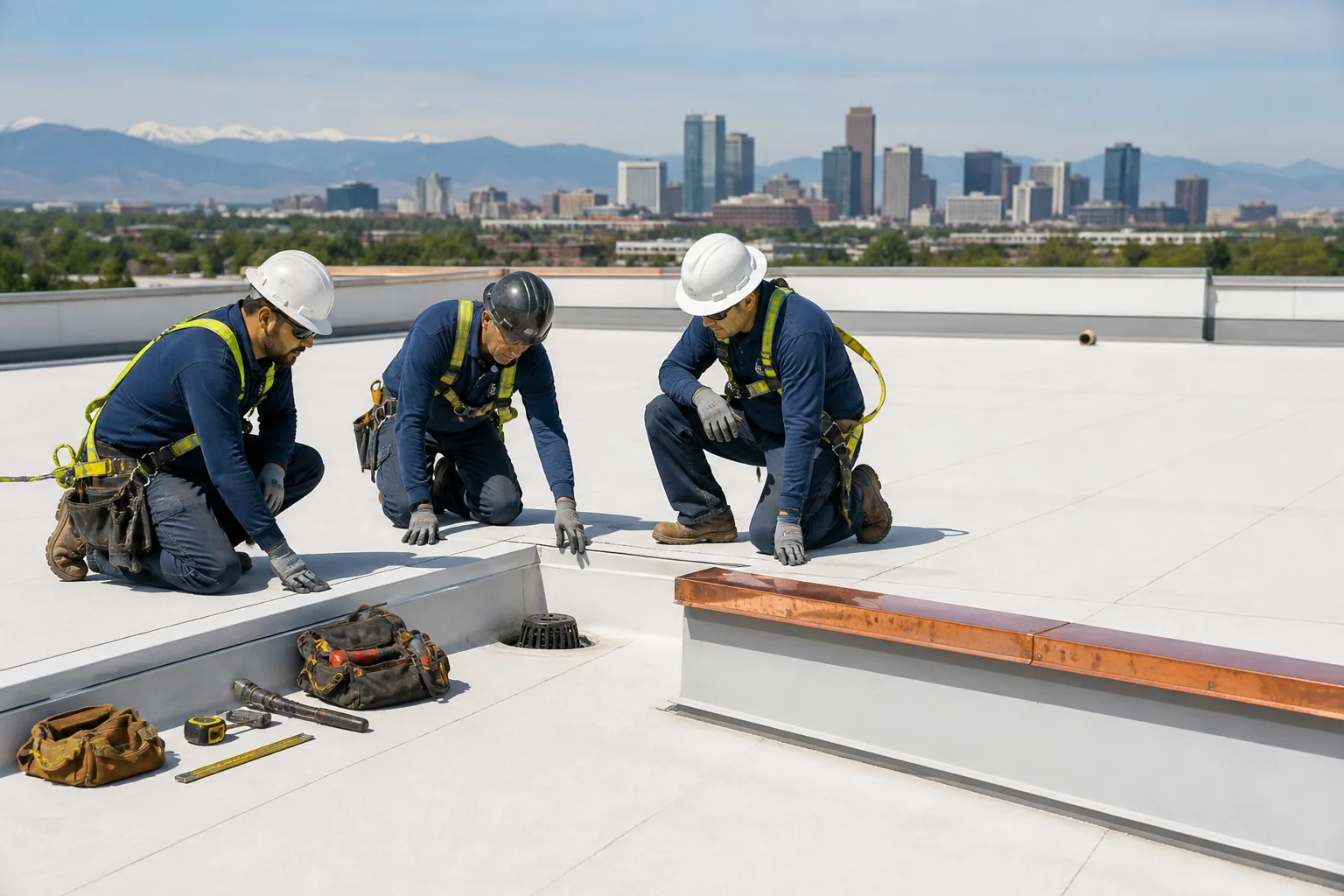
A roof warranty and an array contract can pull against each other. The membrane manufacturer wants to know who is working on the roof and how the penetrations are sealed, and a panel installer wants to know the roof will not need to be opened for years. A single file with dated photographs of the roof before the array, each attachment as it was made and each inspection afterward supports comparison of the work and the contractual responsibilities; it does not resolve coverage or responsibility by itself.
Hail is the event that tests the file. July 2025 storm reports support a dated comparison with array observations. Hail maxima from the May outbreak in west central Minnesota and western Wisconsin cannot be transferred to this property. Panels can crack and membrane beneath them can be bruised, so a before and after record helps an adjuster separate array damage from roof damage. We keep the roof side of that record and coordinate with the array owner on the rest.
Planning the Roof for Large Industrial and Corporate Buildings
Large roofs draw the most interest from array developers. Eagan, where the local building mix includes corporate campuses and logistics buildings, is the kind of place where owners ask about arrays, and so are the industrial-zoned parcels of Beacon Bluff. In Cottage Grove, home to Cottage Grove Logistics Park, the same questions arise. In each case, an inspection with moisture readings comes first, so the array plan rests on a dated record of the roof instead of a guess about it.
Questions We Hear
How old can a roof be and still take an array?
Age by itself does not rule a roof out. A dry membrane with sound seams and good insulation can support a roof-side suitability review, while a younger roof with wet insulation cannot. Our moisture readings and core samples give the condition directly.
Who pays if the roof must be repaired under the panels?
That is governed by the array contract and the lease, so the owner should read both before signing. What we can do is record the roof condition at installation and at each visit, which provides a baseline for assessing whether the observed condition predates the array.
Will panels make the snow load on my roof worse?
They change where it collects. Rows hold drifts, and snow sliding off the lower edge lands in concentrated spots. The structural effect needs an engineer, and we add measurements of snow depth and meltwater paths to the file after the first winter.
Can an array go over a recover or a coated roof?
Potentially, after roof, structural, attachment and warranty review. Dry materials and mount compatibility alone do not complete that review. A recover must be approved for the added weight, and a coating needs to be applied before racks go on so that no one works on a fresh surface later.
What happens to the array when the membrane needs replacing?
The panels must be lifted, stored and reset, which adds time and cost. That is why we recommend dating the roof first. If the membrane will not last as long as the array, replacing it before installation costs less than doing it beneath the racks.
Does hail change my warranty?
It can. Hail marks bruise membranes and crack panels, and warranty terms vary with the manufacturer. Photographs taken before and after each storm give the owner a defensible account of what the event did and when.