
Membrane Puncture Repair in St. Paul, MN
Membrane puncture repair in St. Paul, MN combines direct inspection, suitable moisture testing and compatible patches with a dated record of findings.
Request a Roof Assessment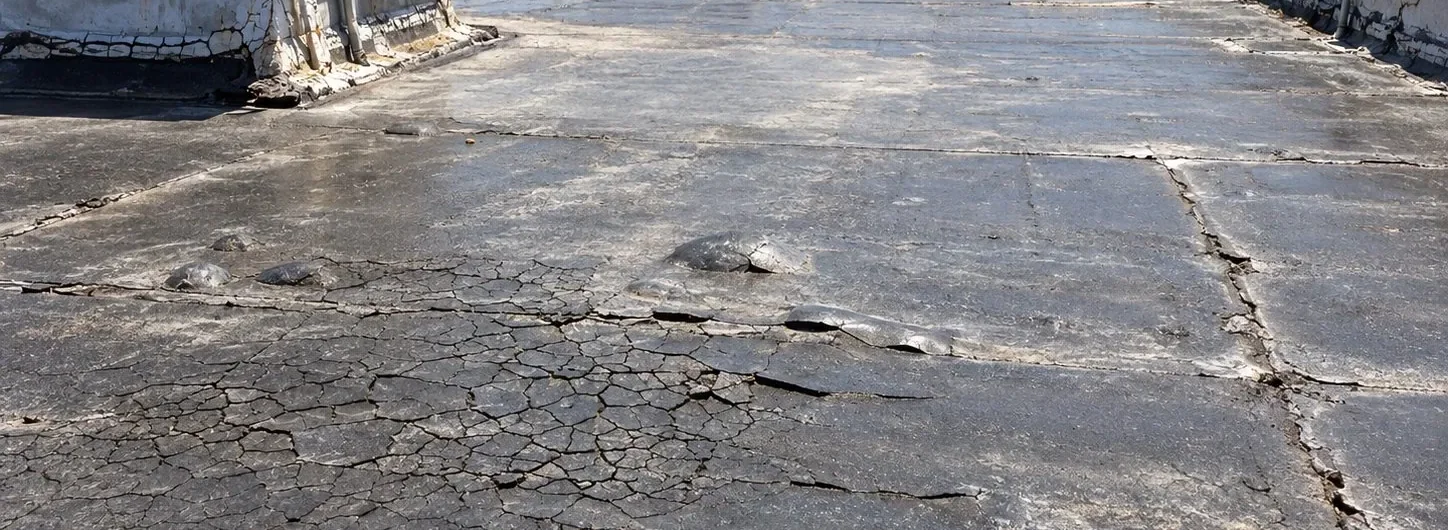
Membrane Puncture Repair
A puncture is often a small entry in the inspection log beside a large wet area. The hole may be no wider than a pencil, while the insulation beneath it has been soaking up water for a season. That mismatch is why we treat a puncture as a moisture problem first and a patching job second, and why the dated record from the first visit matters as much as the repair.
Punctures come from people and from things that fall. On a flat roof in St. Paul, MN, the sources are usually the same: service visits to rooftop units, trades working near the roof, tools set down and dragged, and ice or debris that has dropped from higher up. A frozen membrane is stiffer and cuts more easily, so a winter of heavy use can leave a roof with more small injuries than the owner knows about. Our work is to find all of them, not just the one that leaks.
Locating Suspect Moisture and Inspecting the Membrane
A visible hole is only part of the story. Water that enters a puncture can travel along the top of the deck and collect far from the entry point, so we start with a moisture survey of the whole area. An infrared scan can identify temperature patterns when roof construction and weather permit useful contrast. Grid readings and selected openings check whether those patterns represent moisture; they do not establish an exact boundary or locate every puncture. Our infrared moisture survey provides a suspect-area map to use alongside direct membrane inspection.
On the ground, we look for what the scan suggests: a rounded cut, a scuff that has worn through the surface layer, a puncture by a screw or a nail, a gouge from a dropped tool. We photograph each find beside a coin or a ruler, mark it with a number and note whether the membrane layer beneath, such as the scrim, is exposed. Small punctures are easy to miss on a textured or dirty surface, so we clean the area before we call it sound.
Following Wear Lines From the Roof Hatch to the Rooftop Units
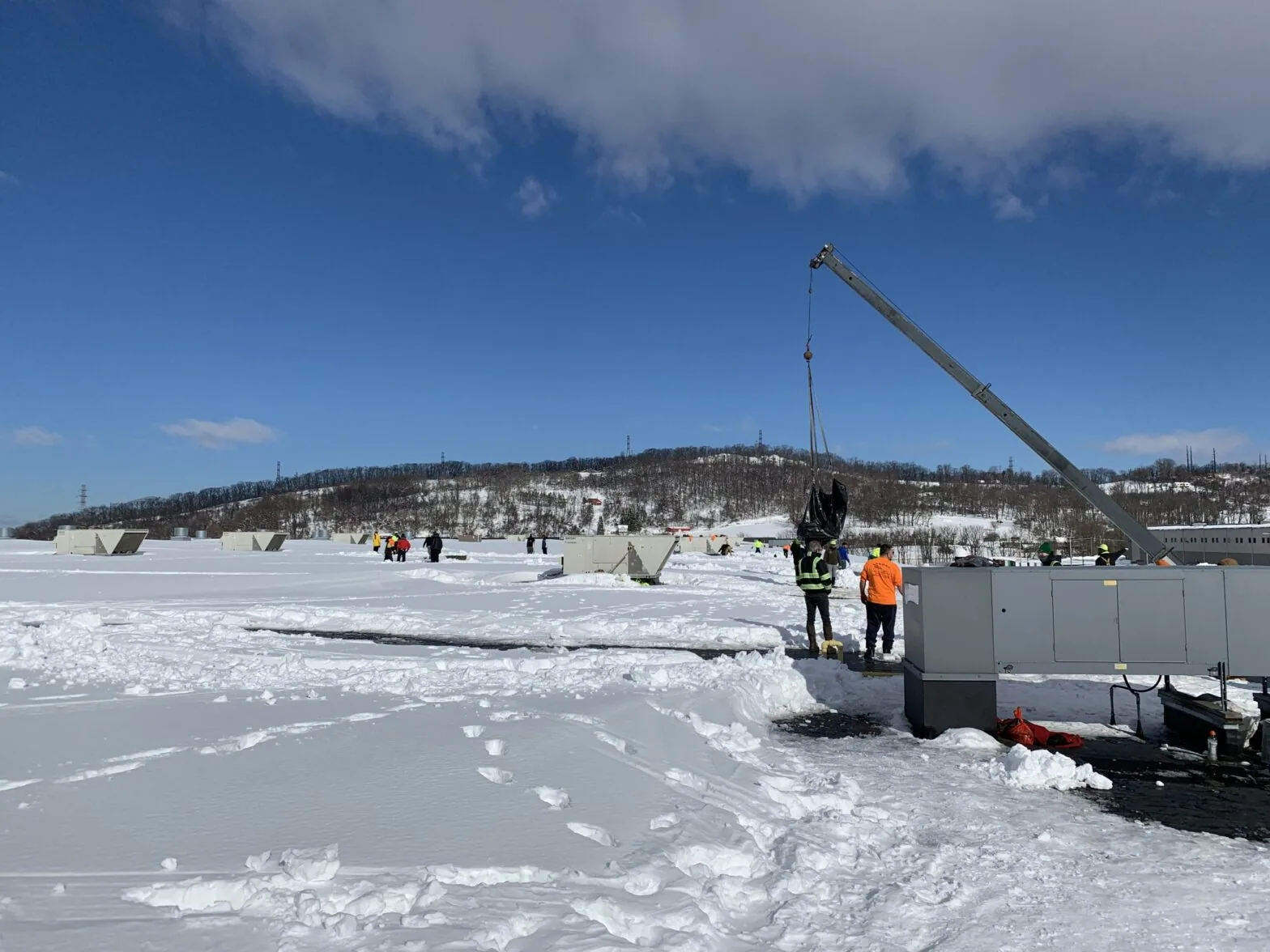
Foot-traffic damage is predictable because people take the shortest route. Between a roof access door and the equipment that needs service, the membrane shows a path: dirt, scuffs, a polished strip where the surface has worn thin. We trace that line and probe along it, since a membrane worn to its reinforcement fails quickly when a boot twists.
In the downtown office core, where Securian Financial and Travelers employ thousands and a 40-bridge skyway system ties the buildings together, any roof that carries mechanical equipment will have someone walking to it. Wherever a rooftop unit sits, a worn path to it is likely. We record the wear and recommend a preventive maintenance routine that includes walk pads along the service route. The pads are cheap compared to a puncture, and they leave a clear line of travel for technicians who might otherwise walk across the open field.
Separating Trade Damage From Weather and Age
When a roof has been punctured, someone will ask who did it. Our file helps answer that by recording what the damage looks like and where it sits. Damage beside a freshly installed unit, a line of screw holes beside a new conduit run, or a cluster of cuts near a skylight curb suggests trade work. A scatter of impact marks across the field suggests hail, and a thin spot that looks sanded suggests foot traffic over years.
On a corporate campus, such as those in Eagan where Thomson Reuters, BlueCross BlueShield of Minnesota, UPS and Ecolab are all major employers, several contractors may be on the same roof within one year. A dated photograph of the roof taken before and after each trade visit protects the owner when responsibility is disputed. General contractors working for an owner can use the same practice, and we prepare the pre-job and post-job photographs that the general contractors on a project need.
Matching the Patch to the Membrane, the Thickness and the Weather
A patch has to be made of material that bonds to the sheet beneath it. On a thermoplastic roof, the patch is the same family of membrane, cut with rounded corners to resist peeling and welded around its perimeter. On an EPDM roof, the area is cleaned, primed and covered with a cured or uncured patch, depending on the repair. For a coated roof, a spot repair may call for the same coating, applied over fabric, to bridge the damaged area. Where the hole is large or the deck is damaged, the repair expands to a larger section.
Wet insulation beneath the hole must be dealt with before the patch goes on. We cut out and replace saturated board, dry the cavity and often add a cover board to protect the repaired area from further traffic. A silicone coating may be considered only after punctures and wet areas are repaired and the substrate passes compatibility and adhesion review. Coating does not replace those repairs. In winter, patches may be temporary until the weather lets us make a permanent repair.
Keeping an Access Log and a Record of Repair
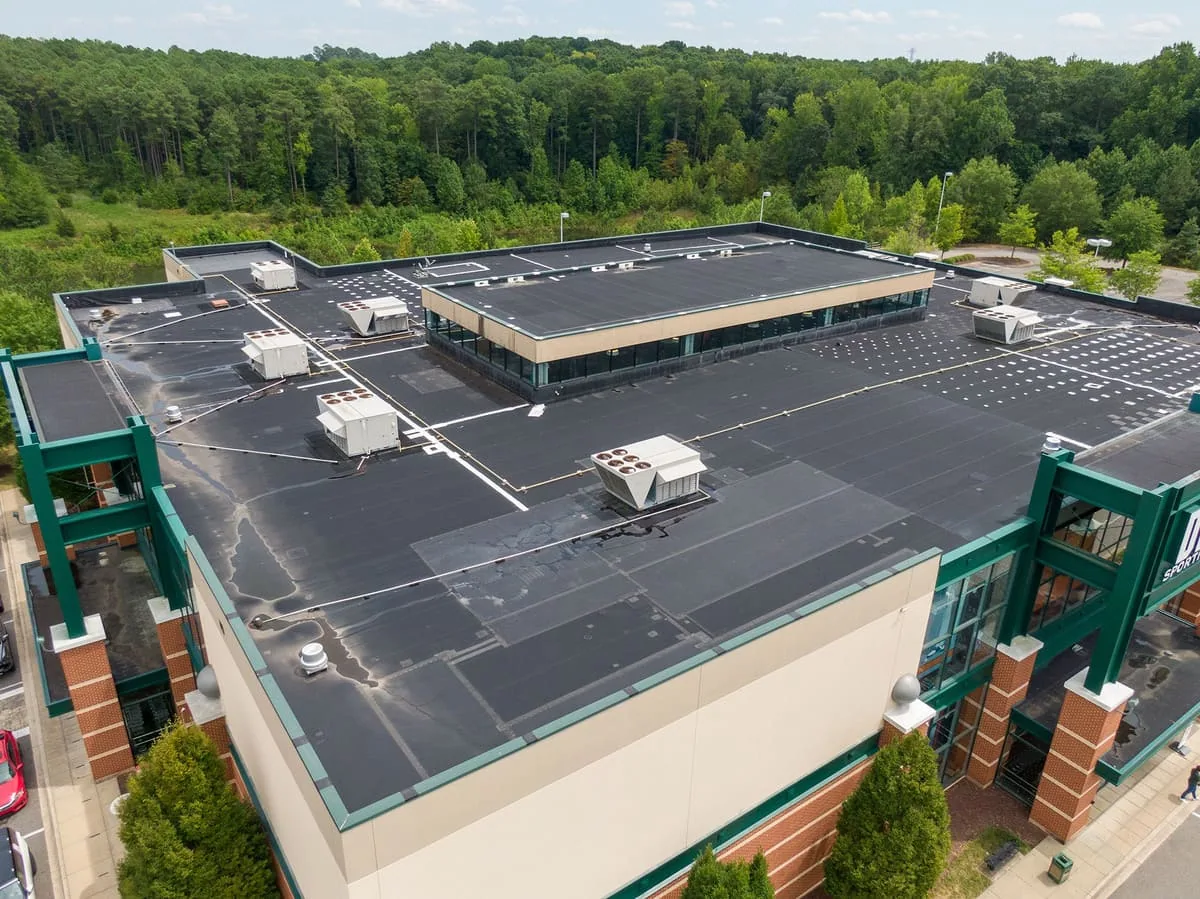
The repair file lists every puncture by number, with the cause as best we can determine it, the moisture reading, the repair method and the date. It sits alongside a short access log, listing who entered the roof and for what purpose. In the light-industrial and flex buildings of the Midway and Energy Park, where one roof may serve several tenants, the log is especially useful, because it shows which tenant's equipment drew the traffic.
Warranties often exclude damage from traffic or from other trades, so the file also records the roof's condition at each inspection. A commercial roof inspection done twice a year builds a record of how the surface is aging and where new damage appears between visits. That record gives an owner a firm basis for requiring repairs from a contractor whose work caused a puncture.
When traffic damage reaches an adjoining seam connection or flashing junction, we inspect that detail separately because its preparation may extend beyond the puncture patch. The closeout records each affected location and photograph before coverage, allowing a later visit to compare the completed work.
Questions We Hear
Is a pinhole puncture worth a service call if nothing is leaking?
Yes, because the membrane may be wet beneath the hole even if the ceiling is dry. Insulation can absorb water for months before a stain forms. We confirm with a moisture reading, repair the hole and date the record.
How do you find a puncture on a ballasted or gravel roof?
Ballast and gravel can limit thermal interpretation. Where suitable, readings help select an area for investigation, then sweep the stone back from that section and inspect the exposed sheet. After the repair, the ballast is returned to its original weight and layout so the roof's wind resistance is not reduced.
Can the membrane be patched when the insulation underneath is wet?
A surface patch does not resolve wet insulation, which can damage the retained assembly even if the patch initially bonds. We cut out the wet section, replace it with dry board and then patch the membrane. A core confirms its own location; additional readings and openings define removal as the area is exposed.
Who is responsible when a trade puts a hole in the roof?
Responsibility rests with the contract between the owner and the trade, and a photograph from before the work is the strongest evidence of the roof's earlier condition. We supply dated before-and-after images, and the owner uses them in the claim.
Where should walk pads be placed?
Along the path from the roof access to each piece of equipment that needs service, and at points where people turn or step down. We mark the route during inspection and show the owner where wear already runs.