
School Roofing in St. Paul, MN
Roof repair, recover and replacement for K-12 school buildings in St. Paul, MN, scheduled around the school year with a dated photo record of every finding.
Request a Roof Assessment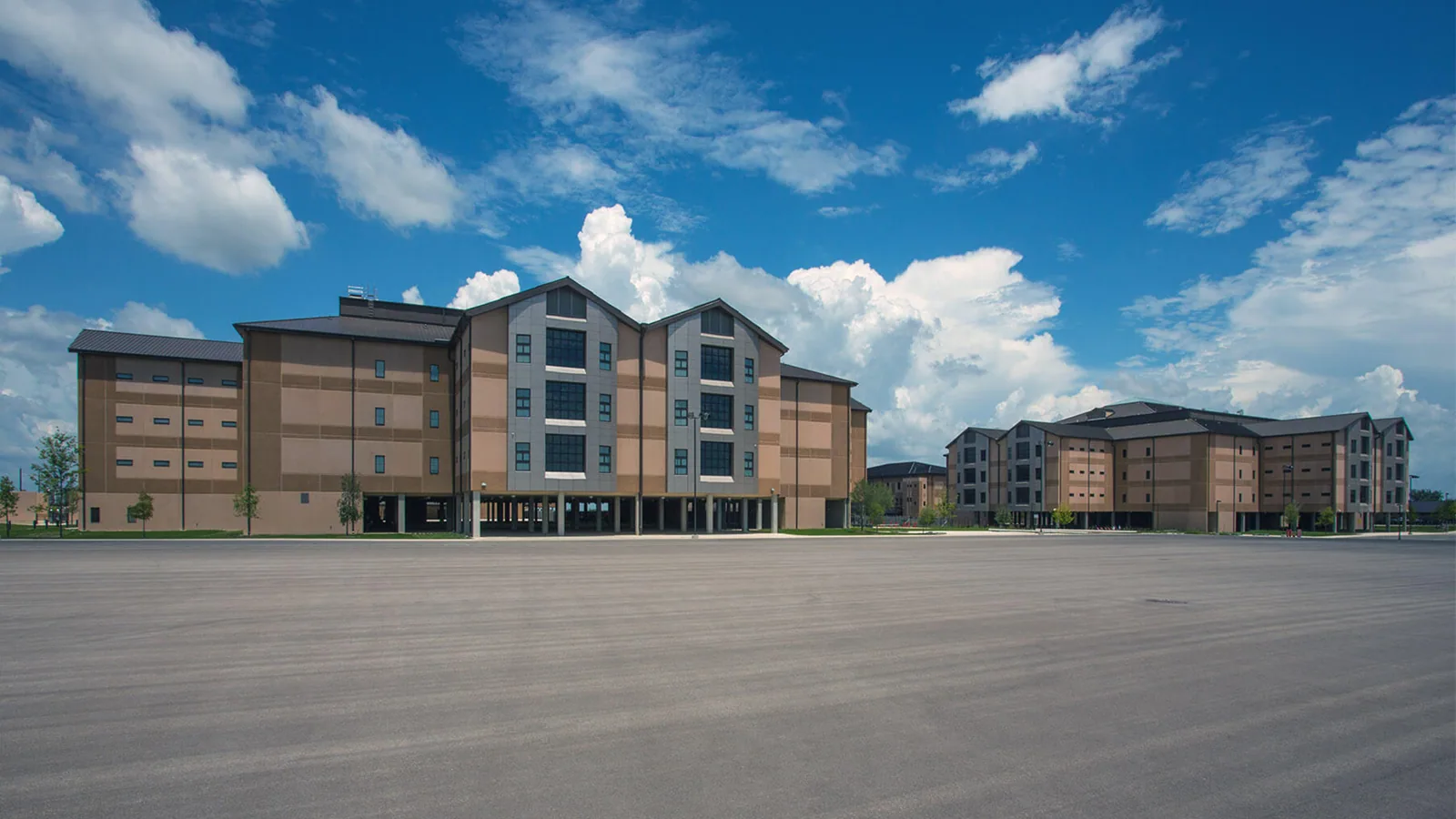
School Roofing
A school roof in St. Paul, MN can receive a useful inspection during an agreed summer access period, when winter-related findings can be compared with the current membrane condition. We record where January's drifts settled against the gymnasium wall, which drains held water through the March thaw, and where an ice dam left a stain at the eave of a classroom wing. Every reading is dated and photographed. By August a school district has a defensible record: it tells the board what the roof needs before the next winter, and it shows an adjuster the condition the roof was in before any storm.
Fitting Roof Work Into the Summer Calendar
Replacement and recover work on a school is scheduled backward from the first day of classes. Roofing in the Twin Cities is bounded by cold at both ends of the year, so summer break is the stretch when adhesives cure, welds run clean and a tear-off can be closed in at the end of each shift. We build the schedule from the roof outward: how many separate roof areas the building has, which ones share a drain line, and where a hoist can stand without crossing a bus route.
Summer is also when hail and wind arrive. A line of storms on July 28, 2025 brought gusts to 70 mph and golf-ball hail across the metro, while St. Paul, Woodbury and Maplewood all drew flash flood warnings. A plan with no allowance for a storm day misses the opening bell, so each shift includes a planned closure and weather-protection check. Because summer programs, custodians and office staff are often still in the building, the work is run as occupied building reroofing, with noise, fumes and deliveries kept away from active rooms.
Measuring Drifts Where a Gymnasium Rises Above Classrooms
Snow measurements at a school need structural interpretation rather than comparison with a single accumulation allowance. County ground-snow criteria are design inputs; roof loads depend on the geometry, drift effects and building information. Where a gymnasium or auditorium rises above a lower classroom wing, wind strips the high roof and deposits the snow on the low one. The drift against the step can weigh far more than the even layer farther out, and it holds meltwater against the base flashing long after the open field has dried.
After a heavy snow we measure the depth at the step, photograph the drift and log the spot. In the winter of 2013-14, when the Twin Cities collected 69.8 inches, a comparable dated drift record would identify which areas required closer review. A district planning capital work can read that history beside the findings in snow and ice roof damage repair to decide which sections come first.

Reading Each Addition as Its Own Roof
Where a school has grown through additions, one building can carry several roofs of different ages, each with its own membrane, insulation and drain layout. We treat each area separately. Every section gets its own inspection entry, its own moisture readings and, where the readings call for it, its own core sample, so that a sound roof over the library is not condemned because the roof over an old boiler room is failing.
The result is a map a district can budget from. It shows remaining life by area and separates the sections worth repairing now from the ones that need a larger project. Facilities staff can carry it into roof capital planning with the evidence attached. The same section-by-section method suits college and university buildings and government buildings wherever a complex has grown in stages.
Keeping Students, Buses and Entrances Clear of the Work
The edge of a school roof often sits directly above an entrance. Canopies, bus loops and play areas are the first places we fence and the last we release. Ice is the winter version of the same hazard: an ice dam at an eave sends sheets down onto a walkway during the thaw, and we log those spots so they can be cleared or corrected before the doors open in the morning.
Work during the school year gets a different plan from work in July. Roof access is set away from drop-off routes, and adhesives and sealants are chosen with the building's fresh-air intakes in mind, with each intake marked on the daily plan. Hot work stays away from occupied rooms. Each day includes closure and weather-protection checks, photographed and dated, so the next morning begins from a recorded condition.
Assembling the Permit Package and the Record of Repair
A flat-roof re-roof in St. Paul goes to plan review at the Department of Safety and Inspections, where the application has to state the roofing material, the roof area in square feet and the drain size. Those three figures come straight from the survey measurements. The proposed assembly is checked against the applicable Minnesota building and energy requirements. Insulation, retained layers and attachment need that review before installation, rather than being treated as a simple membrane swap.
At completion the district receives a record of repair or installation: photographs of each layer as it went down, the materials used, the drain and flashing details and the dates. Filed with the original specifications, it is what a warranty administrator, a future contractor or an adjuster working a roof insurance claim will ask for first.
Questions We Hear
Can a school roof be replaced between June and August?
Phasing makes it workable. We divide the building into roof areas, price and sequence each one, and close every area in at the end of the shift with suitable temporary protection planned for changing conditions. The order follows the evidence: sections with wet insulation and active leaks go first, and sections with years of life left wait or receive repairs. The calendar also needs room for the plan review the city requires, so the survey and permit package start in spring rather than after the last bell.
What happens if a leak starts while classes are in session?
Temporary protection comes first. We respond at any hour, nights and holidays included, to assess safe immediate protection, and we photograph the damage before anything is covered so its cause is on record. Wet ceiling tiles, wet insulation and the roof opening are logged as separate items. The permanent repair is scheduled once the weather and the school calendar allow, and the dated photographs go to the district's insurer if a claim is filed.
Why does the gymnasium roof show wear before the classroom wings?
Height and exposure often account for it. A tall roof takes the full force of wind and hail, and it sheds snow onto the lower roof beside it, so the step between the two collects both ponding and abrasion. We compare readings from each level to learn whether the difference is exposure or a real defect, and the log shows the district which of the two it is.
What belongs in the file after a school roof repair?
Dated photographs of the damage as found, each layer as it went on and the finished detail. The file also holds the materials list, the location of every patch, moisture readings taken before and after, and the roof area named on the building plan. Those pages give a district a record of repair it can hand to an insurer, a manufacturer or a successor in the facilities office without anyone reconstructing events from memory.
Is a coating a sensible choice for a school roof that is wearing out?
Moisture readings and core samples answer that. A membrane with dry insulation and sound seams can often take a restoration coating, which extends its life without a tear-off and with a work plan suited to the actual occupied areas. A roof with wet insulation cannot be coated back to health, and the cores show that before any money is spent. We give the district both outcomes in writing, with the evidence for each.