
Public Agency Roofing in St. Paul, MN
Roof inspection, repair and replacement for cities, counties and state agencies in St. Paul, MN, with measured scopes and dated records for public review.
Request a Roof Assessment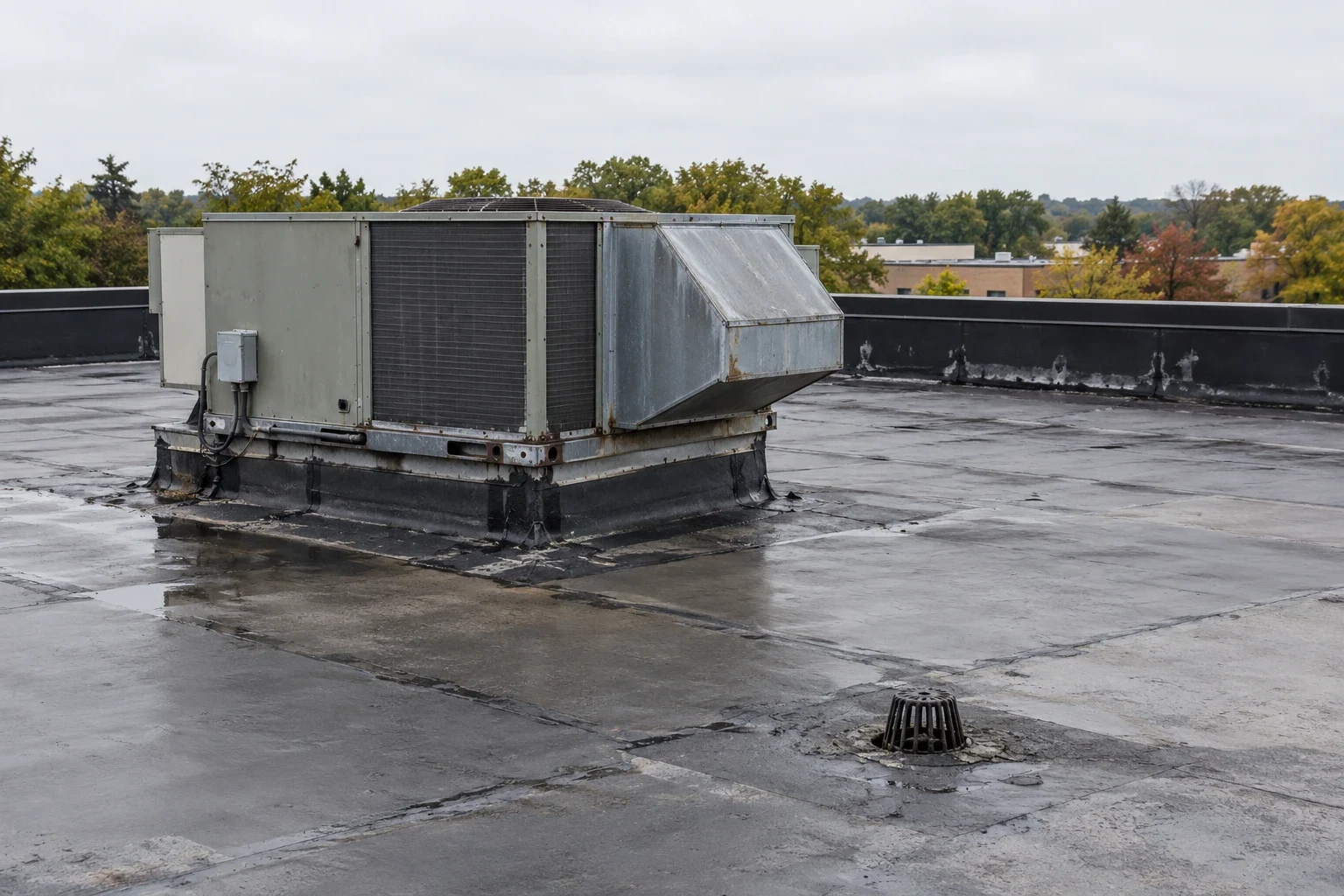
Public Agency Roofing
A roof entry for a government building has to hold up when it is read by someone who was never on the roof: an auditor, a council member, a county board or a resident who asks where the money went. So our inspection log for a public building records only what can be checked. Each page carries a date, a roof area, a moisture reading or a core finding, and a photograph taken from a marked position. In St. Paul, MN the state, the county and the city each own buildings, and the log treats them alike. It is the working record behind any government building roofing job, written so that the next administration can pick it up without a briefing.
Documenting Roofs on Listed Buildings Before Anyone Touches Them
Union Depot in Lowertown, completed in 1923 and restored in 2012 for $243 million, is on the National Register of Historic Places, and so is the St. Anthony Park Branch Library, a Carnegie library from 1917. Work on a listed building is reviewed more closely, and the review asks what exists before it asks what is proposed.
We therefore photograph and measure the roof edges, flashings, parapets, drainage paths and visible materials before a scope is written, and we do not assume what lies beneath the surface. Cores are cut sparingly and patched, and every cut is located on a drawing. The file that results gives a preservation reviewer, an architect and a facilities engineer the same set of facts, and it keeps a repair from removing something the building was meant to keep.
Writing Scopes That Competing Bidders Can Price Equally
Public money is spent through competition, and competition works only when bidders see the same roof. From the survey we draw up a scope with measured areas, existing layers, the extent of wet insulation, drain counts, penetration lists and edge details. Alternates are priced separately, so an agency can compare a repair, a coating or a full replacement for the same roof on equal terms. Addenda answer questions in writing, and every answer goes into the file.
The measurements also satisfy plan review. St. Paul's inspections department takes a flat-roof re-roof through plan review and expects the material, area and drain size to be stated, and the designer confirms applicable energy provisions for that assembly and any scope-specific exceptions. The findings feed roof asset management records, which keep the next procurement from starting at zero.
Ranking Buildings That Cannot Close for a Roof Project
Government buildings do not all share a calendar. The Minnesota State Capitol complex, which includes the Capitol at over 300,000 square feet, the Minnesota Judicial Center, the Senate Building completed in 2016 and the State Office Building, is a concentration of government uses with different access and scheduling requirements. The stated Capitol figure is building floor area, not a measured roof quantity. A leak over an occupied hearing room or a records room is ranked differently from one over a storage space, and the roof plan carries that ranking.
Work near such buildings follows their security and access rules, with crews badged, deliveries scheduled and staging areas agreed in writing. The method is the one used for any occupied building reroofing job: small sections, closed in daily, with the interior below checked and photographed at the end of each shift. If a leak starts outside business hours, the emergency contact route is used, and any protection installed under suitable access and weather conditions is documented.
Tracking Snow, Ice and Roof Clearing on Old and New Buildings
Buildings from different generations share one winter. The 2013-14 Twin Cities season recorded 69.8 inches of snowfall. That seasonal accumulation describes repeated exposure; it does not measure snow weight on any agency roof. Crews sent to clear snow off a membrane can cut or abrade it with a shovel, so we record any clearing history in the file and flag the areas where tools have scarred the surface. A shovel scar is often the beginning of a leak that surfaces months later.
Ice at the eaves is logged the same way: where it forms, what sits beneath, and whether the pattern repeats. Repeated ice warrants investigation of heat loss, roof drainage and edge configuration. The log identifies locations to examine rather than declaring the cause. Laid beside an agency's own work orders, the dated photographs show whether the trouble returns at the same eaves, which is the pattern behind snow and ice damage.

Keeping Multi-Year Records Across Counties, Armories and Offices
Public owners are spread across jurisdictions. Washington County runs its Government Center in Stillwater, Dakota County government is among West St. Paul's larger employers, and Minnesota's Department of Military Affairs coordinates armories, air bases and military reservations from its downtown St. Paul office. Each body has its own budget cycle, and each needs a roof record that matches. For armories, the same method applies to a National Guard armory.
We assemble one file per building and a summary that ranks the buildings an agency holds. The file notes every warranty with its notice dates, every repair with its photographs and every open item with a location. The same file serves school districts, and an agency that brings in a general contractor for a larger project can hand the file over before bidding opens.
Our procurement file brings together the performance requirements, written bid questions, approved substitutions, inspection notes and change approvals. It identifies the owner’s authorization path for concealed conditions and distinguishes unconfirmed quantities from completed work, giving reviewers an auditable path from the original scope through acceptance.
Questions We Hear
What proof does an agency have that a roof repair was needed?
The dated record. It shows the roof area, the defect, the moisture reading or core that confirmed it, and the photograph taken before work began. After the repair, a second photograph and reading complete the pair. An auditor can follow that sequence without anyone from the roofing side explaining it.
How are alternates handled when funding is not settled?
They are priced as separate items against the same measured scope. A coating, a recover and a replacement for one roof can be bid side by side, and the agency evaluates funding alongside technical eligibility and its procurement requirements. Since every item rests on the same survey, a delayed award may require updated conditions, quantities or product approvals before proceeding.
Can a listed building get a modern roof?
Often it can, with review. The reviewer wants to know what exists, what changes and how the work can be reversed. Our file supplies the first answer in full. Edge, flashing and drainage details are photographed and measured, and any new material is proposed against that record so the review has facts to work from.
Who responds when a leak starts at night in a government building?
We do, at any hour, including holidays. The crew assesses suitable temporary protection when roof access and weather permit, photographs the affected area before covering it and takes moisture readings. The building contact receives the findings in writing, and the permanent repair is scheduled once weather and building operations allow.
What goes into a handover when the facilities lead changes?
The roof plan, the latest inspection, the list of open items, the repair history and the warranty papers with their dates. Photographs are keyed to the plan so a newcomer can find any location. The package lets the successor continue the program from a known starting point.