
Naval Facility Roofing in St. Paul, MN
Roof inspection, repair and replacement for Navy Reserve and naval facility buildings near St. Paul, MN, with ice dam logs, core samples and dated records.
Request a Roof Assessment
Naval Facility Roofing
A snow drift against a parapet needs a dated depth record before a later thaw changes its shape. Navy Reserve Center Minneapolis operates at the Minneapolis-Saint Paul Joint Air Reserve Station near St. Paul, MN. An authorized roof scope there identifies the actual building, accessible details and conditions beneath the work. The roof problems at an inland naval facility come from the winter, and the record that protects the building comes from measuring that winter on the roof itself, with dates, photographs and moisture readings that a successor can pick up and read.
Recording Cold and Thaw Where Other Stations Record Salt
A coastal roof corrodes. An inland one flexes. The 2013-14 winter in the Twin Cities logged 8,597 heating degree days against a normal of 7,580, with a low of minus 23 degrees on January 21, 2014, and every cycle of that cold pulled on membrane seams, metal flashing and fasteners. We record the places where that movement shows: a seam edge that has lifted, a flashing lap that has opened, a fastener plate that has backed out of the deck. Each gets a photograph and a date so a later survey can show whether it is a one-winter event or a pattern. Metal edge details and coping take the worst of it, because they are long, thin and fastened at intervals, so we check each run for gaps that open and close with the temperature.
Thaw does its own damage. An ice dam starts when heat escaping through the assembly melts snow that then refreezes at the eave, trapping water behind the ice. We note which eaves held ice, how deep it was, and which areas need further thermal, air-leakage or ventilation investigation.
Sorting Out Whose Roof Is Whose on a Shared Station
The Joint Air Reserve Station is not one tenant's property. The Navy Reserve Center shares the airport installation setting with the Air Force Reserve's 934th unit and the 133rd wing of the Minnesota Air National Guard. For a roof inspection, that shared footprint raises practical questions: which command owns a given building, who approves access, and whose facilities office receives the report. We settle them at the start and write the answers into the file header so a finding does not wait on a routing question.
The record then travels with the building, not the tenant. If a unit moves, the roof history stays with the address. That continuity matters wherever several units share one fence line, and it is the same logic a landlord applies to a light-industrial building in the Midway when tenants turn over.
Walking the Steps Between Training Space and Offices
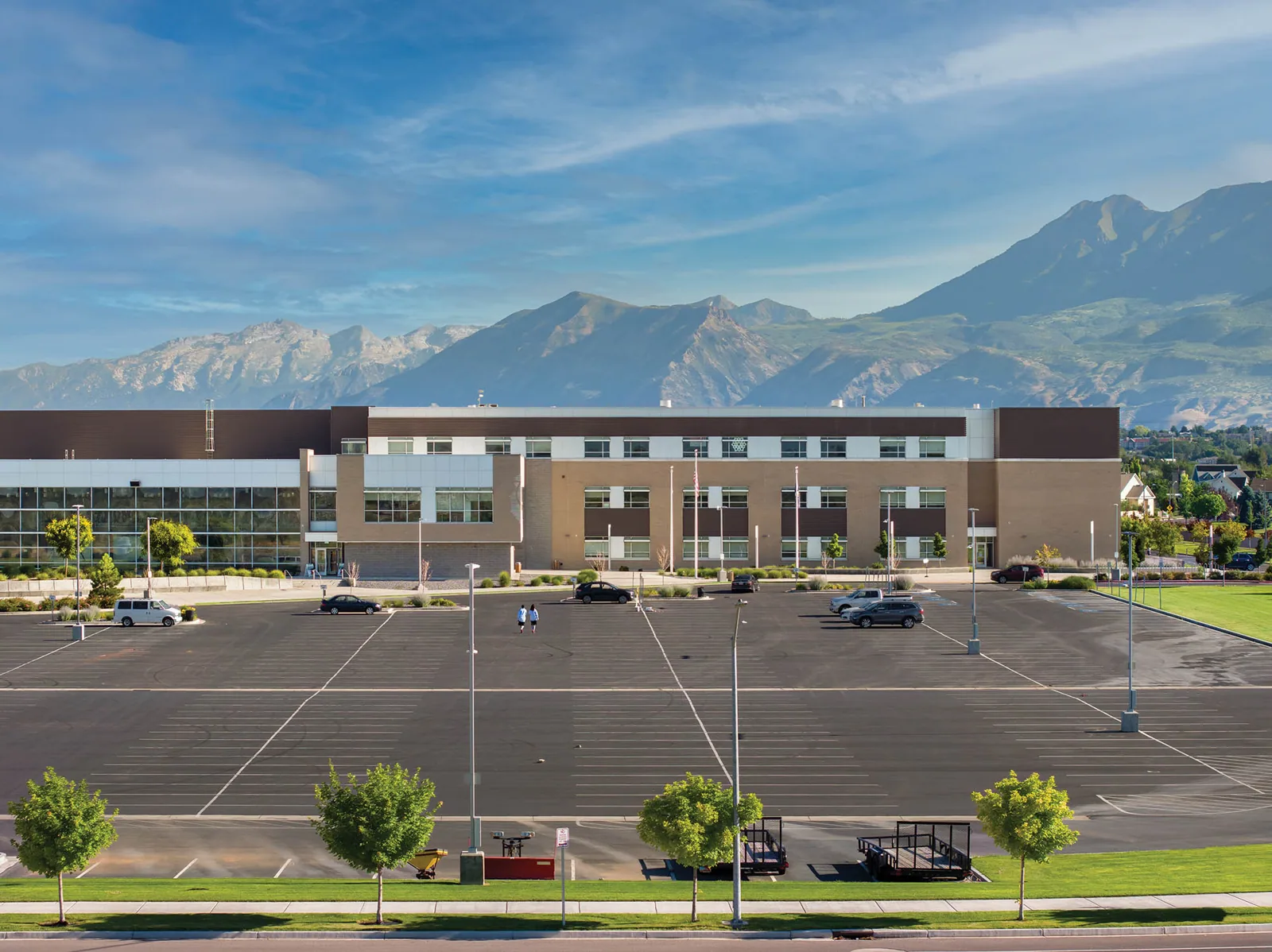
Wherever a tall training or assembly space stands beside a low office wing, the roof steps up, and a step produces a drift. Wind off the open ground piles snow against that vertical face, and the load there can run well above the even blanket across the middle. The engineer evaluates drift effects using the structure, geometry and applicable snow-design criteria. We supply dated locations and depths, without treating the county ground-snow input as a final roof load or capacity allowance.
We also log the equipment the roof carries. Rooftop units, exhaust fans and antenna mounts each have a curb or support, and each is a place where flashing can fail. A curb and support inspection checks the flashing height, the sealant and the fasteners, then records the condition with a photograph.
Fitting Repairs Around Reserve Training Periods
Reserve units train on set schedules, and those periods fill a building in a way an ordinary workweek does not. Roof work near an assembly space is planned around them: loud work, hoisting and any interior protection are set for the days the room is empty, and the file records the window each section was opened and closed. A leak that appears over a training room is stabilized first with a temporary repair, then scheduled for the permanent fix once the weather and the calendar allow.
Options follow the evidence. A dry roof with a worn surface may suit a restoration coating. A roof with trapped moisture gets cores and an infrared moisture survey to find the wet boundary before any decision is made. Replacement is reserved for the areas that testing shows are beyond repair, and its scope states which sections are being replaced and which are staying, so the budget matches the evidence.
Leaving a File That Survives a Change of Command
Commanding officers and facilities staff rotate. A roof file that lives in one person's memory does not survive that rotation, but a dated binder does. Ours holds the inspection log, the core results, a roof plan with every repair marked and the manufacturer's terms for the installed system. For winter damage specifically, the snow and ice damage record shows where weight or ice affected the deck and what was done about it.
An incoming officer can read that file and know the roof's condition, the open items and the order of the next repairs. That is the purpose of the record, and the same file serves a government building or the Air Force Reserve buildings across the same station.
At turnover, the owner receives a building-by-building summary of completed work, records delivered and unresolved conditions requiring follow-up. An indexed roof plan, warranty references and dated photographs help incoming facility staff trace the history.
Before mobilization, we coordinate approved access and work areas with the facility contact and record open items for the next authorized review. The summary groups conditions by roof zone, date and repair status, so incoming staff can distinguish completed work from areas awaiting investigation. That continuity supports budget planning even when facility personnel or unit assignments change.
Questions We Hear
Does an inland naval building need a different roof than a coastal one?
The systems are the same, but the stresses differ. Coastal roofs fight salt corrosion and sustained wind; a Minnesota roof fights snow weight, deep cold and freeze-thaw cycles. We choose membranes, fasteners and edge metal for the exposure the building actually has, and the inspection log tracks that exposure.
Who approves roof access when several commands share one station?
The command that owns the building, working with base security. We ask which office that is before scheduling, get the pass and escort terms in writing, and put the approving office's name on the file so anyone reading it later can see who signed off.
Which ice dam evidence is worth keeping from a winter?
Photographs of the ice at each eave with a date, the depth of snow behind it, and any interior staining found afterward. Those three items show where heat is escaping and whether water got into the assembly. Without them a spring repair is hard to target.
How is a leak over a training room scheduled for repair?
A temporary repair goes first, usually within the same visit, to address immediate exposure where access and conditions permit. The permanent fix is then planned for a day when the room is not in use, with interior protection set before the membrane is opened and the moisture readings taken again afterward.
What should a departing facilities officer hand over about the roof?
The inspection log, the most recent core and moisture results, the roof plan with repairs marked, and the warranty papers. A short list of open items, ranked by risk, helps most because the successor can act on it without walking every roof.