
Air Force Base Roofing in St. Paul, MN
Roof inspection, repair and replacement for Air Force station buildings near St. Paul, MN, with escorted access, dated photo records and moisture readings.
Request a Roof Assessment
Air Force Base Roofing
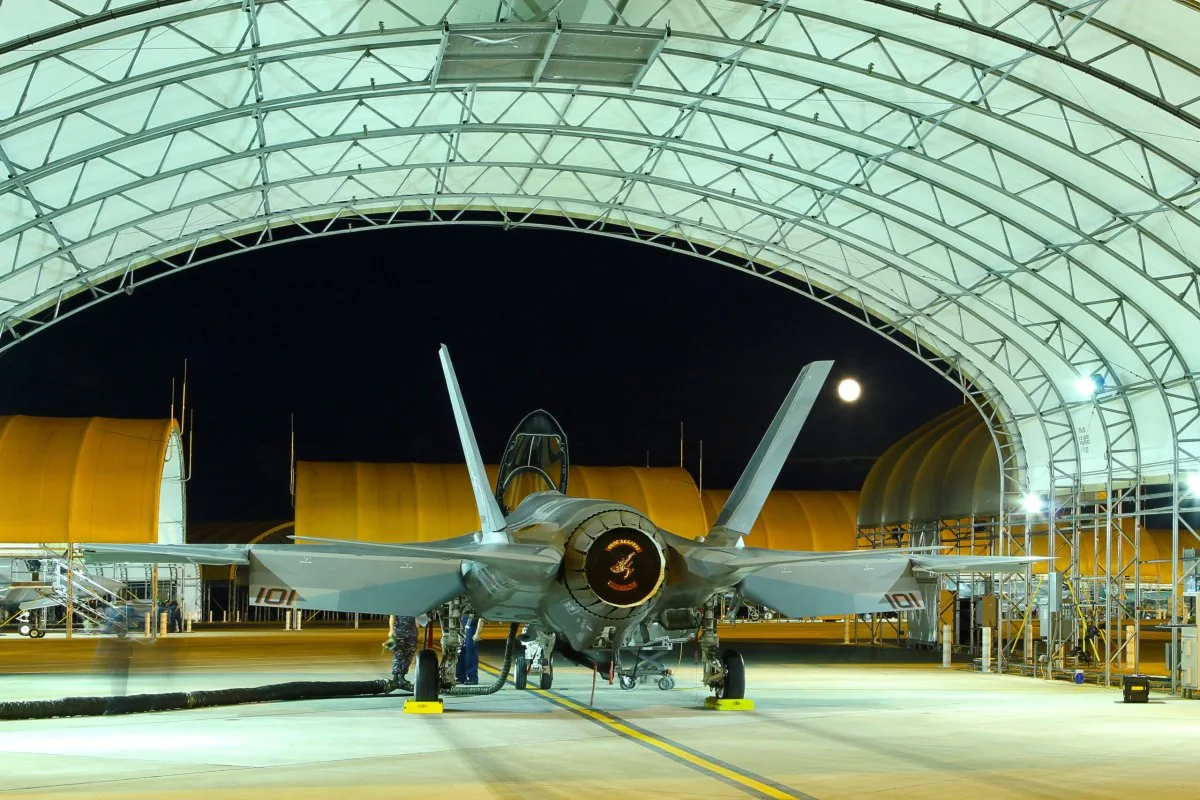
The first line in an inspection log for a roof on an Air Force Reserve station is not a moisture reading. It is the name of the escort and the hour the gate cleared the crew. The Minneapolis-Saint Paul Joint Air Reserve Station is at the international airport southwest of St. Paul, MN. The 934th Airlift Wing and Minnesota Air National Guard's 133rd Airlift Wing operate C-130 aircraft there, making aircraft-area coordination relevant to an authorized roofing scope. A facilities office responsible for separate station buildings needs records that stand on their own: dated photographs, moisture readings tied to a roof plan, and condition notes a new program manager can read without having walked the building.
Writing Down the Gate Terms Before the First Core
Roof work at an installation begins with project-specific coordination. Authorized facility documents and contacts establish applicable access, staging, equipment and work-window requirements; those details are confirmed before the scope and schedule are finalized. Work sequencing can account for access to a hangar door when required by the approved project scope. Our project file records approved work areas and the planned sequence so the facility team and roofing crew can coordinate around the actual building and mission needs.
Reading Loose Material and Wind Exposure Beside a Flight Line
Anything that can come loose from a roof is a problem near aircraft. Pea gravel from a ballasted system, a lifted cut-off of membrane, a backed-out fastener or a sheared length of coping can end up on a ramp or taxiway, and airfield crews call that foreign object debris. On a roof in that setting we count and photograph the loose edge metal, the exposed fasteners and the open laps, and we log whether ballast is thinning near the perimeter, where wind scours it first. A fully adhered or mechanically attached membrane has no stone to scatter, so the record of how the existing roof is held down matters before anyone chooses what replaces it.
Winds of up to 70 mph crossed the Twin Cities on July 28, 2025, and a roof on a wide, clear field meets that wind with nothing upwind to slow it. Uplift concentrates at corners and perimeters, so those are the first places we check for lifted flashing and shifted coping.

Measuring Moisture Over Shops, Offices and Equipment Rooms
A leak above a storage bay is an inconvenience. A leak above a communications room, a maintenance shop or a records office interrupts the work of the unit below, so the moisture survey sets its priorities by what sits under the deck. Infrared imaging on a clear evening, followed by handheld readings and a core sample at each suspect area, shows which insulation is wet, how far the wet area has spread and whether the deck beneath has taken damage. Each result is plotted on a roof plan with the date, so the next survey can be compared reading by reading.
Winter adds its own entries. Cold-season snow observations need their own dated location record, so drifts against parapets and rooftop units are measured and photographed, and ice at an eave is logged along with the likely route of the heat that formed it.
Assembling a File a Facilities Office Can Act On
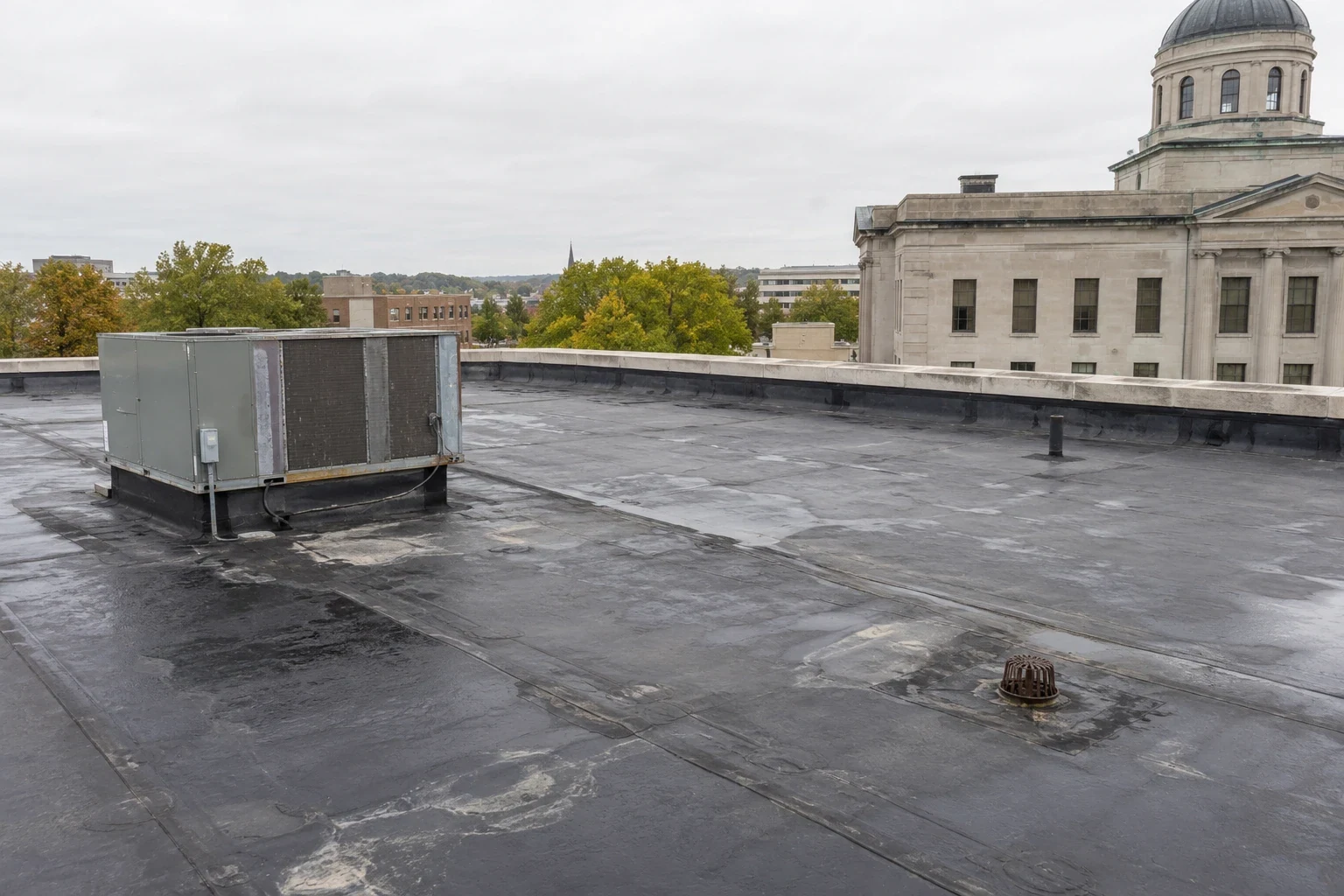
The authorized project documents establish applicable requirements, including Unified Facilities Criteria for roofing where specified, so the most useful record lets an engineer compare an existing assembly with those criteria: the layers, the insulation thickness from core samples, the deck type, the drainage and the location of every penetration. Our written roof condition report pairs a photograph with each measured finding, sorts the findings by building and roof section, and puts the reading date on each one. A report arranged that way lets a facilities manager rank sections by urgency and carry the findings into a work request or a roof capital plan, without walking the roof again to explain the same finding at the next funding discussion.
Weighing Repair, Coating and Replacement Against the Schedule
Cost on an installation roof is driven by more than square footage. Escort hours, restricted work windows, staging distance and the time it takes to move materials through a gate all add to the plan, and they are written into the scope so they are priced rather than discovered. The condition record then sorts the roof into three groups. Sections with dry insulation and sound seams are candidates for repair or a restoration coating. Sections with sound insulation but a worn surface can take a recover. Sections with wet insulation or damaged deck are replacement candidates, because a new layer over saturated board only hides the problem.
Season matters as well. A January low like the minus 23 degrees recorded on January 21, 2014 stops permanent welding and coating work, so cold-season entries in the file are temporary repairs, each one dated and photographed so it can be found and finished in spring. The same rule holds across military installation roofing: record first, then decide.
Keeping Storm Evidence and Warranty Papers in One Folder
Hail leaves its best evidence in the first days. The July 28, 2025 storm that carried golf-ball hail across the Twin Cities shows how quickly a roof can collect damage that the next rain will blur. We photograph a test area under a chalk grid, count hits per square and log the dents in vents, units and flashing beside them, which is the same hail damage record a private owner would hand an adjuster. The folder also holds the installed system's manufacturer terms and the date of every repair, so the warranty file stays intact. Highland Park, across from the airport, sits in the same Twin Cities weather.
Questions We Hear
Who has to be on the roof with the crew inside a station fence?
Base security and the facilities office set that, and the answer varies by building. Typically every crew member needs a pass or badge, and anyone without unescorted clearance stays with an assigned escort for the full time on the roof. We ask for those terms in writing before scheduling and record the escort's name and times each day.
Why would a flight line change the choice between ballast and an adhered membrane?
Loose stone is a hazard to aircraft, and wind scours ballast from perimeters first. An adhered or mechanically attached single-ply system avoids loose ballast, while tools, debris and other components still require control, so it is usually the better fit beside a ramp. Retention of a ballasted assembly requires its condition and applicable facility criteria reviewed, rather than acceptance from an inspection schedule alone.
How much of the work can be finished in winter on a Minnesota station?
Temporary repairs can be made in any month, but permanent welds, adhesives and coatings need the temperatures the manufacturer allows. In a Twin Cities winter that often means sealing leak points, clearing drains and protecting the interior, then returning once the cold breaks.
What belongs in the file for a roof above a shop with sensitive equipment?
Start with a roof plan marking the equipment below, then add core samples, moisture readings, infrared images and photographs of every penetration above that space. We add the shutdown or covering steps agreed with the occupants, since protecting equipment while the roof is open is part of the scope.
Is the membrane for a military building different from a commercial one?
The membrane families are the same: TPO, PVC, EPDM, modified bitumen, metal and coatings. What changes is the specification around them. The governing agency identifies the project standards, including Unified Facilities Criteria where applicable, perimeter uplift gets closer attention, and the closeout documentation is more detailed than a private owner usually requests.