
GAF Commercial Roofing in St. Paul, MN
GAF commercial roof systems in St. Paul, MN: how we core, probe and photograph TPO and asphaltic roofs, then repair or install them with a dated record.
Request a Roof Assessment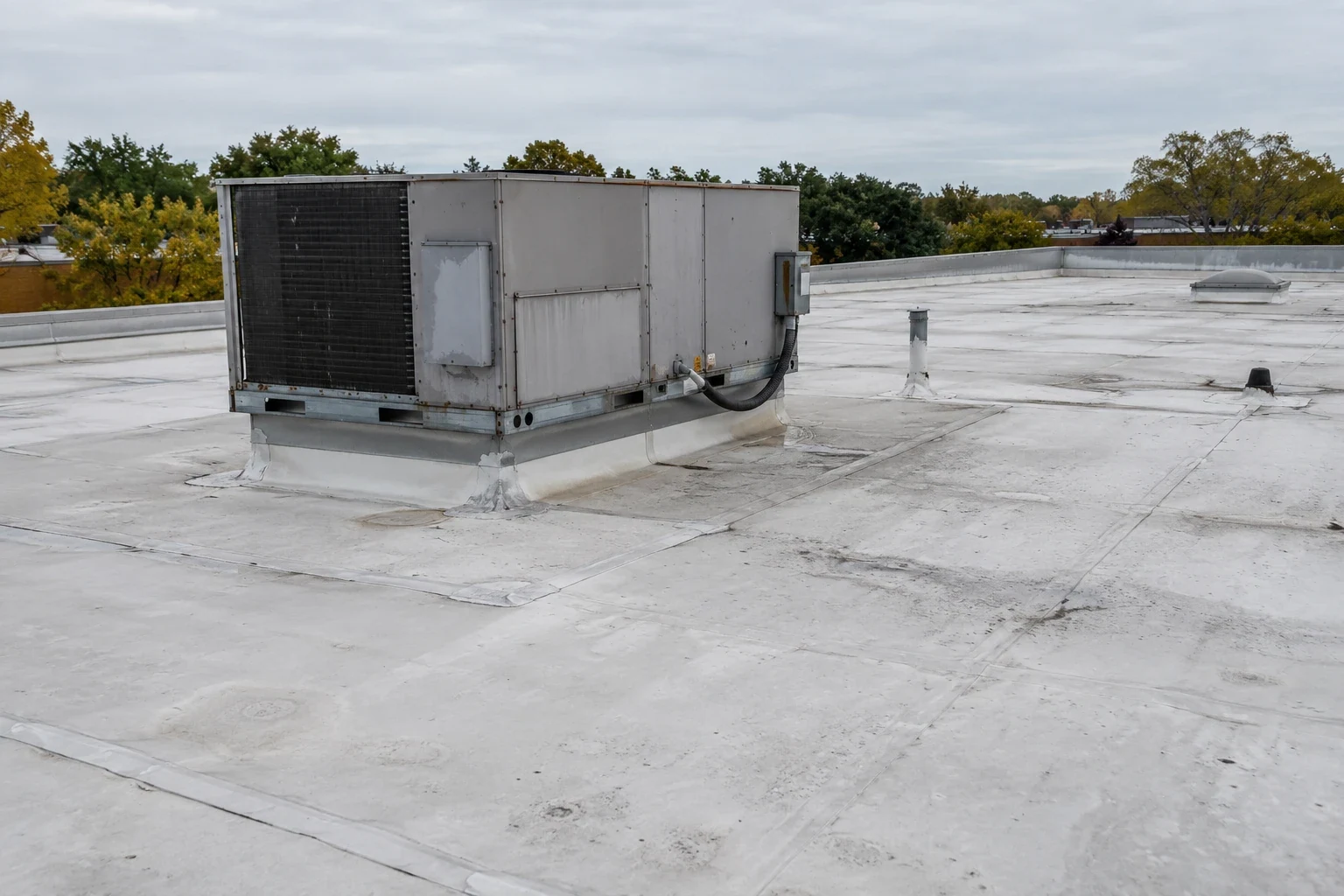
GAF Commercial Roofing
A core sample lifted from a St. Paul roof reads like a page from the building's maintenance history: the membrane on top, the insulation and cover board beneath it, the deck at the bottom. On a roof that carries a GAF system, that cross-section shows which sheet is up there, how thick it is, and whether the layers under it have stayed dry. We photograph the core beside a scale, date the photograph, and file it with the moisture readings taken across the same roof.
GAF's commercial offerings include TPO and PVC single-ply roofing as well as asphaltic systems. The exact assembly and application method are identified from product documentation rather than a color or trade name alone. We evaluate repair and installation for these systems on St. Paul buildings, and the record we build as we work tells an owner what the roof is, what condition it is in, and what the next decision should be.
Probing the Welds and Edges of an EverGuard TPO Sheet
EverGuard TPO is joined with hot-air welds, so the quality of the roof is the quality of its laps. We draw a blunt probe along each seam, flag any stretch where the tip slides into a channel (the start of what becomes seam failure), and photograph that stretch beside a tape measure. The same walk covers the places where a single-ply sheet is under the most strain: the corners of parapets, the base of each rooftop unit, and the seams that cross a drain sump. Every flag is dated and plotted on the roof plan, so a return visit shows whether a spot has grown.
Surface wear records condition but does not establish installation age. Chalky dirt in a ponded area, scuffing along the paths crews use to reach equipment, and fine cracks beside exhaust vents each go into the log with a position. TPO roofing in St. Paul has to handle summer sun and a winter of freeze and thaw, and the photo record supports comparison while leaving the cause of unexplained deterioration open.
Reading Moisture Readings Beneath a Membrane That Looks Sound
A clean white sheet can sit over wet insulation. We take moisture readings across the field, along every edge and around each penetration, then lay the pattern over the drain locations and the seam flags. A wet patch beside an open weld points to a repair. A wet band along one edge points to flashing or edge metal. Wet insulation spread over a whole slope raises a larger question about the assembly, and that finding goes to the owner in writing with the readings attached.
Where readings run high we cut a core to confirm, because a meter number is only a lead until the cut face agrees with it. An infrared moisture survey speeds the mapping on a large roof, and the core results then tell us whether the wet material can dry in place or has to come out.
Compare Single-Ply and Asphaltic Assemblies for the Building
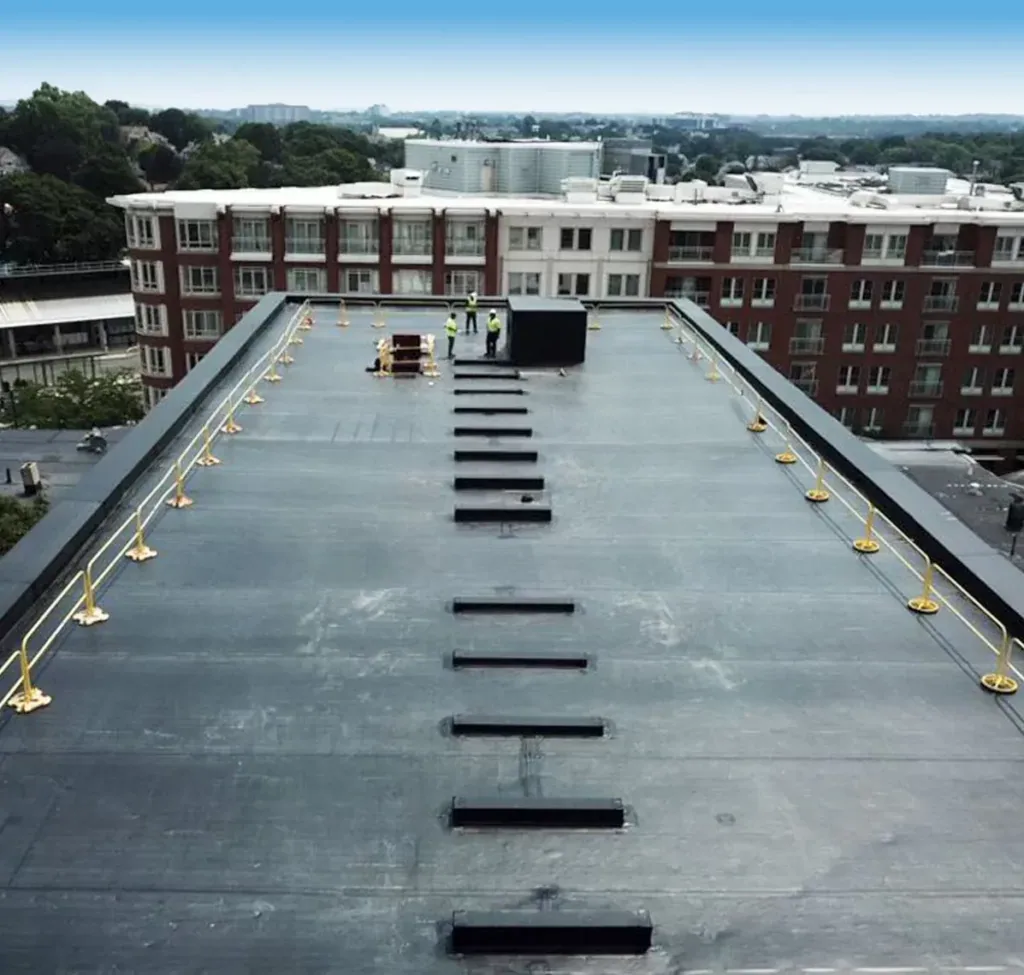
Product choice starts with the complete assembly. For a building in Energy Park or Westgate, compare the deck, required attachment, substrate preparation, drainage and tenant constraints. Membrane weight alone cannot establish structural suitability. Asphaltic systems offer several application methods, but the proposed product must be checked for actual temperature conditions and fire controls rather than assumed suitable because a torch is absent.
Before a recommendation, the file distinguishes structural information supplied by the engineer from roof conditions measured in the field. Tenant restrictions and permitted work methods are recorded alongside the proposed assembly. Temperature, wind and substrate preparation also affect application, a review relevant to Soprema bituminous systems. An owner comparing a Carlisle Sure-Weld roof receives the same categories of evidence, with product-specific details retained for each building.
Logging Each Layer as the New Roof Goes Down
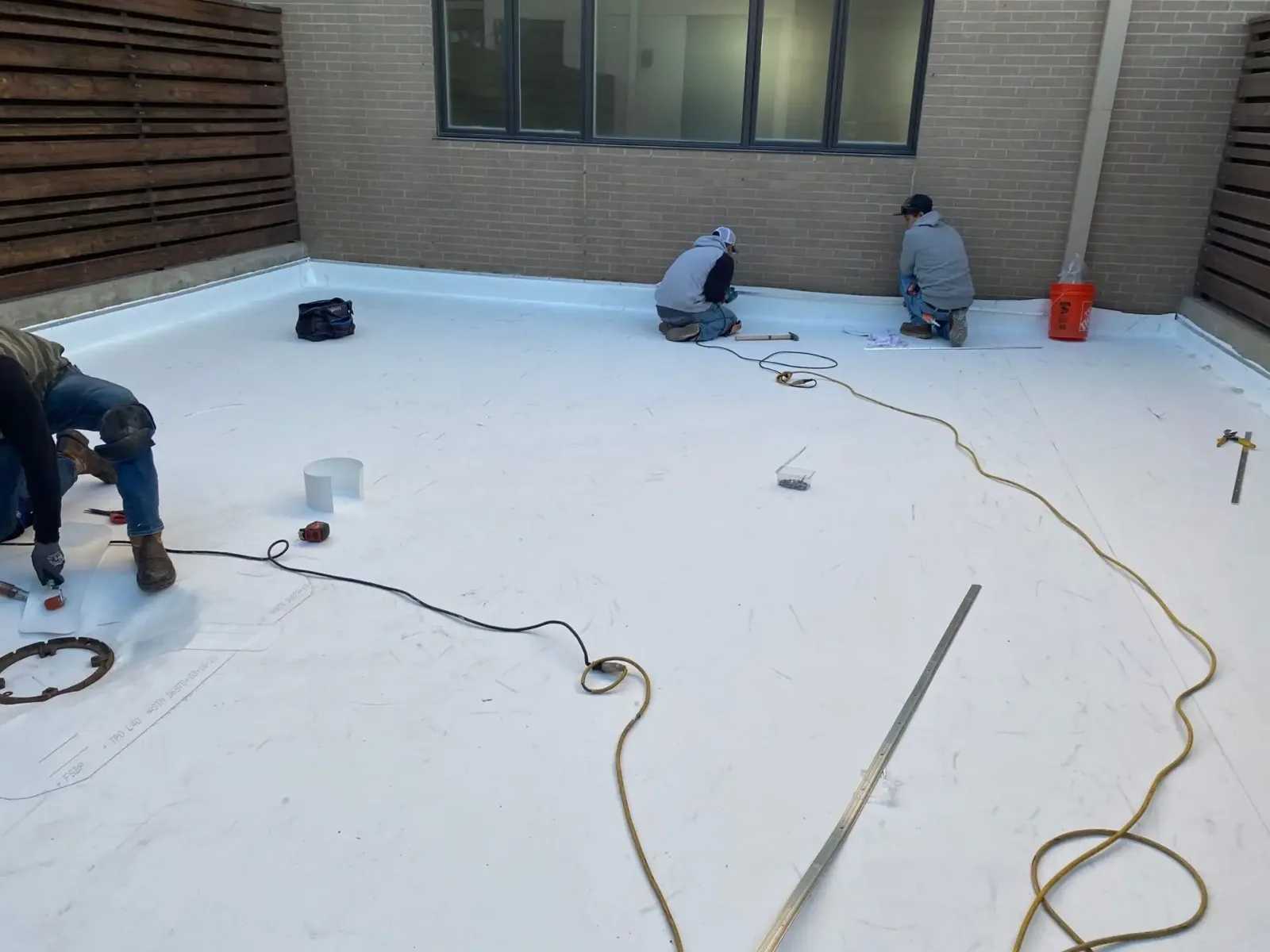
A finished roof hides everything that matters, so we photograph it while it is open. The bare deck, each course of insulation, the cover board, the fastener pattern and the first pass of membrane all get dated pictures with a position on the plan. After welding, a probe pass on the new laps is recorded the same way, with any correction shown before and after.
The Ramsey County ground snow design input of 50 psf is distinct from roof snow loads and available capacity. Before a recover adds dead load, the engineer reviews the actual framing, roof geometry and applicable loading criteria. That confirmation, the product data and the finished photographs form the record of repair that goes into the owner's file. Our commercial roof replacement work closes with that file rather than a handshake.
Filing Storm and Warranty Records That an Adjuster Can Follow
The Twin Cities took 70 mph winds and golf-ball hail on July 28, 2025, and the warnings reached Woodbury and Maplewood as well as St. Paul. A storm like that is exactly when a dated roof record earns its keep. If we have a before photograph of a seam, a moisture reading and a core, the damage can be separated from wear that came earlier. That separation is what an adjuster needs, and it supports evaluation of pre-existing conditions without guaranteeing how a claim will be decided.
Manufacturer warranty paperwork asks for the same kind of evidence, so repairs on a GAF roof are made with compatible materials and entered in the inspection log. We help assemble the claim file for hail damage repair with photographs, readings and a written scope. Owners should read their own warranty for who may repair the roof, and our record of repair gives them something concrete to attach.
Questions We Hear
Does a failing GAF TPO roof need a full tear-off, or can a new sheet go over it?
Core results and moisture readings inform the decision alongside layer limits, structural capacity, attachment and applicable requirements. Dry insulation alone does not authorize a recover. If readings show wet material across a large share of a slope, that material has to come out first. We photograph both outcomes so the owner sees the evidence before choosing.
Why would a St. Paul building owner pick a self-adhering modified bitumen over a torch-applied one?
Open flame is the reason most owners give. A suitable self-adhering product avoids torch application. Facility fire controls and the manufacturer's instructions still govern the work; absence of a torch does not remove every hot-work or occupancy concern. The tradeoff is temperature: adhesion in cold weather needs care, so our log records the air and surface readings each day the sheet is placed.
Which photographs should I keep after a hail or wind event on a GAF roof?
Keep wide shots of each roof area with the date visible, close shots of any dents, bruises or lifted laps beside a ruler, and pictures of every drain after the storm. Our post-storm visit adds probe results and moisture readings. Together they let an adjuster compare the roof against its earlier condition.
Can someone other than the original installer repair a GAF membrane?
Roofs of this type are routinely repaired by other contractors, but the owner should read the warranty for any limit on who may do the work. We repair with compatible TPO or modified bitumen materials, follow the product instructions, and write up each fix in the inspection log so the paperwork has an accurate record to refer to.
How does the 50 psf snow figure affect adding a recover layer to a TPO roof?
A recover adds dead load on a roof that already carries snow and drift loads. Engineers work from the 50 psf ground figure for Ramsey County and adjust for drifting, so we ask for the building's structural information first. If capacity is unclear, the written findings say so and recommend an engineer's review before any layer goes on.