
Carlisle SynTec Roofing in St. Paul, MN
Carlisle SynTec roofs in St. Paul, MN: Sure-Seal EPDM, Sure-Weld TPO and Sure-Flex PVC, with winter splice checks, thickness readings and a dated repair record.
Request a Roof Assessment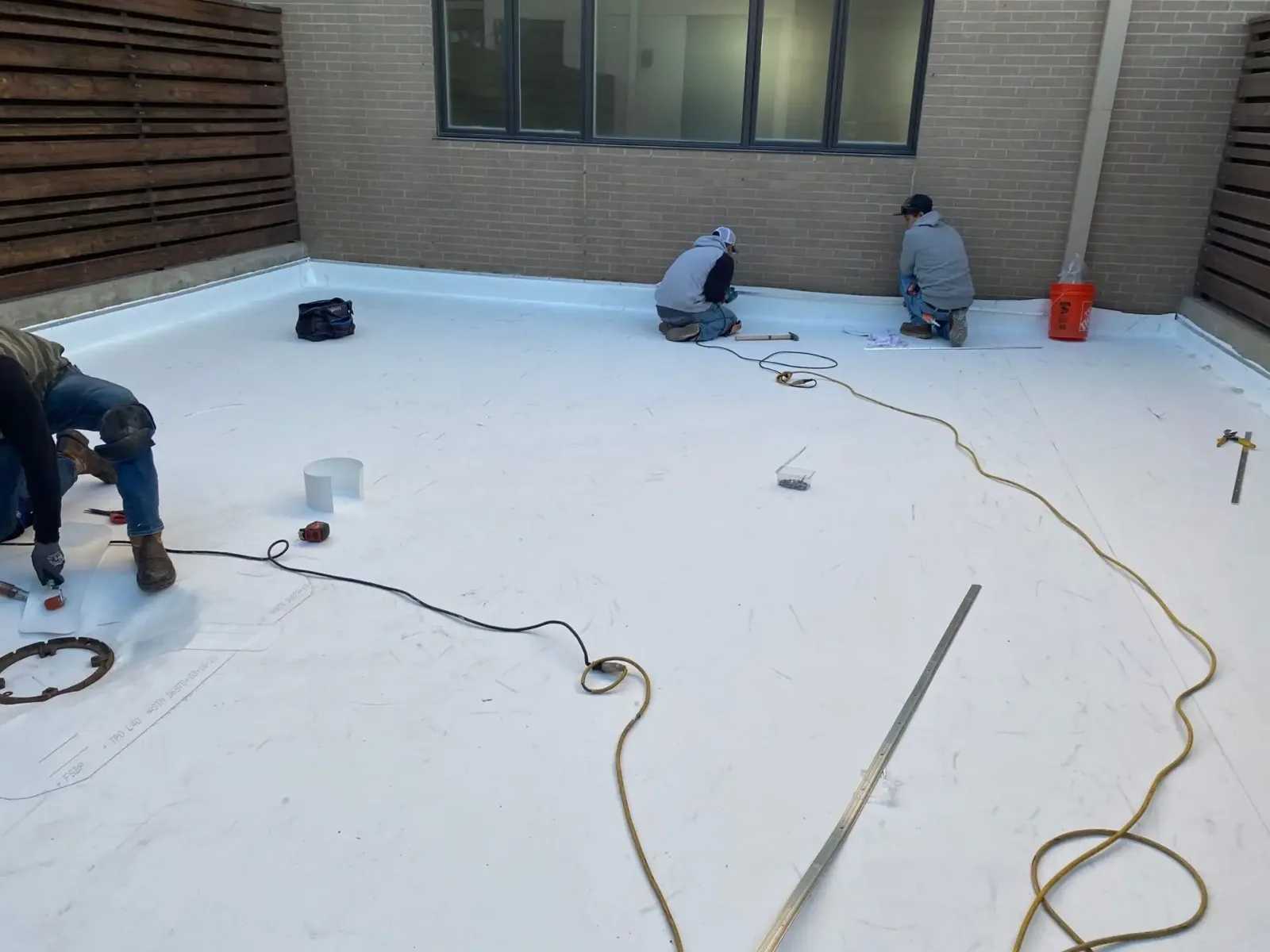
Carlisle SynTec Roofing
An inspection of a Carlisle roof in St. Paul records the season, access conditions and observed defects so later visits have a reliable comparison. The 2013-14 winter dropped 69.8 inches of snowfall on the Twin Cities, with a low of -23 degrees on January 21, 2014, and that historical weather record explains the value of checking winter exposure without establishing a particular roof's condition. We record where the sheet lies flat, where it has pulled away from a wall, and where meltwater has found a path beneath it.
Carlisle SynTec makes Sure-Seal EPDM, Sure-Weld TPO and Sure-Flex PVC, along with fleece-backed versions sold as FleeceBACK. We repair and install these sheets on St. Paul buildings, and each visit adds a dated entry to the owner's inspection log.
Reading Splices and Wall Terminations After a Hard Winter
Membrane movement and restraint can affect wall details, but the mechanism varies with the product and assembly. Separation at a parapet is recorded with the condition of the termination, surrounding flashing and attachment rather than attributed to cold alone. We press along each termination, photograph any gap between the sheet and the wall, and measure how far the membrane has moved from its original line.
Splices get the same treatment. On EPDM roofing, seams are joined with tape or adhesive, and a lifted edge shows as a pale line where dirt has crept into the gap. Each one is numbered and dated. A split at a corner is often the first sign of flashing failure, and a dated photograph records the accessible condition without proving when or why the defect developed.
Measuring Thickness and Attachment at the Cut Edge
A core cut from a Sure-Seal or Sure-Weld roof shows the sheet in cross-section, and we measure its thickness with a gauge instead of relying on what the plans say. A sampled thickness must be compared with the identified product and measurement limits before a difference is attributed to wear. Beneath the sheet we log the insulation type, the cover board if there is one, and the way the sheet was held down: fastened in rows, adhered, or ballasted.
FleeceBACK sheets add a layer of fabric bonded to the underside, and that backing lets the sheet be adhered to the substrate rather than fastened through its field. The sample exposes local layer conditions. Adhesion across the roof and the extent of moisture require additional examination; one core cannot establish either for the entire field. All of it goes into a condition record with the position on the roof plan, so a future repair can start from facts.
Matching Sure-Seal, Sure-Weld and Sure-Flex to the Building Below
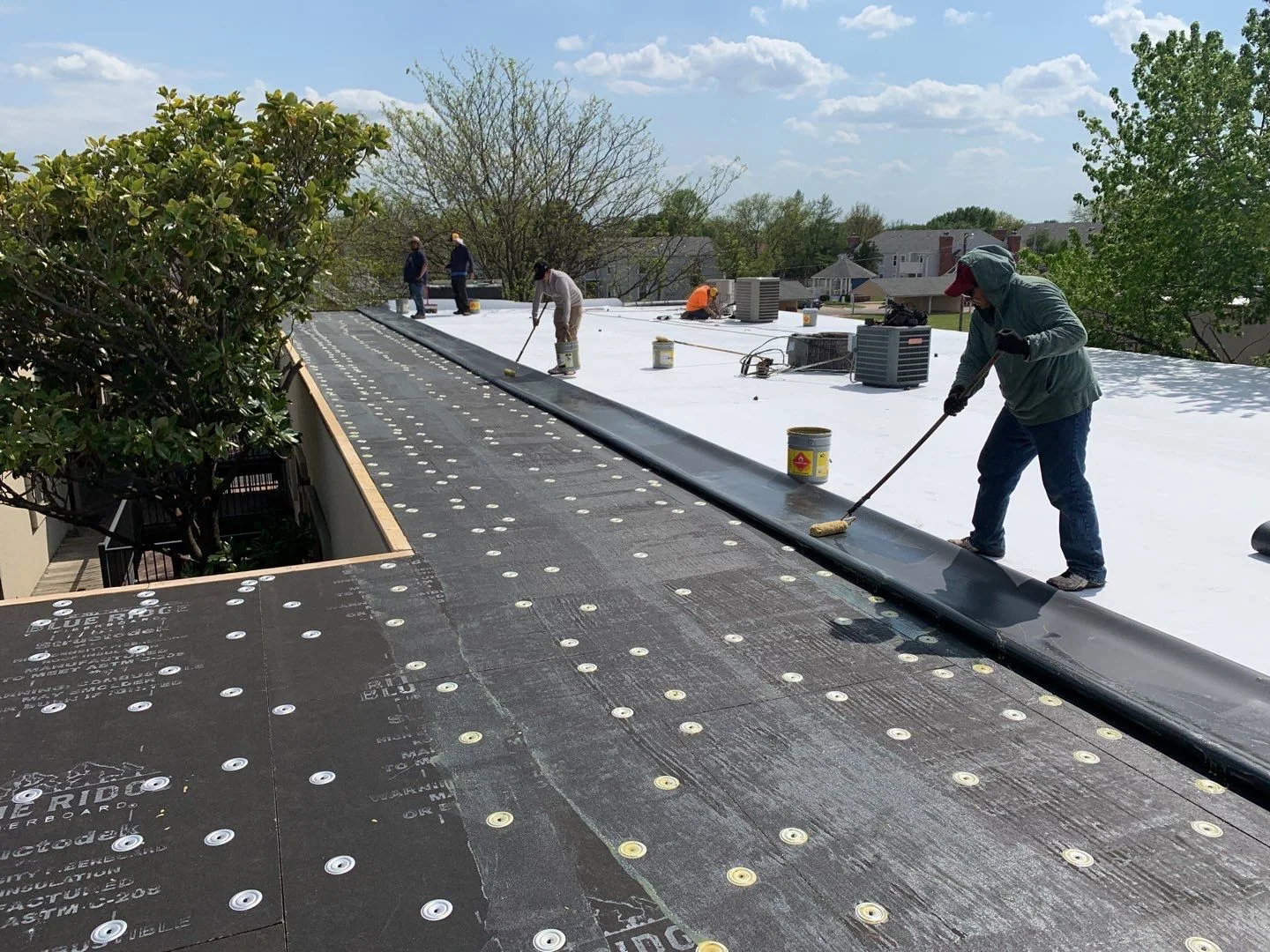
Each Carlisle sheet suits a different kind of roof. A black EPDM membrane warms quickly in winter sun, which shows up in how snow clears from it, while interior heat transfer also depends on insulation and the complete assembly. Sure-Weld TPO reflects more sunlight and is joined with hot-air welds. For Sure-Flex PVC near kitchen exhaust, the actual residue and the manufacturer's compatibility guidance need review before selection. We set these trade-offs out in writing for each building.
In the Lowertown historic district, where the 37 contributing properties date from the 1870s to the 1920s, a building's age says little about the roof above it, so the termination detail and the deck condition shape the choice as much as the membrane. The same log format carries over when the PVC comes from Sika Sarnafil, and a heat-welded TPO from Versico gets its weld logs on the same terms.
Recording Cold-Weather Seam Work With Surface Temperatures
Adhesives and tapes behave differently on a frozen deck, so any seam work we perform in cold weather carries the air temperature, the surface temperature and the condition of the substrate in the log. Damp or icy substrates may prevent a specified repair from being installed. Interim protection is evaluated separately, with its limits and any return work recorded. The photograph after each repair is paired with the photograph before it.
In the Midway, where the Port Authority's Westgate and Midway business centers hold a dense mix of light-industrial and office buildings, this habit pays off at the next inspection, because a tenant or a lender can see which repairs were permanent and which were holding actions. It also gives preventive roof maintenance a baseline to measure against each spring.
Tying Ice and Snow Damage to a Claim File
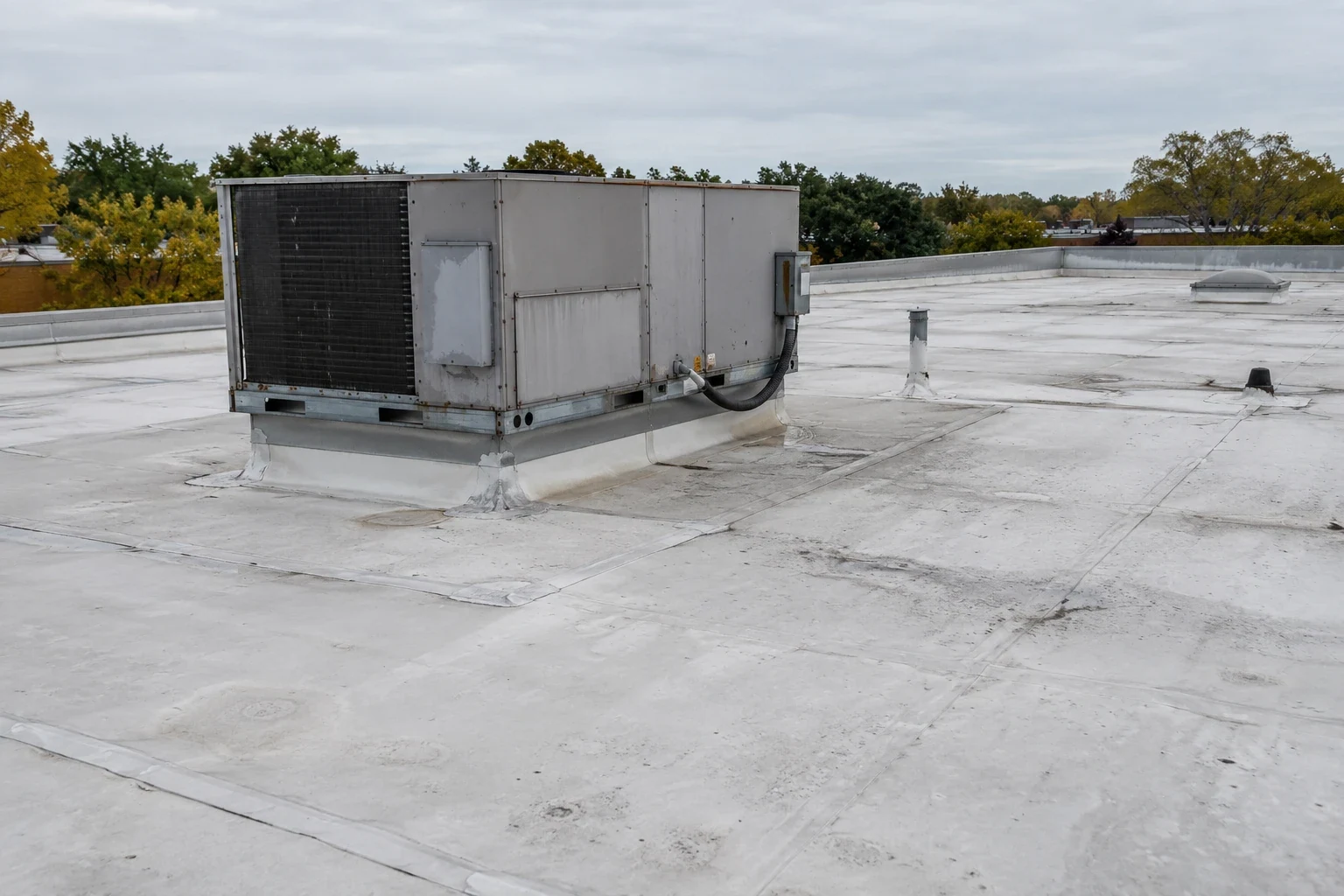
An ice dam is meltwater from a warm roof refreezing at the cold eave and backing water up behind itself, and heat escaping the assembly is the usual cause. On a Carlisle roof, the evidence is stained insulation near the edge, wet readings in a band along the eave and ice marks on the sheet. We photograph each, date it, and note the snow depth and the thaw cycle in the log so an adjuster can follow the sequence.
Warranty correspondence is easier when the roof's history is already written down. We assemble the claim file for snow and ice roof damage repair with readings, photographs and a scope that separates storm damage from wear, and we keep a copy of the record of repair for the owner.
Our repair record identifies the installed Carlisle membrane family, thickness and attachment, alongside the issued warranty terms. We use compatible materials and applicable details, then record test-weld or adhesive conditions, retained layers and any area excluded from examination. The owner receives a clear account of the actual assembly and the documentation needed to review warranty coverage.
Questions We Hear
What fails first on a Sure-Seal EPDM roof after a stretch of 20-below weather?
Terminations and splices tend to show trouble first, because cold contraction pulls the sheet against its walls and its seams. We check every wall edge, probe the splices and photograph any gap. A sheet that has stayed tight to its parapets through a hard winter is a good sign, and the log records the visible condition and inspection limits.
Can a FleeceBACK membrane go over an older roof that has been patched many times?
A suitable recover may be possible after reviewing layers, moisture, attachment, capacity and applicable requirements. We map every patch, take moisture readings across the area and cut cores where results look high. Wet or crushed insulation comes out first, and a cover board usually goes down before the new sheet, so the owner receives the findings before work begins.
How can I tell Sure-Weld TPO from Sure-Seal EPDM if I do not have the original plans?
Look at the seams. A white sheet with welded laps is thermoplastic, and a black rubber sheet joined by tape or adhesive is EPDM. Surface color and seams do not establish a brand or exact formulation. Product records and qualified identification resolve uncertainty, and we record both in the log along with the insulation and deck so future work starts with accurate information.
What does a winter repair on a Carlisle roof involve?
A winter repair is usually a holding action: clearing ice from a leak path, installing cold-applied patches at the failing detail, and photographing the result. The permanent weld or splice waits for conditions the product instructions allow. We schedule that return visit and keep the interim photographs in the file.
What should I photograph if ice backs up at the eaves of a Carlisle roof?
Capture the ice at the eave with a ruler for scale, any water stains inside the building, and the roof edge once the ice is cleared. Our visit adds moisture readings and notes on insulation. Dated pictures help an adjuster evaluate the sequence; they do not by themselves establish causation or coverage.