
Roofing for Hotel Owners and Hospitality Groups in St. Paul, MN
Dated roof records, moisture readings and condition notes for hotel owners and hospitality groups in St. Paul, MN, ready for lenders, brands and insurers.
Request a Roof Assessment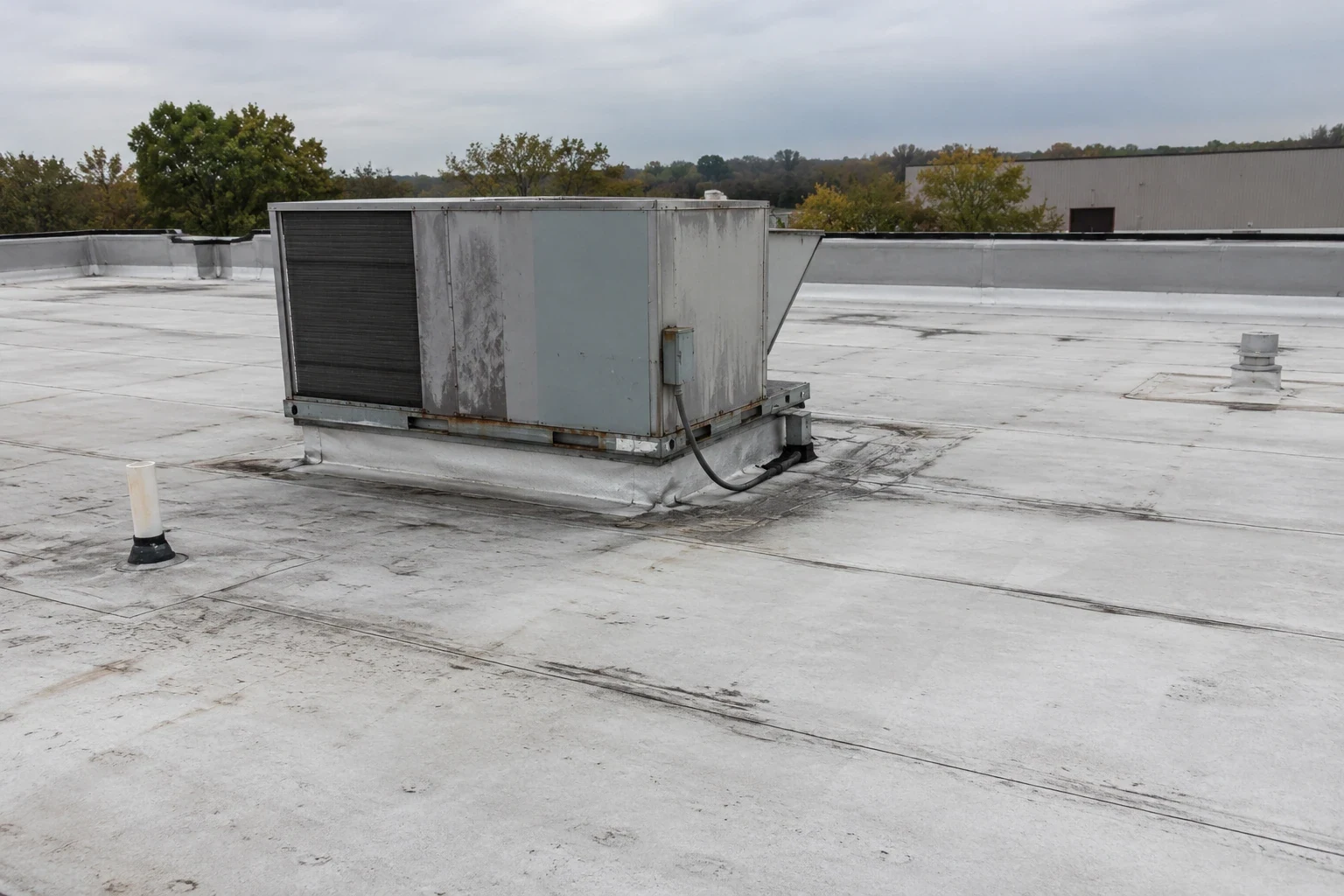
Hotel Owners and Hospitality Groups
Moisture readings from one hotel in St. Paul, MN mean little until they sit beside the readings from the rest of the group. A dated note about a wet corner at a parapet says one roof needs attention. A set of notes taken the same way supports a priority list with the uncertainty stated beside each recommendation. It cannot predict the exact order of future failures. That comparison is what we build for hospitality owners. We walk each roof, photograph every flashing and drain, log moisture readings with the day they were taken, and write the condition notes in one format for every property. Ownership groups, franchise operators and asset managers then hold a roof condition report for each building that a lender, a brand inspector or an adjuster can read without a guide.
Comparing Roofs Across a Group of Properties
Hotels in one group seldom share a roof. A downtown tower with a flat podium, a limited-service building beside an interstate ramp and an older converted building carry different membranes, different drainage and different rooftop plant. Condition evidence includes: how much water sits in the insulation, how many flashings have opened, how deep the ponding runs at the drains, and what a core sample shows about the layers underneath.
We record those items with the same fields for every property and file them against the building. That is the working method behind our multi-site roof programs, and it lets an asset manager rank the group by measured condition instead of by whichever general manager called last. Photographs support each change in priority.
Reading Winter Load on Podiums and Rooftop Plant
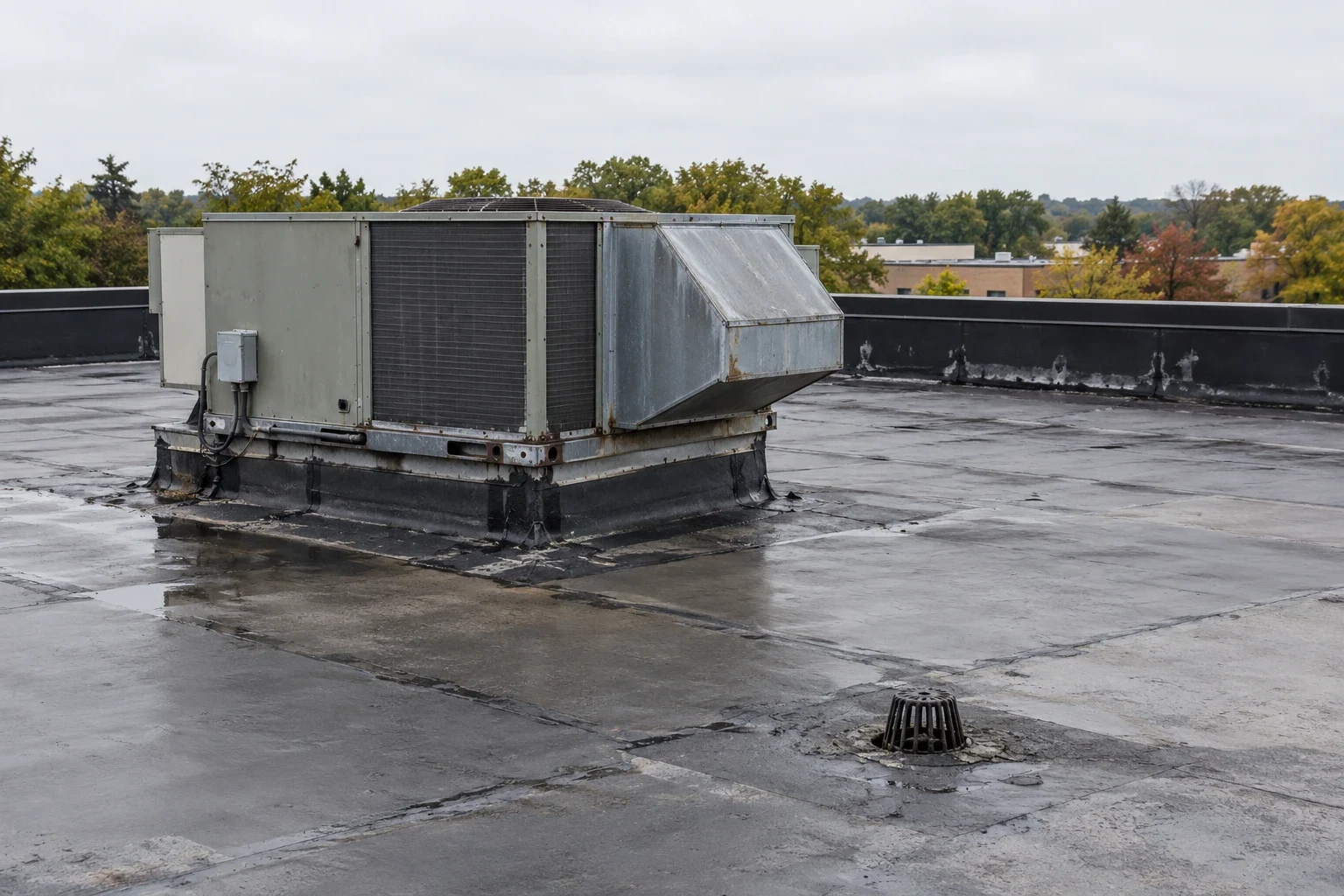
The 2013-14 season accumulated 69.8 inches of Twin Cities snowfall; the January 21 low of -23 degrees was a separate event within that winter. For design review, the cited county ground-snow input is 50 psf. That input is neither an allowable roof load nor a measure of unused structural capacity. Wind can deposit snow where a podium meets a taller wall or guest tower. We measure and photograph the drift for review; depth alone does not establish its weight or the structure’s capacity. Depth observations and photographs locate the drift for review, while snow density and the structural design determine its load implications. We also note where meltwater collects near drains.
Eaves and entrance canopies take a different kind of punishment. Ice forms where heat escaping through a thin assembly melts the snow above and the water refreezes at the cold edge, backing up behind the ice and finding its way under flashing. A dated photograph of the ridge, with the guest corridor beneath it noted, turns a vague winter complaint into a snow and ice damage scope that can be priced and approved quickly.
Scheduling Roof Work Against the Booking Calendar
A property manager in downtown Saint Paul can use events at Grand Casino Arena and RiverCentre as calendar prompts when discussing roof access. Midway operators can compare their own booking records with Allianz Field match dates. The Minnesota State Fairgrounds in Falcon Heights provide another scheduling reference. Attendance does not establish occupancy at a particular hotel. The operator supplies the actual busy dates and entrance restrictions for staging.
So we ask for the demand calendar before we draw the schedule. Staging goes on the side away from the lobby, loud tear-off work stays off the floors that are sold, and any kitchen or laundry exhaust interruption is coordinated with the mechanical team and affected operations through an approved window. Summer work also needs a dry-in plan, as the July 2025 metro power outages illustrate the need for a plan that can be followed if normal equipment or building access becomes unavailable. Any section opened in the morning is closed against weather by evening.
Supplying Evidence to Lenders and Flag Inspectors
Brand reviews, refinancing and lender property assessments all ask the same question in different words: what shape is the roof in, and who says so? An answer that rests on a general manager's memory does not hold up. An answer built from dated photographs, moisture readings, core findings and a record of repair does. We assemble that file so that an inspector reviewing a property improvement plan can find the roof pages in the order the form expects.
Permits belong in the file too. A flat-roof replacement in St. Paul goes to plan review at the city's Department of Safety and Inspections, and the application has to give the membrane type, the area and the drain size. The designer establishes the energy requirements that apply to the chosen replacement scope. Survey measurements support that submittal, and the schedule carries time for review and any corrections. Where a membrane is under warranty, the same file shows what the manufacturer will ask to see after a claim.

Weighing Repair Against Replacement Before a Sale
A hospitality group deciding whether to hold, refinance or sell a property needs a defensible figure for the roof, and that figure depends on what the building will do over the next several winters. Core samples confirm conditions at their locations, and a suitable survey with follow-up openings helps estimate moisture extent, and the condition notes separate local flashing failures from a membrane that has reached the end of its service. A repair scope is reasonable when the wet area is small and the field is sound. Extensive wet material can support a replacement recommendation, but deck condition, repair feasibility and attachment requirements also need review.
Buyers read the same evidence. Our due diligence roof surveys give an investor or fund a measured picture of a roof before closing, and a seller who commissions one first can answer a buyer's questions with documents instead of assurances. After hail, the same discipline applies to a hail damage claim, where the adjuster works from the record we assembled before the storm.
Questions We Hear
Which property in a group should receive roof money first?
Moisture extent is one deciding factor alongside attachment, active defects and the consequence of a leak. A ten-year-old roof with a wet corner at a drain can need work sooner than a twenty-year-old roof that reads dry across the field. We rank the group by readings, core findings and the count of open defects, then adjust for the rooms beneath each failing area. That produces an order the owner can defend to partners and to lenders.
Can one roof file satisfy a franchise inspection and a lender at the same time?
A single file can do both when it holds dated photographs, moisture readings, condition notes and a record of repair in a consistent layout. The two audiences want different pages first, so we index the file by topic. A brand reviewer finds the leak history and the repair log, while a lender finds the remaining-life assessment and the scope behind any reserve.
Why document a hail event when no guest has reported a drip?
Hail damage often shows up in the membrane long before it shows up on a ceiling. Golf-ball-size stones, like those in the July 28, 2025 storm, can bruise a membrane, crack a coating or dent metal edging without opening a leak that week. A dated survey right after the storm records what changed, which gives the insurer a clear before and after and gives the owner a record if a leak appears months later.
How early should roof work be booked around State Fair and stadium dates?
Start once the operator can identify restricted dates and the survey supports a scope. Confirm supplier lead times, permit review and product weather limits rather than assigning a universal March deadline. The resulting schedule should show what can be completed before each busy period and what temporary details need monitoring between phases.
What happens to the roof record when a property changes management company?
The file stays with the building and the owner. Each entry is dated and cross-referenced to the roof area it describes, so a new general manager can open it and see the last repair, the last moisture reading and the open items without a handover meeting. We update it after every visit, which keeps it current instead of leaving it as a snapshot from one inspection.