
Commercial Roofing in Falcon Heights, MN
Commercial roof inspection, repair and replacement in Falcon Heights, MN, from State Fairgrounds buildings to sites along Snelling Avenue near St. Paul.
Request a Roof Assessment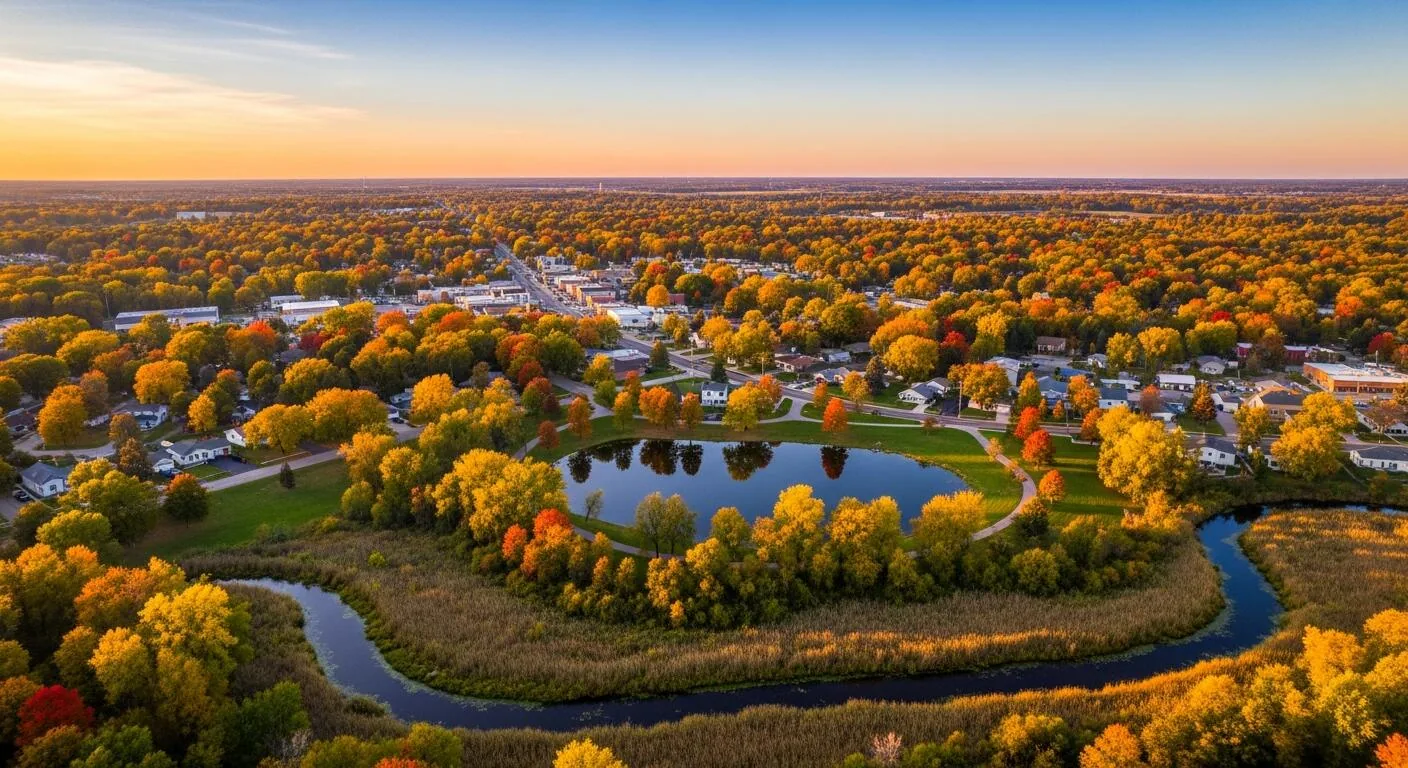
Falcon Heights
Barns, a grandstand that seats 17,000 and the Lee and Rose Warner Coliseum, completed in 1951, sit on the 322 acres of the Minnesota State Fairgrounds in Falcon Heights, and what hangs over every one of them is a calendar. About two million visitors arrive over 12 days each year, and for the rest of the year the buildings are rented for events, storage and commercial uses. A roof on a property like that is inspected, repaired and replaced in the gaps between occupants, and the dated record of what was found keeps each gap from being wasted.
We work on low-slope and metal commercial roofs across the St. Paul, MN area, and we start every Falcon Heights job on the roof itself. Photographs, moisture readings and written findings come first. Leaks can be reported at any hour. Dispatch and temporary work depend on crew availability, access and weather.
Fitting Roof Work Into the Gaps Around Twelve Fair Days
Cold weather and the fair squeeze the roofing season from both sides. Installation windows depend on the specific membrane, adhesive, substrate and product limits, and the 12 fair days cut into it. A job that is scoped in winter and permitted in spring has to be sequenced so that no area is open when crowds arrive.
We write the schedule as a record: the date each section is opened, the date it is closed and dried in, the weather on each of those days and a photograph of the finished area. Where the buildings are rented between events, tenants and event managers receive the same dates ahead of time. Each temporary closure is checked and documented; the sequence records the protection completed and any limitations that need follow-up.
An event property benefits from a calendar that distinguishes inspection, noisy preparation, material staging and membrane installation. We confirm which buildings must be ready first, where visitors or livestock may be present, and how crews will be kept away from public paths. The work package identifies a protected stopping point for each day so a weather change does not leave an exposed area overnight. If the venue schedule shifts, the manager can see which tasks may move and which require a full uninterrupted window. No activity date is committed until access, product temperature limits and weather are suitable.
Reading a Roof Instead of Trusting the Date on the Building
For the Coliseum, completed in 1951, the roof file should identify installation and repair dates from available records. The walk documents accessible construction and defects. Moisture testing, authorized samples and a suitably timed infrared survey can investigate concealed conditions, with each method’s coverage and limitations stated alongside the findings.
Layer count matters because it changes what is possible. A roof that has already been recovered once may not be a candidate for another overlay, and the written core record shows why. Sampling describes selected locations, while attachment testing and deck review may also be needed to decide whether a recover or a full replacement is the defensible route. Each option goes into the report with its cost drivers named.
Measuring Snow on Wide Spans and Stepped Roofs
A venue roof assessment identifies the actual supporting system, geometry and changes in elevation. Wind can redistribute snow near walls and equipment, but the resulting load depends on density and other conditions. An engineer evaluates loading against the applicable criteria and actual construction; the roof’s use as a barn or grandstand does not establish its span or capacity.
After heavy snow we measure depth along walls and steps, photograph the drifts and note what the roof looks like beneath them. A spring follow-up compares seams, flashings and drainage with the previous record. Any snow-removal plan must address access, fall protection, the roof surface and balanced loading rather than rely on a single tool choice, the same care a snow and ice roof damage repair calls for.
Protecting Livestock Areas and Stored Goods From Moisture
Buildings used for events, storage and commercial uses share one vulnerability: whatever is inside them can be harmed by a roof that is only slightly open. Stored goods swell, rust and mold. In animal areas, damp bedding and humid air are a health issue, and ventilation openings in the roof are additional penetrations to watch.
We investigate leaks and possible condensation by comparing reported timing with weather, interior humidity and the installed assembly. Rain entry can occur at seams, fasteners or flashings. Condensation can occur when moist air contacts a sufficiently cold surface; both mechanisms may be present and need further testing. Where a barn has a metal roof, original or a metal roof retrofit, panel fasteners, seam sealant and trim need checking each visit, and each check is entered in the inspection log with a date.
Preparing Condition Records for Public Landowners
Two-thirds of Falcon Heights is public land, chiefly the University of Minnesota St. Paul campus and the fairgrounds. Public owners work from capital requests, procurement rules and maintenance budgets, and each of those is easier to support with a document than with a verbal report. A dated condition report with photographs by roof area, moisture readings and a ranked repair list gives a facilities manager something to put before a budget committee.
On the campus side, where college and university roofs of different ages and systems share one owner, a numbered inventory keeps them comparable. The same report format serves any structure a public agency holds. Whoever the owner is, the report is written so that a new manager who arrives next year can pick up the file and know exactly what was found.
Reaching Sites Along Snelling and Larpenteur
MN 51, also called Snelling Avenue, and Larpenteur Avenue are the two named routes in Falcon Heights, and transit access along Snelling also affects delivery coordination. Crews, lifts and deliveries use those roads, and the pre-work plan names the route, the staging area and the hours that avoid event traffic. Neighboring St. Anthony Park, which borders the fairgrounds, is part of the same planning area for owners with more than one building.
For another assignment in Roseville, establish the permitted receiving position and material movement with the operator before combining delivery dates.
Questions We Hear
How is a roof job scheduled for a venue with a short, busy season?
Backward from the busiest dates. We set the closing date for each roof section first, add weather margin, and work out which areas can be opened and dried in between events. The written sequence goes to everyone who uses the space.
What does a core sample tell the owner of an older building?
An authorized sample identifies layers and conditions at that selected point. Additional samples, moisture investigation, attachment testing or deck review may be required for a larger decision. The report states the tested locations and limits before comparing recover with removal.
Why do metal roofs on large barns leak even without rain?
Condensation is one possible cause when warm, moist air reaches sufficiently cold panels. Rain entry can also appear later than the rainfall or coexist with condensation. We compare humidity, temperature and leak timing with seam, fastening and ventilation findings before selecting a repair.
Who reviews a roof scope on public land?
The owner's facilities staff and its procurement or budget office, and sometimes an engineer or an outside reviewer. We write the scope, photographs and cost drivers to stand on their own, so each reviewer can follow the reasoning without a walkthrough.
How do we limit hail losses on a property used all year?
Keep the roof in a condition that resists impact, and record it. A dated photo set before storm season gives an adjuster the baseline needed to separate new hail damage from old wear. After a storm, we repeat the set and compare.