
Commercial Roofing in Lake Elmo, MN
New-roof records, hangar and open-site inspections, repair and replacement for commercial buildings in Lake Elmo, MN, with dated photos and moisture readings.
Request a Roof Assessment
Lake Elmo
Photographs of a membrane taken in its first week, with seams, flashings and drains located on a sketch, establish a useful turnover record for a new commercial roof in Lake Elmo, MN. The city covers 24.19 square miles, much of it still farmland, and its commercial properties span open sites and developed corridors. Each new building deserves a roof file from day one, because the date on the first photograph gives later inspections a comparison point.
MN 36 runs along the northern edge of Lake Elmo and I-94 borders it on the south. Lake Elmo Airport, which the Metropolitan Airports Commission runs for general aviation, sits roughly 12 miles east of St. Paul and adds another kind of building to the city. Here, low-slope and metal commercial roofs come to us for repair, recover or replacement, and we keep a dated file for each one so an owner can show what the roof was, what was done to it and when.
Opening a Roof File the Week the Membrane Goes Down
On a new commercial roof we walk the finished surface before the crew leaves and record what we find. Seams are examined using the applicable inspection method and documented coverage, each curb and wall flashing is photographed from two angles, the drain positions are marked on a sketch, and the insulation thickness is written beside the cover board type. That record is a baseline of accessible conditions, supplemented by installation records and unresolved punch-list items.
The file earns its keep in the second and fifth winters. After the first winter, the observed drainage and seam conditions can be compared with that baseline to be measured against once rooftop units are added or a tenant changes. If a manufacturer's warranty is in play, the same photographs support warranty management, because the installed conditions are on record from the start.
Checking Spans, Door Heads and Edges on Hangar Roofs
Lake Elmo Airport is a general aviation field that has a 3,500-foot runway that opened in 2022. Where a building at an airfield is a hangar, the roof asks for its own checks. The inspection identifies the actual hangar framing and roof layout. Door-head transitions, wall connections and drainage above openings receive separate entries where present. We photograph the door-head flashing, the edge metal along the long sides and every fastener line that crosses a rib.
Metal panels on a long span expand and contract with the temperature swing from deep cold to a hot July afternoon, and that movement works on fasteners and sealant. We tap the clips, check seams for gaps and record panel laps. Owners comparing aircraft hangar roofing options often weigh standing seam metal against a coating on the existing panels, and the comparison includes adhesion, compatibility, attachment, moisture and supporting condition.
Measuring Drift and Uplift Exposure on Open Ground
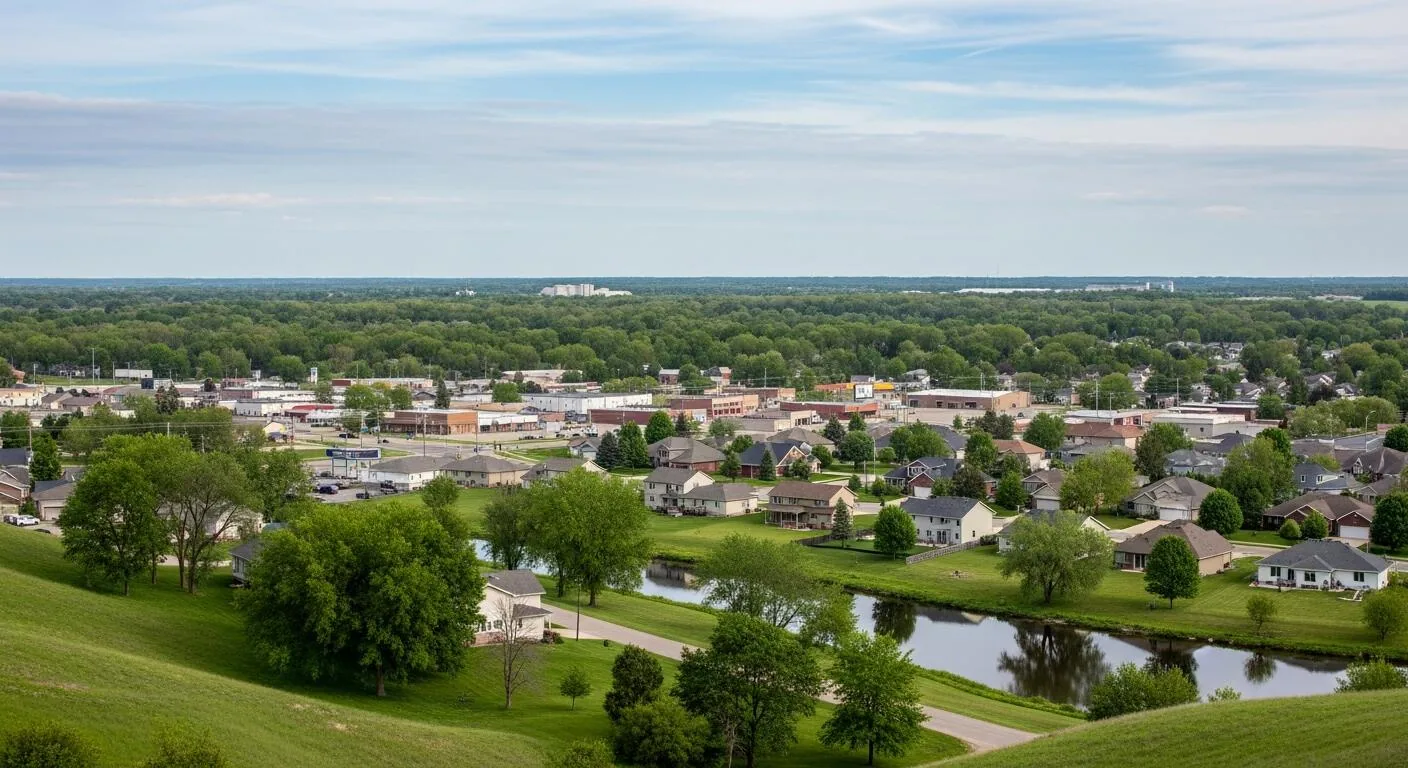
Much of Lake Elmo is still farmland, and the exposure of an individual property is assessed from its actual surroundings and roof geometry. Wind can redistribute snow near walls and equipment, so those accumulations receive mapped observations. We measure those drifts in the field, photograph each with a tape, and provide those observations for any needed engineering assessment. Snow density and the supporting assembly matter; depth cannot be compared directly with a design ground snow input to prove capacity.
Wind also lifts at roof edges and corners, where the membrane and its attachment are most heavily loaded. On an exposed site attachment testing is selected where the assembly and investigation scope warrant it, check how the edge metal is fastened and photograph any billowing or loose laps. A pattern of loosened perimeter attachment is the kind of finding that argues for wind damage repair before the next storm, and the date on the photograph carries the argument.
Scheduling Deliveries Around the MN 36 Interchange Work
Interchange work has been planned at MN 36 and Lake Elmo Avenue. For a roofing job that means checking the status of lane closures and detours when a delivery is booked, because membrane, insulation and a lift cannot wait in a queue. We confirm the route the day before, set the staging with the owner and keep a backup entrance on file. MN 36 to the north and I-94 to the south give two ways in.
Owners with buildings in neighboring cities can use one dated format across all of them. I-94 carries traffic east through Woodbury to Wisconsin, and MN 36 continues west past North St. Paul toward Roseville, so a portfolio spread along those routes keeps the same photographs, readings and condition notes in each file.

Putting Preventive Visits Into a Growing Owner's Budget
A roof that is only a few seasons old still needs its drains cleared, its seams looked at and its flashings checked, and that routine is what keeps an early problem from becoming a repair bill. A preventive maintenance program puts two visits a year on the calendar, one after the thaw and one before the first hard freeze, and each visit adds to the inspection log with photographs and moisture readings.
For an owner adding buildings, that routine is a budget line that can be forecast. The log shows which roof needs attention first, which can wait, and which is coming up on a decision between a restoration coating and a replacement. After reported severe weather near the property, earlier photographs help compare suspected new damage with pre-existing wear. The report retains uncertainty where the available evidence does not establish cause.
An annual roof program can be scaled to the building rather than repeated as a fixed checklist. A new hangar may need careful review of long spans, doors and edge details, while an occupied office may need interior leak reporting and drain checks. We set a baseline visit, document the system and establish a short list of conditions to revisit after severe weather or equipment work. The owner can then reserve funds for planned maintenance and keep urgent findings separate from routine tasks. If a property group adds another building, its roof begins with its own plan and inspection history rather than being folded into a neighboring record.
Questions We Hear
What should be recorded on a brand-new commercial roof?
Seam probe results, flashing photographs, drain locations, insulation thickness and cover board type, all dated and matched to a roof sketch. That set becomes the baseline every later inspection is compared against.
Why do hangar roofs get a separate set of checks?
A hangar inspection identifies the actual framing, panel or membrane system and door-head transitions. We document attachment, flashing and drainage at those locations, with engineering review where support or loading concerns arise. The building’s use alone cannot establish a long-span configuration or its capacity.
A building stands alone in an open field. How does that change the roof inspection?
The site exposure and geometry are assessed before selecting tests. We document edge attachment, corners and snow accumulation where present, with engineering review for loading concerns. Fastener testing needs a defined method and sampling scope rather than being automatic on every open-ground property.
How do you handle a delivery when a highway interchange is under construction?
We confirm lane closures and detours the day before, choose between the MN 36 and I-94 approaches, and keep a backup entrance on file. Staging and the lift position are set with the owner in advance.
After hail like the July 2025 storm, what goes into the file?
Photographs of every bruise, dent and puncture with the date visible, plus a roof sketch locating each one and moisture readings near any breach. The set shows an adjuster what the roof looks like now and gives the owner a record to repair from.